
0%

Choosing reliable suppliers for High-Rise Balcony Aluminum Railings requires more than comparing factory photos or export numbers. Chinese manufacturers differ in alloy selection, fabrication accuracy, coating quality, testing procedures, and project support. A balcony system may look polished, yet small weaknesses can appear around fasteners, drainage points, or corner joints after years of exposure.

Joseph Lstiburek, a respected building-envelope expert, often emphasizes, “The best way to control water is to keep it out.” His principle applies directly to balcony railing design. Proper drainage, sealed connections, compatible metals, and carefully engineered anchors matter as much as appearance. Aluminum offers low maintenance and strong corrosion resistance, but it is not maintenance-free. Coastal salt, heavy rain, wind pressure, and thermal movement still demand careful specification.

This guide reviews China’s top 10 High-Rise Balcony Aluminum Railings suppliers through practical criteria. These include manufacturing experience, engineering capability, finish consistency, customization, certifications, installation guidance, and after-sales communication. Product samples can reveal details that catalogues hide. Check welds, surface uniformity, glass channels, protective packaging, and dimensional tolerances.

No ranking is perfect. Supplier performance can change with management, workload, or project scale. That uncertainty deserves attention. Buyers should request current test reports, project references, material certificates, and clear warranty terms before making decisions. The strongest supplier is not always the largest one. Sometimes, a responsive technical team prevents the most expensive mistake.
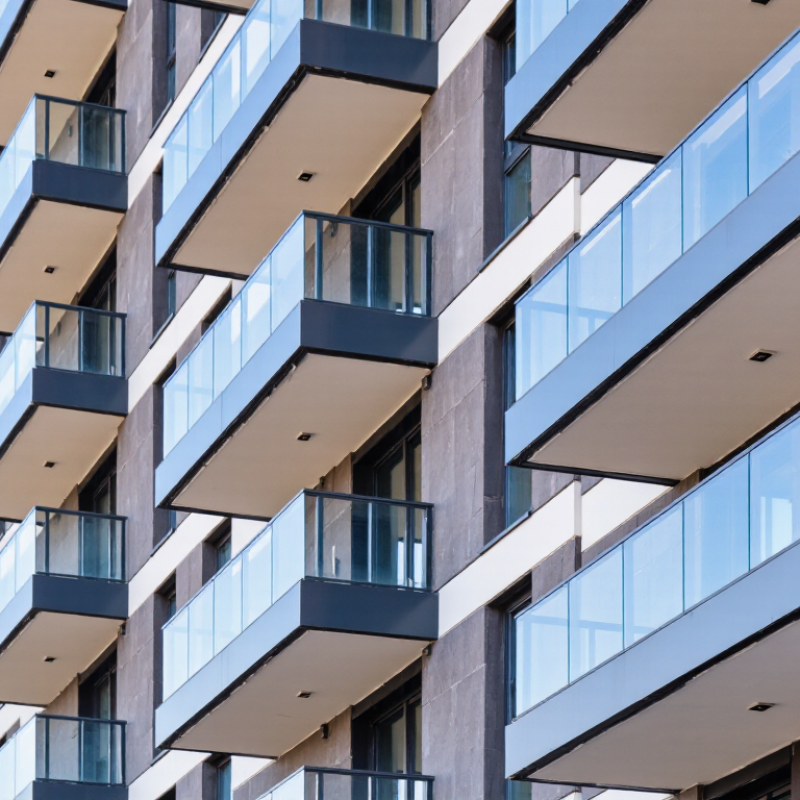
China Top 10 High Rise Balcony Aluminum Railing Suppliers

What Are High-Rise Balcony Aluminum Railings?

High-rise balcony aluminum railings are engineered edge-protection systems for elevated outdoor spaces. They usually include posts, top rails, infill panels, brackets, and structural anchors. Unlike decorative balcony fencing, they must resist wind pressure, occupant loads, corrosion, and repeated temperature changes. Their design depends on building height, balcony shape, local climate, and fixing conditions.

The Council on Tall Buildings and Urban Habitat reports thousands of completed buildings above 200 meters worldwide. This growth increases demand for lighter, durable façade components. The Aluminum Association lists aluminum’s density at about 2.7 g/cm³, far below steel at roughly 7.85 g/cm³. Lower weight can simplify handling and reduce installation strain. However, lightness does not replace engineering. Anchor depth, fastener compatibility, drainage, and movement joints still require careful review. A railing may look rigid, yet balcony slabs move slightly.

Reports from the International Energy Agency show that buildings remain responsible for a major share of global energy-related emissions. Long service life and low-maintenance finishes therefore matter. Powder coating or anodizing can improve surface protection, but poor edge sealing may still cause staining or corrosion near coastal areas. The weak point is often installation, not the aluminum itself.

Tips: Request tested load data, coating specifications, and anchor details before approval. Check gaps, handrail height, and water drainage on site. Treat generic catalog dimensions cautiously; every high-rise balcony has different wind and movement conditions.

Key Criteria for Evaluating Chinese Aluminum Railing Suppliers

China Top 10 High Rise Balcony Aluminum Railing Suppliers

Selecting a high-rise balcony railing supplier requires more than comparing catalog prices. The International Aluminium Institute’s 2024 production statistics show China supplies over half of the world’s primary aluminum. This scale supports competitive sourcing, but it does not guarantee consistent alloy quality. Buyers should request alloy certificates, batch numbers, tensile-test results, and extrusion records. Traceability matters.

Safety documentation deserves close attention. Suppliers should provide load calculations based on the project’s applicable building codes, plus test evidence for posts, fasteners, and glass channels. Coating performance also needs verification. AAMA 2604 or 2605 specifications can help assess finish durability, while independent salt-spray reports reveal weak pretreatment. Ask for samples from actual production, not showroom pieces. Small differences show quickly.

Factory evaluation should include equipment age, welding control, inspection staff, packaging methods, and corrective-action records. The World Bank’s Commodity Markets Outlook has repeatedly shown aluminum prices can change sharply, so a very low quotation may conceal thinner profiles or substituted hardware. I would compare total installed cost instead. Visit the production line when possible. A polished catalog can still hide poor drainage design. One weakness remains: supplier audits capture a moment, not every future batch. Add random inspections, approved drawings, and clear acceptance limits to reduce that uncertainty.

China’s Top 10 High-Rise Balcony Aluminum Railing Suppliers

China’s Top 10 High-Rise Balcony Aluminum Railing Suppliers should be judged by evidence, not catalog photography. China’s construction scale makes this comparison relevant. CTBUH’s 2023 Tall Building Year in Review recorded 128 buildings reaching at least 200 meters worldwide. That height increases demands on wind resistance, drainage, fastening, and finish consistency. A capable supplier should provide tested load data, alloy certificates, coating specifications, and traceable inspection records. Experience matters at balcony edges, where salt, rain, and repeated cleaning expose weak details quickly.

Industry data also supports aluminum’s role. The International Aluminium Institute reports that aluminum can be recycled repeatedly without losing its core properties. This supports lower material waste, but recycling claims still need documented sourcing. In practical procurement, installation drawings often reveal more than a showroom sample. Check anchor spacing, thermal movement allowance, infill compatibility, and replacement access. A supplier may look technically strong yet miss local code coordination. That gap is easy to underestimate.

Tips: Request a project-specific wind calculation and a full-size corner mock-up. Confirm whether testing covers the actual posts, base plates, fasteners, and infill. Ask for coating thickness records and independent test reports, not only internal statements. Compare lead times against inspection stages. Keep one spare section for future repairs. No shortlist is perfect. Recheck assumptions after site measurements, because balcony geometry rarely matches early drawings.

China Top 10 High-Rise Balcony Aluminum Railing Suppliers - China’s Top 10 High-Rise Balcony Aluminum Railing Suppliers

Anonymized supplier comparison based on high-rise balcony railing capability, technical compliance, manufacturing capacity, and export-readiness indicators

Rank Supplier Profile Primary Product Focus Typical Aluminum Alloys Surface Finishes High-Rise System Capability Applicable Standards Engineering Documentation Indicative Production Capacity Typical Lead Time Export Readiness Best-Fit Project Type
1 Supplier Profile 01 Post-and-rail systems Glass balustrades 6063-T5 / 6063-T6 extruded aluminum Powder coating, anodizing, PVDF coating Designed for multi-story residential and commercial balconies; concealed base and side-fixing options EN 1991-1-1; EN 1090-3; ASTM E985; ASTM E2358 Shop drawings, section details, load calculations, installation manuals Approx. 300–500 metric tons/month 25–40 working days Container packing, export documentation, project coordination Large apartment towers and mixed-use developments
2 Supplier Profile 02 Frameless glass railings Minimalist profiles 6063-T5 aluminum; 6061-T6 for structural components Fluorocarbon coating, powder coating, brushed anodized finish Continuous base-shoe systems for elevated balconies and terraces EN 1991-1-1; BS 6180; ASTM E2358 Wind-load review, glass specification, anchor layout, BIM-compatible drawings Approx. 200–350 metric tons/month 30–45 working days International packaging and multilingual technical documents Premium residential towers and hotel projects
3 Supplier Profile 03 Aluminum picket railings Balcony screens 6063-T5 extrusions with 6061-T6 brackets Powder coating and anodizing Modular railing packages suitable for repetitive balcony layouts EN 1991-1-1; EN 755; ASTM B221 Color schedules, cutting lists, assembly drawings, fastening schedules Approx. 250–450 metric tons/month 20–35 working days Bulk export packing and standardized carton labeling High-volume residential construction
4 Supplier Profile 04 Custom balcony systems Complex geometry 6063-T6 / 6061-T6 aluminum Powder coating, PVDF, wood-effect transfer finish Custom corner, curved, sloped, and stepped balcony solutions EN 1991-1-1; EN 1090-3; ISO 9227 testing support 3D modeling, structural calculations, prototype approval, mock-up support Approx. 100–250 metric tons/month 35–55 working days Sample approval process and project-based export support Architecturally complex high-rise façades
5 Supplier Profile 05 Aluminum-and-glass systems Stainless accessories 6063-T5 aluminum with 304/316 stainless steel fittings Powder coating, anodizing, satin stainless finish Hybrid railing systems for coastal and high-humidity environments EN 1991-1-1; BS 6180; ASTM E2358; ISO 9227 Material certificates, glass schedules, fixing details, inspection reports Approx. 150–300 metric tons/month 30–50 working days Moisture-resistant packing and overseas installation guidance Coastal towers, resorts, and waterfront apartments
6 Supplier Profile 06 Prefabricated railing modules Fast installation systems 6063-T5 aluminum profiles Powder coating and anodizing Factory-assembled modules with adjustable connectors and concealed fasteners EN 1991-1-1; EN 755; ISO 9001 quality procedures Module drawings, packing lists, installation sequence, tolerance schedules Approx. 200–400 metric tons/month 20–35 working days Serialized packing and installation-lot management Projects requiring rapid site installation
7 Supplier Profile 07 Heavy-duty guardrails Structural aluminum systems 6061-T6 / 6063-T6 aluminum PVDF coating, powder coating, anodizing Higher-load applications with reinforced posts and engineered anchors EN 1991-1-1; EN 1090-3; ASTM B221; ASTM E985 Load reports, anchor calculations, welding or mechanical-joint procedures Approx. 120–250 metric tons/month 35–60 working days Third-party inspection coordination and export-quality control Public buildings, office towers, and exposed terraces
8 Supplier Profile 08 Cost-optimized systems Standardized profiles 6063-T5 aluminum Standard powder coating and anodizing Standard post-and-rail systems for repetitive residential balconies EN 1991-1-1; EN 755; ASTM B221 Standard drawings, color chart, installation guide, packing list Approx. 300–600 metric tons/month 18–30 working days Competitive container loading and standard export documents Budget-sensitive apartment developments
9 Supplier Profile 09 Decorative railings Privacy panels 6063-T5 aluminum with optional perforated panels Powder coating, wood-effect finish, anodizing Balcony privacy screens integrated with railing posts and handrails EN 1991-1-1; ASTM B221; ISO 9227 testing support Design drawings, perforation layouts, wind-area assessment, samples Approx. 100–220 metric tons/month 30–50 working days Custom crating and sample-based approval workflow Residential towers requiring privacy and façade design
10 Supplier Profile 10 Replacement and renovation systems Retrofit railings 6063-T5 / 6063-T6 aluminum Powder coating, anodizing, PVDF coating Lightweight retrofit solutions for existing balconies and façade upgrades EN 1991-1-1; EN 755; ASTM E2358 Site-measurement templates, retrofit details, anchor schedules, survey support Approx. 80–180 metric tons/month 30–45 working days Small-batch export handling and replacement-part support Renovation, refurbishment, and façade-upgrade projects

Notes: Capacity, lead-time, and system details are indicative procurement benchmarks for anonymized supplier profiles. Final selection should be confirmed through project-specific structural calculations, material certificates, finish samples, wind-load requirements, local building codes, and third-party quality inspections.

Product Range, Quality Standards, and Customization Options

China Top 10 High Rise Balcony Aluminum Railing Suppliers

A reliable supplier should offer more than standard balcony panels. Product ranges may include picket rails, glass systems, perforated screens, privacy panels, and handrails. Aluminum grades such as 6063-T5 support clean profiles and practical fabrication. The right choice depends on wind exposure, balcony geometry, drainage, and maintenance access.

Quality evidence matters. Suppliers should provide material certificates, welding or assembly records, coating reports, and load-test results. ASTM E935 evaluates permanent metal railing performance, while EN 1090 supports controlled structural fabrication. ISO 9001 certification can strengthen process reliability, but it does not replace product testing. The Qualicoat framework is also useful when reviewing architectural powder-coating durability. Grand View Research’s 2024 aluminum market analysis identifies construction as a major demand sector, reflecting aluminum’s growing role in modern building envelopes. Still, market growth does not prove every supplier’s quality.

Tips: Ask for project photos, test reports, coating thickness data, and sample corners. Check whether drawings show drainage holes and concealed fasteners. Request wind-load calculations for the actual building height. Custom finishes, curved sections, laser-cut patterns, and glass infills are possible, but each adds inspection points. I would not approve a quotation from photos alone. A minor dimensional error can become a visible alignment problem across thirty floors. Sampling helps, although even samples may not reveal long-term coastal corrosion.

How to Select the Right Chinese Aluminum Railing Supplier

Selecting the right Chinese aluminum railing supplier requires more than comparing price lists. Review suppliers with proven high-rise project experience and request completed-project photos, shop drawings, and installation details. A reliable factory should explain alloy grades, profile thickness, surface treatment, and connection methods clearly. Vague answers are warning signs.

Ask for physical samples before placing a large order. Check coating consistency, corner joints, weld quality, and the smoothness of handrails. For coastal buildings, discuss corrosion resistance and suitable powder coating systems.

For tall buildings, confirm wind-load calculations, anchor design, and compliance with the destination country’s building codes. Independent testing reports are useful, but verify their scope and validity.

Factory control matters too. A video call is helpful, yet an on-site audit gives stronger evidence. Inspect incoming material records, production inspections, packaging protection, and corrective-action procedures. Request a written schedule with inspection points and replacement terms.

I once trusted an attractive sample and ignored small scratches on bundled profiles. The final shipment revealed uneven protection. It was a costly lesson.

The cheapest quotation may exclude testing, hardware, or careful packing. Compare the complete delivered cost, not only the aluminum price.

Communication also deserves testing: send technical questions and observe response accuracy, document control, and willingness to admit limitations.

No supplier is perfect. A dependable one identifies problems early and fixes them transparently.

FAQS

What evidence should a high-rise railing supplier provide?

Request alloy certificates, load-test results, coating records, and traceable inspection documents. Catalog images are not enough.

Why are wind calculations important for balcony railings?

Tall buildings face stronger wind pressure. Ask for calculations based on the actual height, balcony shape, posts, fasteners, and infill.

Which railing details deserve close inspection?

Check anchor spacing, base plates, drainage holes, thermal movement, and replacement access. Small details become visible across many floors.

What railing options can a supplier usually offer?

Options may include picket rails, glass panels, privacy screens, perforated panels, and continuous handrails.

How can buyers evaluate coating quality?

Request coating thickness records and independent durability reports. Inspect corners, edges, and bundled profiles for scratches or uneven coverage.

Should buyers approve a quotation from photos alone?

No. Request physical samples and a full-size corner mock-up. A polished sample can hide weak joints or poor drainage.

What should coastal projects consider?

Discuss corrosion resistance, suitable finishes, drainage, and cleaning access. Salt air exposes weak protection quickly.

Does a factory audit matter?

Yes. Inspect material records, production checks, packaging, and corrective actions. Video calls help, but they reveal less.

How should buyers compare supplier prices?

Compare complete delivered costs, including testing, hardware, packaging, inspection, and replacement terms. The cheapest quote may omit important work.

What common mistake should buyers avoid?

Do not ignore small scratches or vague answers. Recheck site measurements because early balcony drawings can be imperfect.

Conclusion

High-Rise Balcony Aluminum Railings are essential architectural systems designed to provide safety, durability, and an attractive appearance for residential, commercial, and mixed-use buildings. This article explains their key features, including corrosion resistance, lightweight construction, structural stability, low maintenance, and suitability for high-altitude applications. It also introduces the main criteria for evaluating Chinese suppliers, such as material quality, manufacturing capabilities, engineering experience, testing procedures, certifications, production capacity, and delivery reliability.

The guide reviews ten leading categories of Chinese suppliers without focusing on specific brand names, while comparing their product ranges, quality standards, surface finishes, railing profiles, glass or metal infill options, and customization services. It further explains how buyers can select the right supplier by assessing project requirements, local building codes, technical support, quality control, communication, pricing transparency, and after-sales service. This overview helps international buyers make informed decisions and source dependable railing solutions for demanding high-rise construction projects.

Oliver Bennett

Oliver Bennett

Oliver Bennett is a professional marketing specialist with a strong understanding of product strategy, customer needs, and digital communication. As a regular contributor to the company’s professional blog, he transforms complex product information into clear, practical, and engaging content that......