
0%

Architectural Aluminum Railings are becoming a visible design choice in balconies, stairways, terraces, and commercial entrances. Their appeal is practical: aluminum resists corrosion, weighs less than steel, and supports clean architectural lines. A powder-coated frame can appear matte black beside glass panels or warm bronze against stone walls.

Industry data supports this broader movement. Grand View Research’s 2024 aluminum market analysis identifies construction as a major end-use sector, supported by urban development and renovation activity. The Aluminum Association also reports that aluminum remains highly recyclable, with roughly 75% of all aluminum ever produced still in use. These figures do not measure railings alone, but they clarify why durable, lightweight systems remain important.

The 2026 market will likely feature several leading railing types. Glass-and-aluminum systems emphasize unobstructed views. Cable railings create a lighter visual effect. Baluster and picket designs offer familiar safety language, while privacy panels suit rooftops and dense residential spaces. Modular systems may also attract contractors seeking faster installation and easier replacement.

Details matter. Very much. Handrail diameter, drainage, fastener compatibility, coating quality, and local load requirements can change the final result. Reports from MarketsandMarkets and other construction-industry analysts often combine multiple aluminum applications, so their forecasts should not be treated as railing-specific proof. That limitation deserves attention.

This guide compares the top types of Architectural Aluminum Railings for 2026. It considers appearance, maintenance, installation conditions, durability, and project value. The best option is not always the most expensive one. It is the system that fits the building, climate, users, and long-term maintenance plan.
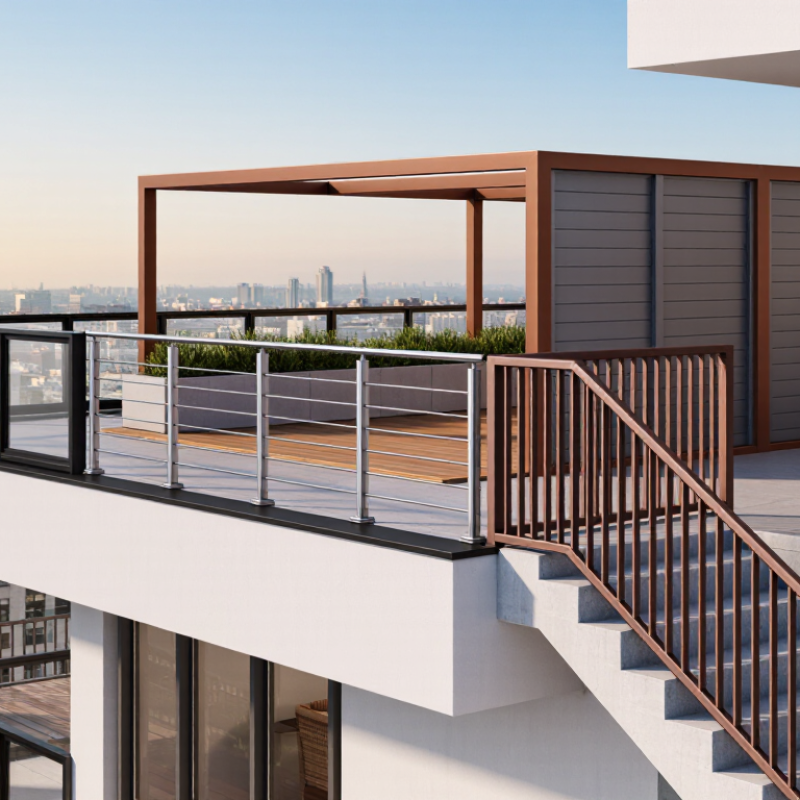
2026 Top Types of Architectural Aluminum Railings?

What Are Architectural Aluminum Railings?

Architectural aluminum railings are engineered edge-protection systems for balconies, stairs, terraces, ramps, and walkways. They use aluminum posts, rails, brackets, and infill panels to create a continuous safety barrier. Unlike temporary site fencing, these systems become part of a building’s permanent design.

Aluminum is lightweight, naturally corrosion-resistant, and easier to handle than many steel assemblies. A properly finished surface can withstand rain, sunlight, and regular cleaning.

Common types include picket railings, glass railings, cable railings, and solid-panel designs. Pickets provide a familiar open appearance. Glass preserves views. Cable systems create thin visual lines. Panels offer stronger privacy and wind screening. Each option changes the building’s character.

In 2026, designers are paying closer attention to clean profiles and accessible maintenance. On real projects, accurate field measurements matter more than attractive drawings. A small mismatch at a stair landing can create difficult adjustments. Local building codes also control railing height, opening sizes, load resistance, and handrail requirements. Qualified installers should verify the substrate, fastener selection, drainage, and final alignment. Aluminum can look simple. It is not always simple. Poor detailing around joints may trap water or weaken the finish over time. Regular inspections can reveal loose connections, surface damage, or movement before these issues become expensive repairs.

How Are Aluminum Railings Classified by Design and Structure?

Architectural aluminum railings are classified by both visual design and structural behavior.

Design types include picket, glass-infill, cable, privacy-panel, and ornamental systems.

Picket railings use repeated vertical balusters, creating a familiar balcony and stair appearance. Glass systems prioritize open views, while cable designs create a lighter, more industrial expression.

Privacy panels use solid or perforated infill. They suit terraces where wind, sightlines, or comfort matter.

Structure changes how forces travel through the railing.

Post-and-rail systems transfer loads through posts, rails, and base plates. Framed panel systems add stronger perimeter members around glass, mesh, or solid infill.

Frameless designs reduce visible hardware but demand precise anchorage and edge control. Installation may use surface-mounted, fascia-mounted, or embedded posts.

The substrate matters as much as the railing. Weak concrete can defeat a well-designed aluminum assembly.

A neat catalog can mislead.

A 2024 International Aluminium Institute report recorded about 70 million tonnes of primary aluminum production in 2023, supporting broad material availability. The Aluminum Association reports that recycled aluminum requires roughly 5% of the energy used for primary production.

That advantage depends on alloy selection, coatings, and responsible fabrication.

My practical concern is simple: designers often classify railings by appearance alone. That misses drainage, fastener compatibility, infill deflection, and local loading requirements.

A better specification names the design, load path, mounting method, alloy, finish, and inspection process.

Which Aluminum Railing Types Are Most Popular in 2026?

Which Aluminum Railing Types Are Most Popular in 2026?

In 2026, glass-panel aluminum railings remain popular for modern balconies, rooftops, and pool terraces. Clear panels preserve views while powder-coated aluminum frames resist moisture and daily wear. During site measurements, I often find homeowners choosing vertical picket railings for stairs and family decks. Their narrow spacing feels familiar, and their open design improves airflow. They are practical. Picket systems also allow flexible color choices and simpler maintenance than glass. However, poor spacing or weak post anchoring can create serious safety concerns. Every installation should follow applicable local building requirements and receive a professional load check.

Cable railings are gaining attention in contemporary homes and hospitality spaces. Thin horizontal cables create a lighter visual effect than traditional balusters. They work especially well beside timber decking, stone walls, and wide coastal views. Yet cables need accurate tensioning and periodic inspection. Small slack can change the appearance quickly. Perforated aluminum panels are another growing option for privacy screens and rooftop terraces. Their repeated patterns provide shade without completely blocking ventilation. In my experience, these panels can feel too enclosed when used across a small balcony. That design choice deserves more reflection. Selecting the best type depends on wind exposure, cleaning access, privacy needs, and the building’s architectural character. A beautiful railing still fails when its fasteners corrode or its drainage details are ignored.

2026 Top Types of Architectural Aluminum Railings? - Which Aluminum Railing Types Are Most Popular in 2026?

Comparative overview based on common residential, commercial, multifamily, and public-space applications. Popularity indicates general market adoption rather than audited market-share data.

2026 Popularity Aluminum Railing Type Typical Infill or Configuration Common Applications Main Advantages Important Considerations Relative Adoption
1 Aluminum Picket Railings Vertical or horizontal aluminum pickets installed between posts and top rails Decks, balconies, stairs, porches, multifamily housing, and light commercial projects Cost-effective, lightweight, durable, visually open, and relatively simple to install Picket spacing, opening limitations, guard height, and load requirements must comply with local building regulations Very High
2 Aluminum Glass Railings Framed, semi-frameless, or post-supported laminated or tempered safety glass Modern homes, rooftop terraces, balconies, hospitality areas, offices, and premium outdoor spaces Clear views, contemporary appearance, strong daylight access, and wind protection when designed appropriately Higher material and installation cost; glass thickness, safety glazing, drainage, cleaning, and impact resistance require careful specification High
3 Aluminum Cable Railings Stainless-steel horizontal cables tensioned between aluminum posts Decks, waterfront properties, contemporary stairs, balconies, and view-oriented residential projects Minimal visual obstruction, modern styling, and good preservation of views Cable tension can require periodic checking; openings, corrosion resistance, child-safety concerns, and local code requirements must be reviewed High
4 Aluminum Privacy Railings Closely spaced horizontal or vertical slats, panels, or louvered aluminum infill Ground-level patios, rooftop areas, balconies, pool surroundings, and urban residential spaces Improved visual separation, wind screening options, low corrosion risk, and flexible contemporary design Solid or dense infill may increase wind loads; structural anchorage, drainage, and allowable opening dimensions are important Moderate to High
5 Ornamental Aluminum Railings Decorative balusters, scrollwork, shaped profiles, or traditional pattern elements Traditional homes, heritage-style buildings, entry stairs, front porches, and civic design projects Decorative appearance, lower maintenance than painted steel or iron, and broad finish and profile options More detailed profiles may increase fabrication and cleaning requirements; decorative elements must not compromise required guard performance Moderate
6 Perforated or Laser-Cut Aluminum Railings Perforated sheet, patterned panels, or custom-cut aluminum screens Architectural balconies, restaurants, hotels, public buildings, and design-focused residential projects Distinctive visual identity, optional privacy, controlled transparency, and opportunities for custom patterns Custom fabrication can increase cost and lead time; panel deflection, wind pressure, edge safety, and drainage need engineering review Niche but Growing
Selection note: Final selection should consider local guard and handrail regulations, structural loads, opening limitations, corrosion exposure, slip and impact hazards, accessibility requirements, maintenance access, and the project’s required level of privacy or visibility.

How Do Materials, Finishes, and Safety Features Differ?

2026 Top Types of Architectural Aluminum Railings?

Architectural aluminum railings differ most in alloy, finish, and connection design. Extruded 6063 aluminum suits clean profiles and detailed shapes. 6061 aluminum offers higher strength for demanding structural connections. However, alloy selection alone cannot prove safety. Wall thickness, post spacing, fasteners, and substrate strength matter more on site.

Finishes change durability and maintenance. Anodizing creates an oxide layer within the metal, preserving a visible metallic texture. Powder coating provides broader color choices and a thicker protective surface. AAMA 2603, 2604, and 2605 classify increasing performance expectations for organic coatings. The strictest category requires stronger resistance to weathering, chemicals, and color change. Still, no finish is maintenance-free. Salt, trapped moisture, and careless cleaning can damage even premium surfaces. A glossy sample can mislead.

Safety depends on geometry, testing, and installation quality. The 2024 International Residential Code generally requires 36-inch guards at qualifying residential walking surfaces. Its opening limits commonly use a 4-inch sphere test. Commercial projects may follow different height and load requirements under the International Building Code. OSHA’s 2024 walking-working-surfaces standard also emphasizes guardrail strength and controlled fall hazards in workplaces. Designers should request tested load data, not vague claims. I would not approve a railing from drawings alone; field anchors often reveal the real weakness. Short spans help. So do continuous top rails.

How Can You Choose the Right Aluminum Railing System?

Choosing an aluminum railing starts with the space, not the catalog. A balcony may suit glass panels for open views, while stairs often benefit from vertical pickets or a graspable handrail. Cable systems look light, but they demand accurate tensioning and careful inspection. For coastal locations, specify a corrosion-resistant alloy, compatible fasteners, and a durable powder-coated finish. A railing can look elegant and still fail early.

Measure the opening, slab edge, and finished floor level before selecting post spacing. Check the required guard height, opening limits, handrail shape, and design loads with local building requirements. A qualified designer or engineer should verify connections to concrete, steel, or masonry. Do not judge strength by post thickness alone. Base plates, anchors, substrate condition, and installation torque often decide performance. Ask for test data, material specifications, finish details, and maintenance guidance.

Think about daily use. Children, pets, wet shoes, furniture, and cleaning habits can change the best choice. Glass needs frequent wiping; cables may need retensioning; pickets usually hide dirt better. I would also leave room for drainage and thermal movement. Small omissions become expensive repairs. My own preference can be wrong when the view, climate, or installer changes. Review a physical sample beside the flooring and wall color. Then confirm dimensions on site before fabrication.

2026 Top Types of Architectural Aluminum Railings

How can you choose the right aluminum railing system? Compare common railing types by their typical visual openness, maintenance needs, and installation complexity.

Open-area percentages represent typical architectural configurations: picket and cable systems provide the highest visibility, while privacy and glass systems offer greater screening or wind protection. Ratings are practical comparative indicators and can vary with local building codes, project geometry, material thickness, and installation conditions.

FAQS

How are aluminum railings classified by design?

Common designs include picket, glass-infill, cable, privacy-panel, and ornamental systems. Pickets use repeated vertical balusters. Glass keeps views open. Cable looks lighter but needs accurate tensioning.

How do railing structures differ?

Post-and-rail systems transfer loads through posts, rails, and base plates. Framed panels add perimeter members around glass, mesh, or solid infill. Frameless systems show less hardware but require precise anchorage.

Which railing suits an open-view balcony?

Glass panels usually preserve the clearest view. Their edges and frames need careful control. Frequent wiping may become annoying.

What railing works well on stairs?

Vertical pickets often provide a familiar stair appearance. A graspable handrail can improve daily comfort. Confirm handrail shape and height locally.

What should be checked before choosing post spacing?

Measure the opening, slab edge, and finished floor level. Check guard height, opening limits, and design loads. Confirm dimensions on site.

Does a thicker post guarantee a stronger railing?

No. Base plates, anchors, concrete quality, and installation torque often control performance. A weak slab can defeat a strong aluminum assembly. Thickness alone misleads.

What details matter in coastal locations?

Select a corrosion-resistant alloy and compatible fasteners. Use a durable powder-coated finish. Inspect joints, drainage paths, and exposed edges regularly.

How do household habits affect railing selection?

Children, pets, wet shoes, furniture, and cleaning routines all matter. Glass shows fingerprints quickly. Cables may need retensioning. Pickets usually hide dirt better.

Why should the substrate be inspected?

The railing depends on concrete, steel, or masonry connections. Cracks, weak concrete, or poor edge distances can reduce stability. The substrate deserves equal attention.

What information should a railing specification include?

Name the design, load path, mounting method, alloy, finish, and inspection process. Include test data and maintenance guidance. I might overvalue appearance without these details.

Conclusion

Architectural Aluminum Railings are durable, lightweight systems designed to provide safety, visual definition, and reliable support on balconies, stairways, terraces, decks, and other elevated spaces. This article explains how aluminum railings are classified by design and structure, including picket, glass-infill, cable, privacy, and decorative systems. It also considers how mounting methods, post arrangements, and modular components influence appearance, strength, installation, and maintenance requirements.

The discussion highlights the most popular aluminum railing types expected in 2026, with attention to clean lines, adaptable layouts, and contemporary outdoor design. It compares materials, surface finishes, colors, protective coatings, and safety features such as proper spacing, secure handrails, stable connections, and suitable height. Finally, it offers practical guidance for selecting the right railing system by evaluating location, climate, architectural style, privacy needs, maintenance preferences, budget, and project-specific safety requirements.

Ethan Carter

Ethan Carter

Ethan Carter is a professional marketing specialist with a strong understanding of product strategy, customer needs, and effective digital communication. As a key contributor to the company’s content and marketing team, he regularly publishes expert blog articles that explain industry developments,......