
0%

Choosing the 2026 best Commercial Aluminum Windows requires more than comparing frame prices or glass appearance. Global buyers now evaluate thermal performance, durability, recycled content, acoustic control, and verified installation quality. Small details matter. A poorly drained sill can damage an otherwise excellent façade.

The UNEP Global Status Report for Buildings and Construction reported that buildings and construction consumed about 34% of global energy and produced roughly 37% of energy-related emissions in 2022. These figures increase pressure on commercial projects to reduce operational loads. The International Aluminium Institute also reports that recycled aluminium requires around 95% less energy than primary aluminium. That advantage supports lower-carbon procurement, but only when suppliers document material sources and recycling claims.

Performance must remain measurable. Look for tested U-values, solar heat gain coefficients, air-leakage results, water-penetration testing, and structural ratings. Regional standards differ. A specification suitable for a mild European office may fail in a tropical tower or a high-wind coastal project. It is easy to oversimplify this point.

Building-science expert Dr. Joseph Lstiburek describes windows bluntly as “holes in walls.” His phrase remains useful for commercial design: every opening needs a reliable connection between glass, frame, sealant, insulation, and the surrounding wall. The best systems are not merely attractive. They are coordinated, tested, and installed correctly.

This guide compares leading Commercial Aluminum Windows for global buyers in 2026. It considers real project conditions, supplier transparency, lifecycle value, and certification evidence. Some rankings remain subjective. That is unavoidable. Buyers should verify every performance claim before signing a contract.
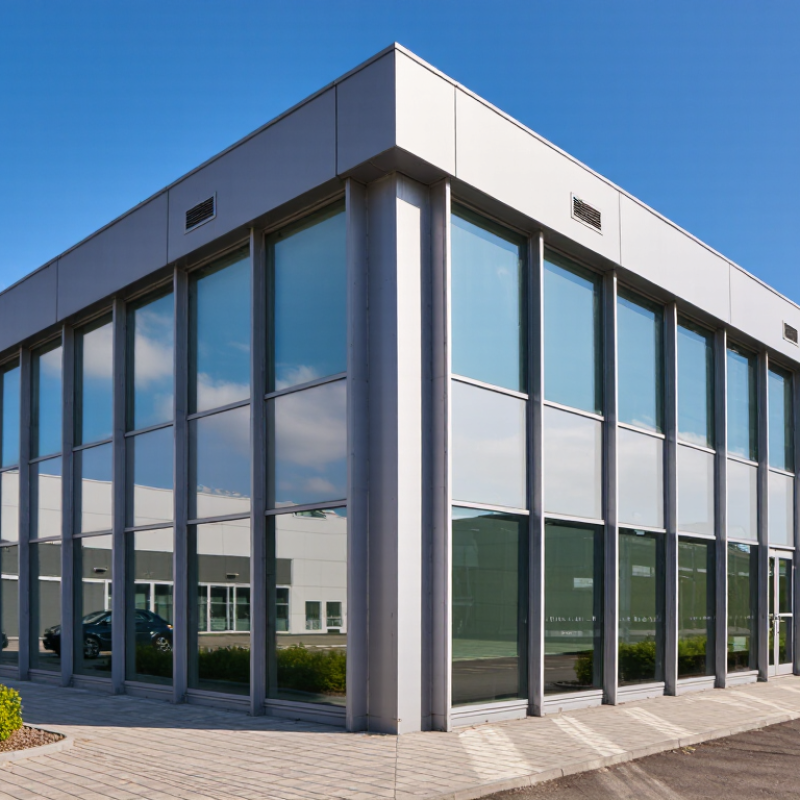
2026 Best Commercial Aluminum Windows for Global Buyers?

What Are Commercial Aluminum Windows?

Commercial aluminum windows are engineered glazed openings designed for offices, retail spaces, hotels, and industrial buildings. Their frames usually use extruded aluminum because it is lightweight, strong, corrosion-resistant, and easy to manufacture in large sizes. Thermal-break systems separate interior and exterior metal sections. This reduces heat transfer, but does not eliminate it. Glazing, seals, drainage, and installation also control performance. The 2024 UNEP Global Status Report states that buildings consume 32% of global energy and create 34% of global carbon dioxide emissions. Window specifications deserve serious attention.

In practice, buyers should compare U-value, solar heat gain coefficient, air leakage, water penetration, and structural pressure ratings. The U.S. Department of Energy explains that window efficiency depends on the frame, glass, orientation, and installation quality. A high-performance frame can still underperform when the perimeter seal is poorly fitted. It happens more often than brochures suggest. For coastal or dusty locations, buyers should also examine hardware, drainage paths, coating durability, and maintenance access. Local climate data should guide glazing choices, rather than appearance alone.

Tips: Request certified test results, full-size samples, and installation details. Check thermal-break depth and gasket quality. Ask who controls site inspections. A low purchase price may hide higher cooling costs, difficult repairs, or premature replacement. Even experienced buyers should review assumptions with a qualified façade consultant. Aluminum is reliable, but it is not automatically energy-efficient.

2026 Best Commercial Aluminum Windows for Global Buyers? - What Are Commercial Aluminum Windows?
Window Type What It Is Typical Thermal Performance Typical Air Leakage Typical Water Resistance Typical Structural Pressure Best Commercial Applications Key Buying Considerations
Non-Thermally Broken Fixed Window A permanently glazed aluminum frame with no operable sash. Whole-window U-factor commonly about 2.2–3.5 W/m²·K (0.39–0.62 Btu/h·ft²·°F), depending on frame and glass. Often below 0.30 L/s·m² at 75 Pa when properly fabricated and installed. Suitable for protected façades; project-specific testing is required for exposed locations. Commonly designed around 1.5–3.0 kPa, subject to size, glass, mullions, and local wind loads. Curtain walls, office buildings, retail façades, schools, and interior-facing elevations. Lowest frame cost, high daylight area, but limited thermal performance and possible condensation in cold climates.
Thermally Broken Fixed Window A fixed aluminum frame separated by a low-conductivity polyamide or equivalent thermal barrier. Typically about 1.4–2.2 W/m²·K (0.25–0.39 Btu/h·ft²·°F) with insulating glass. Commonly below 0.20–0.30 L/s·m² at 75 Pa for tested systems. Often specified for medium- to high-exposure façades after laboratory testing. Frequently engineered for approximately 1.5–3.5 kPa or higher when reinforced and correctly anchored. Energy-efficient offices, hospitals, hotels, educational buildings, and high-rise façades. A strong general-purpose choice for global projects; verify thermal barrier width, glass thickness, and local code compliance.
Commercial Casement Window An outward-opening sash operated by friction stays, hinges, or concealed hardware. Approximately 1.4–2.4 W/m²·K (0.25–0.42 Btu/h·ft²·°F) with a thermally broken frame and suitable glazing. Often below 0.20 L/s·m² at 75 Pa when seals and hardware are correctly adjusted. Generally strong because compression seals improve resistance when the sash is locked. Commonly designed for 1.5–3.0 kPa, depending on sash dimensions and hardware capacity. Natural-ventilation zones in offices, hotels, apartments, healthcare, and institutional buildings. Check opening restrictors, emergency egress requirements, wind-load limits, and outward projection clearance.
Commercial Awning Window A top-hinged opening sash that projects outward from the bottom. Typically about 1.5–2.5 W/m²·K (0.26–0.44 Btu/h·ft²·°F) with thermal separation and insulating glass. Often below 0.20–0.30 L/s·m² at 75 Pa in tested configurations. Usually good for controlled ventilation during light rain, subject to design and exposure. Frequently engineered for approximately 1.5–3.0 kPa, depending on sash size and hardware. Hotels, schools, residential towers, offices, and humid or mixed climates requiring ventilation. Confirm rain-screen detailing, operator durability, restrictors, and cleaning access at height.
Commercial Sliding Window A horizontally sliding sash that moves along rollers or tracks within the frame. Commonly about 1.8–3.0 W/m²·K (0.32–0.53 Btu/h·ft²·°F), depending on frame design and glazing. Often around 0.30–0.75 L/s·m² at 75 Pa; performance varies significantly by seal design. Moderate; drainage paths, interlocks, pile seals, and installation quality are especially important. Often designed around 1.0–2.5 kPa, subject to sash size and roller-track construction. Low- to mid-rise offices, serviced apartments, schools, renovation projects, and space-limited openings. Requires durable rollers, replaceable weather seals, effective drainage, and regular track cleaning.
Tilt-and-Turn Window A dual-function window that tilts inward for ventilation and turns inward for full opening. Approximately 1.3–2.2 W/m²·K (0.23–0.39 Btu/h·ft²·°F) with thermally broken frames and insulating glass. Often below 0.20 L/s·m² at 75 Pa when multi-point locking and compression seals are used. Generally high when correctly installed, drained, and locked. Commonly designed for 1.5–3.0 kPa, with hardware and sash weight carefully verified. Premium offices, hotels, residential towers, healthcare facilities, and projects needing flexible ventilation. Higher hardware cost; confirm operating clearance, safety restrictors, sash weight, and replacement-part availability.
Aluminum Curtain-Wall Window Module A glazed or operable module integrated into a curtain-wall framing system. Whole-system U-factor commonly about 1.4–2.5 W/m²·K (0.25–0.44 Btu/h·ft²·°F), depending on mullions, spandrels, and glass. Project-tested values often target below 0.20–0.30 L/s·m² at 75 Pa. Often specified for 300–720 Pa or more, depending on the façade exposure category and test method. Commonly engineered for approximately 1.5–3.5 kPa or higher based on building height and local wind calculations. High-rise offices, airports, shopping centers, hotels, and large institutional buildings. Coordinate window, mullion, anchor, fire-stop, drainage, glass, and façade engineering as one tested system.
High-Performance Acoustic Window A commercial aluminum window optimized for sound reduction through frame seals, laminated glass, air spaces, and installation detailing. Typically about 1.3–2.2 W/m²·K (0.23–0.39 Btu/h·ft²·°F) when thermally broken and glazed for acoustic performance. Usually designed below 0.20 L/s·m² at 75 Pa for high-performance assemblies. Dependent on compression seals, perimeter interfaces, drainage, and façade installation. Frequently engineered for approximately 1.5–3.0 kPa, subject to glass weight and frame size. Buildings near airports, railways, highways, entertainment venues, and dense urban streets. Ask for tested Rw, STC, or OITC ratings; acoustic results are highly dependent on glazing and perimeter sealing.
Fire- and Smoke-Control Window Assembly A specially tested window assembly using rated glazing, framing, seals, and hardware for defined fire or smoke-control applications. Thermal performance varies widely; fire resistance and heat-transfer limits take priority over standard energy targets. Must be verified through the applicable fire, smoke, and air-leakage test documentation. Requires project-specific weatherproofing and compatibility with adjacent fire-rated construction. Must be engineered according to the tested assembly, opening size, support conditions, and building code. Stair enclosures, fire compartments, atriums, corridors, and locations requiring protected vision panels. Do not substitute standard commercial windows; confirm the exact tested configuration and local authority acceptance.
Buyer’s Note: The figures above are indicative ranges for early product comparison, not guaranteed product ratings. Final performance depends on frame dimensions, thermal-break design, glazing build-up, hardware, fabrication, anchorage, drainage, installation, and local climate. Global buyers should request independently tested data against the applicable requirements, such as ASTM E283 for air leakage, ASTM E331 for water penetration, ASTM E330 for structural performance, or the relevant EN/ISO standards required in the project location.

Key Types and Applications for Global Buyers

2026 Best Commercial Aluminum Windows for Global Buyers?

Commercial aluminum windows must match the building, climate, and installation method. Thermally broken windows reduce heat transfer through insulated polyamide sections. They suit offices, hospitals, schools, and hotels in cold or hot regions. Non-thermally broken frames cost less and work well in mild climates, interior partitions, and unconditioned spaces.

Fixed windows provide clean daylight areas, while casement, awning, and sliding types support ventilation. Sliding units save space, but their tracks need regular cleaning.

Storefront systems fit low-rise retail entrances and small commercial facades. Curtain wall windows support taller buildings and larger glazed elevations. Projected windows can improve ventilation where rain protection matters.

Coastal projects need durable finishes, corrosion-resistant hardware, and careful drainage design. High-wind locations require stronger profiles, tested glass, and certified structural calculations.

A low unit price can be misleading.

Global buyers should request thermal data, air-leakage results, water-penetration tests, and wind-load reports. Check whether these documents match the proposed profile, glass thickness, and hardware.

Ask for shop drawings before production. A physical corner sample can expose weak seals or poor surface finishing. Installation quality remains critical; even a well-designed window may leak with uneven shims or blocked weep holes.

Requirements vary by country, so local engineers should verify fire performance, safety glazing, energy codes, and accessible thresholds. No specification is perfect. Reviewing actual site conditions can change the best choice.

How to Evaluate Performance, Materials, and Design

For global buyers, commercial aluminum windows should be judged by measured performance, not polished appearance. The International Energy Agency reports that buildings consume about 30% of global final energy, making window selection a practical energy decision. Compare U-factor, solar heat gain coefficient, air leakage, and visible transmittance. Lower U-factor reduces heat transfer, while SHGC must match the climate. A high-SHGC glass may help a cold office, but it can increase cooling loads in a tropical city. Check test reports, not only catalog claims.

Material quality matters at the frame and the glass. Thermally broken aluminum profiles use insulating strips to reduce conductive heat flow across the frame. Ask for water penetration and structural performance results under recognized testing standards. The International Aluminium Institute states that recycling aluminum can require about 95% less energy than primary production. That supports recycled content, but buyers should verify certificates and supply-chain records. Recycled does not automatically mean durable.

Design evaluation needs equal discipline. A narrow frame can enlarge daylight areas, yet larger glass panels increase solar exposure and wind pressure. Acoustic laminated glass may suit hotels near airports, while low-emissivity coatings improve insulation without making interiors feel dark. Field installation remains a weak point; even excellent windows can leak through poorly sealed joints. My practical mistake would be selecting a beautiful system before reviewing local climate data, maintenance access, and replacement hardware. Performance is not perfect. It is measured, documented, and sometimes reconsidered.

Regional Standards, Certifications, and Compliance

2026 commercial aluminum windows must satisfy regional rules, not just attractive specifications. In the United States, buyers should request NFRC-rated U-factor, solar heat gain coefficient, visible transmittance, and air leakage. European projects commonly require performance evidence under EN 14351-1, plus applicable CE documentation. Australia uses AS 2047, while China references GB/T 8478 for building windows. These systems are not interchangeable.

The International Energy Agency reported that buildings consumed about 30% of global final energy in 2022. The 2024 Global Status Report for Buildings and Construction also linked the sector to roughly 34% of global energy-related emissions. Window selection therefore affects more than appearance. On tender projects, I would check thermal, acoustic, wind-load, water-tightness, and corrosion data together. A low U-value alone can mislead. Frame depth, glazing spacers, installation gaps, and local climate change the result. A perfect global specification is a myth.

Tips: Ask for recent laboratory reports, not only catalog claims. Confirm test standards, sample size, and certification scope. For coastal sites, specify exposure classification and corrosion protection. For North American work, verify NFRC certification and local energy-code acceptance. For Europe, check the declaration of performance and project-specific requirements. For Australia, confirm structural and water-performance evidence under AS 2047. Review installers carefully; even excellent windows can fail through poor perimeter sealing. I still see this overlooked.

How to Compare Suppliers, Costs, and Installation Support

For global commercial buyers, aluminum windows should be compared as systems, not catalog prices.

The UNEP Global Status Report for Buildings and Construction 2024 reports that buildings used 32% of global energy and produced 34% of global CO2 emissions in 2022. That makes thermal breaks, glazing, air leakage, and solar control commercial decisions, not decorative upgrades. Ask suppliers for tested U-values, solar heat gain coefficients, water penetration results, and test standards. Numbers without test conditions are weak evidence.

Cost comparison needs one landed-cost sheet. Include profiles, glass, finishes, packaging, ocean freight, insurance, duties, local handling, wastage, and installation labor. RSMeans Data 2025 shows construction pricing varies by location, labor market, and project conditions. A factory quotation cannot represent the installed cost. Request three scenarios: supply-only, supervised installation, and full local installation. Check lead times against approved drawings. A low unit price can become expensive after redesigns.

Installation support separates a reliable supplier from a distant seller.

Require shop-drawing review, anchor details, interface guidance, method statements, and training videos. Ask for site references with similar wind loads and opening sizes. The U.S. Department of Energy notes that windows can influence 25–30% of residential heating and cooling energy use. Commercial results will differ, but the performance principle remains relevant. I would not trust a perfect promise. Confirm who handles damaged units, field measurement errors, and water-test failures. A documented warranty matters only when response times and replacement responsibilities are written.

FAQS

What are commercial aluminum windows?

They are glazed openings designed for offices, shops, hotels, schools, and industrial buildings. Their aluminum frames are lightweight, strong, corrosion-resistant, and suitable for large sizes. Aluminum is reliable, but it is not automatically energy-efficient.

Why are thermal breaks important?

Thermal breaks separate interior and exterior aluminum sections with insulating strips. They reduce heat transfer through the frame. They do not eliminate heat loss. Glass, seals, drainage, and installation still matter.

Which performance values should buyers compare?

Compare U-factor, solar heat gain coefficient, air leakage, water penetration, and structural pressure ratings. Lower U-factor usually means less heat transfer. SHGC should match the local climate, building orientation, and cooling needs.

Which window types suit different commercial buildings?

Fixed windows provide broad daylight areas with limited ventilation. Casement and awning windows support airflow. Sliding windows save space, but their tracks need regular cleaning. Storefront systems suit low-rise retail spaces, while curtain walls suit taller facades.

Are non-thermally broken windows always a poor choice?

No. They can suit mild climates, interior partitions, and unconditioned spaces. Thermally broken systems are generally more suitable for strongly heated or cooled buildings. The right choice depends on climate and building use.

What should buyers request before production?

Request certified test results, shop drawings, installation details, and full-size samples. Check whether reports match the proposed profile, glass thickness, and hardware. A physical corner sample may reveal weak seals or rough finishing.

How does installation affect window performance?

Poor installation can cause air leakage and water entry. Uneven shims, blocked drainage holes, and weak perimeter seals are common risks. Even excellent windows can leak. Site inspection needs clear responsibility.

What design details deserve special attention?

Larger glass panels provide more daylight but increase solar exposure and wind pressure. Low-emissivity glass can improve insulation without making rooms feel too dark. Acoustic laminated glass may help buildings near busy transport areas. I might choose a beautiful narrow frame too early; that would be a mistake.

How should coastal or high-wind projects be evaluated?

Coastal projects need durable finishes, corrosion-resistant hardware, and carefully designed drainage. High-wind locations require tested glass, stronger profiles, and structural calculations. Maintenance access also matters. Salt and dust rarely respect design drawings.

Conclusion

This guide to 2026 Best Commercial Aluminum Windows for Global Buyers explains how Commercial Aluminum Windows combine lightweight construction, structural strength, weather resistance, and design flexibility for offices, retail buildings, hotels, schools, hospitals, and industrial facilities. It introduces key types, including fixed, casement, sliding, awning, curtain wall, and thermally broken systems, helping buyers match window configurations with climate, building use, ventilation, daylight, and energy-efficiency goals.

The article also outlines how to evaluate aluminum grades, glass options, thermal performance, air and water resistance, acoustic insulation, safety features, finishes, and custom design requirements. Global buyers will learn why regional building standards, testing reports, certifications, and project-specific compliance should be confirmed before ordering. Finally, it provides practical guidance for comparing suppliers through product quality, production capacity, technical communication, warranty terms, total costs, packaging, delivery schedules, installation training, and after-sales support, enabling more reliable purchasing decisions for international commercial projects.

Ethan Carter

Ethan Carter

Ethan Carter is a professional marketing specialist with a strong understanding of product strategy, customer needs, and effective digital communication. As a key contributor to the company’s content and marketing team, he regularly publishes expert blog articles that explain industry developments,......