China’s window market spans large manufacturers, specialist fabricators, and export-focused suppliers. This guide introduces ten companies associated with Low-E Energy Efficient Windows, while recognizing that product ranges and availability change. A supplier’s brochure is only a starting point. Buyers should also check glass configuration, frame material, tested performance data, customization options, and after-sales support.
Stephen Selkowitz, a longtime building-technology researcher at Lawrence Berkeley National Laboratory, has emphasized a practical principle in his work: window performance depends on the entire assembly, not glass alone. That means a Low-E coating cannot compensate for a poorly matched frame or careless installation. Details matter. A clear specification should identify the glass build-up, coating position, spacer, and stated thermal and solar-control values. Ask for documentation, not just a polished sample.
The companies in this overview are intended as a research shortlist, not a definitive ranking or endorsement. Some may suit large construction projects; others may be better for tailored orders or regional distribution. Compare quotes on equivalent specifications, and confirm lead times, certifications, warranty terms, and sample consistency directly with each supplier. One caution: online claims can be incomplete, and this overview may not capture every change in a supplier’s capabilities. Verify before committing.
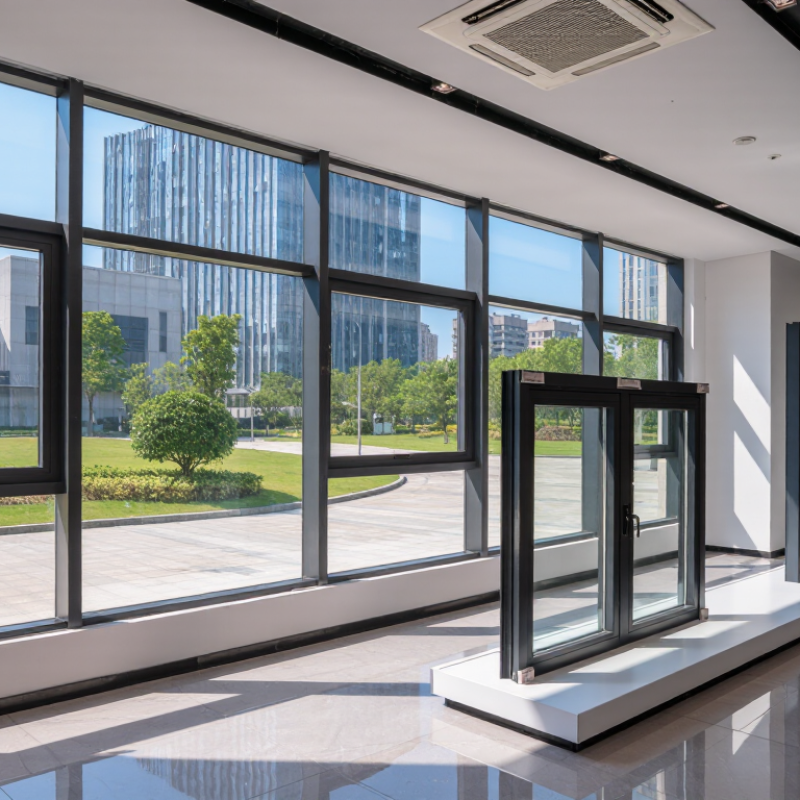
What Low-E Energy-Efficient Windows Are
Low-E means low emissivity: a very thin coating on glass that changes how heat moves through a window. It reflects some infrared heat while letting visible daylight pass.
The U.S. Department of Energy estimates that windows account for about 25–30% of residential heating and cooling energy use. That makes glass choice more than a cosmetic detail.
In winter, a suitable coating can reflect indoor heat back toward the room. In summer, solar-control Low-E glass can reduce heat entering from sunlight. The right performance depends on climate, window orientation, and the full glazing unit—not just the coating.
A west-facing window catching afternoon sun has different needs from a shaded north-facing one. Low-E glass is not necessarily dark or mirror-like.
To compare products, check the National Fenestration Rating Council’s ratings: U-factor measures heat transfer, while solar heat gain coefficient (SHGC) measures admitted solar heat.
Lower U-factor generally means better insulation; a lower SHGC can help limit solar heat. The best balance varies by building and climate. A rating label helps, but installation quality and frame condition matter too.
I would not treat “Low-E” as a guarantee of comfort; poor sealing can still leave a cold draft beside the glass.
How Low-E Coatings Improve Window Performance
Low-E coatings improve window performance by managing heat transfer without making the glass opaque. A microscopically thin metal or metal-oxide layer reflects infrared energy while allowing much visible light through. In winter, it helps keep indoor heat from escaping; in summer, the right coating can limit solar heat entering a room. The U.S. Department of Energy reports that heat gain and loss through windows account for about 25–30% of residential heating and cooling energy use. That is a meaningful share.
Performance depends on more than the coating. Climate, window orientation, frame design, and installation all affect results. A low solar heat gain coefficient can suit a sun-exposed room, while a lower U-factor helps reduce heat flow. The National Fenestration Rating Council’s ratings make these properties easier to compare. ENERGY STAR reports that replacing single-pane windows with certified models can cut household energy bills by about 7–15%; that figure applies to the whole window upgrade, not the coating alone. A useful distinction. For buyers comparing suppliers in China, ask for tested whole-window ratings and coating specifications, not just “low-E” on a brochure. One detail is easy to overlook: a high-performance coating cannot fix poor sealing or a badly fitted frame.
China Top 10 Low E Energy Efficient Window Suppliers - How Low-E Coatings Improve Window Performance
The comparison below presents ten representative low-E window specification profiles rather than named or ranked suppliers. It highlights how glazing choices affect heat transfer, solar gain, and daylight.
Reading the figures: These are indicative ranges, not verified specifications for particular suppliers or products. Whole-window U-factor includes the frame and varies with window size, frame material, glazing design, and test method. SHGC and visible transmittance also depend on the glass and coating selected. Lower U-factor means less heat transfer; lower SHGC means less solar heat enters; visible transmittance indicates how much daylight passes through. Confirm certified product data and local code requirements before specifying a window.
How to Evaluate Low-E Window Suppliers in China
China Top 10 Low E Energy Efficient Window Suppliers
How to Evaluate Low-E Window Suppliers in China
Start with performance evidence, not the glass label. Ask for whole-window U-factor, solar heat gain coefficient, visible transmittance, and air-leakage results. The U.S. Department of Energy estimates that heat gain and loss through windows account for about 25–30% of residential heating and cooling energy use. That makes verified performance more useful than claims about a coating alone. Check whether reports come from an independent, accredited laboratory and match the exact frame, glass build-up, spacer, and dimensions you plan to buy. Small changes matter.
Then test whether the supplier can explain the numbers clearly. Request current test reports, production tolerances, warranty terms, and details about quality checks during fabrication. A sample corner cut can reveal spacer placement and sealant consistency. Ask how the supplier protects glass during shipping; a good specification is little comfort if units arrive chipped. I would still compare results across suppliers carefully. A familiar-looking report may cover a different product configuration. The International Energy Agency’s Buildings report identifies buildings as a major source of global energy demand, but local climate and installation quality shape real savings. Keep that in mind. Don’t rely on a showroom display.
Profiles of China’s Top 10 Low-E Window Suppliers
China’s top Low-E window suppliers differ in glass processing, frame design, and project support. A useful profile looks beyond catalogues: it checks coating options, spacer systems, air leakage testing, and whether performance data matches the finished window. Some manufacturers specialize in large commercial façades; others focus on residential units with thermal-break frames. These distinctions matter. A polished sample is not proof of consistent production.
The International Energy Agency’s 2024 Buildings report estimates that building operations account for about 30% of global final energy use. That makes verified thermal performance more than a sales claim. Compare whole-window U-factors and solar heat-gain figures, not glass-only values. Ask for test reports, production tolerances, and packing details. One weak seal can undermine a good coating. Supplier rankings can look tidy; real procurement is less tidy.
Tips: Request a recent test report for the exact glass-and-frame configuration. Confirm coating orientation, warranty terms, and replacement-glass availability before placing an order. Short questions help. So does a little skepticism.
Low-E Window Thermal Performance: U-Factor Conversion
Lower U-factors indicate less heat transfer through a window. This chart converts reference U-factor values from Btu/(h·ft²·°F) to W/(m²·K) using the factor 5.678. These are conversion examples, not supplier-specific product ratings.
How to Choose a Supplier for Your Project
Choosing a Low-E window supplier starts with your project conditions, not a catalog claim. Share the climate, façade direction, target U-factor, solar heat gain coefficient, frame material, and glass dimensions. A south-facing coastal home may need a different balance than a cold-climate school. Ask how the coating position and spacer system affect the complete insulated glass unit. Numbers matter. Request test reports for the exact configuration, not a similar product with different glass thickness.
Check whether samples, drawings, and performance data arrive before production. Review quality-control steps, lead times, packaging, replacement procedures, and warranty coverage. Ask for references from projects with similar size and weather exposure. A capable supplier should explain trade-offs plainly and flag limits, such as glare or condensation risk. Do not choose on price alone; incorrect dimensions or late delivery can erase the savings. Small details get missed. It is easy to overlook who handles technical questions after shipment, so clarify responsibilities in writing. Compare shop drawings with approved samples before production begins.
Conclusion
This article explains what Low-E Energy Efficient Windows are and how their low-emissivity coatings help manage heat and light. By reflecting selected wavelengths while allowing useful daylight to enter, these windows can support indoor comfort, reduce unwanted heat transfer, and improve a building’s overall energy performance. The article also outlines key factors to consider when evaluating suppliers in China, including product specifications, manufacturing capability, quality control, customization options, communication, and after-sales support.
Profiles of ten suppliers provide a starting point for comparing offerings, while the final section helps readers match a supplier to their project’s needs. Buyers are encouraged to clarify performance requirements, review relevant documentation and samples, assess production and delivery arrangements, and compare the full value of each proposal rather than price alone. Careful evaluation can help project teams make an informed choice for their building type, climate, budget, and installation schedule.