
Engineered for extreme structural loads, high wind pressures, and severe environmental durability. Explore China's leading export-grade aluminum balustrades and facade profiles.
In modern commercial architecture, the procurement of structural railings, glass balustrades, and external metal envelope systems has shifted from mere aesthetic selection to rigorous structural engineering and lifecycle verification. Global developers, façade consultants, and general contractors seeking China's best architectural railings factories & exporters are no longer looking for standard off-the-shelf suppliers. Instead, they require vertically integrated manufacturing partners capable of delivering verified structural load ratings (ASTM E935/E985, CSA A234, BS 6180), low-carbon aluminum alloy extrusions, and complete single-source accountability.
China's manufacturing hub has undergone a massive technological evolution. By combining advanced 5-axis CNC machining centers, automated PVDF powder coating lines, and integrated finite element analysis (FEA) engineering, top-tier Chinese exporters provide unprecedented architectural value. However, mitigating supply chain risks requires a deep understanding of supplier capabilities—ranging from raw billet melting chemistry to structural glass laminated interlayers (SGP/PVB) and full-scale physical mock-up testing.
Eliminate disputes between extruders, glaziers, and installers. Leading Chinese factories control billet casting, profile extrusion, thermal break insertion, CNC milling, and factory glazing under one certified ISO 9001 roof.
Engineered to absorb intense point loads and uniform horizontal pressures. Verified against international building codes including North American IBC/IRC, Canadian NBC, European Eurocodes, and Australian AS/NZS 1170.
From conceptual shop drawings to Revit BIM models, premier manufacturers supply full finite element deflection analysis before profile extrusion, guaranteeing zero field fitment delays.
Selecting the appropriate metal alloy, glass composition, and anchorage system depends heavily on building usage, height, exposure class, and architectural occupancy load. Below is an engineering specification guide compiled by senior structural envelope specialists.
| Railing / System Type | Structural Material Grade | Infill / Panel Specification | Surface Treatment | Design Wind / Impact Load | Ideal Architectural Application |
|---|---|---|---|---|---|
| Frameless Structural Glass Balustrade | Aluminum Base Shoe (6063-T6 / 6005A-T6) | 12mm + 1.52 SGP + 12mm Toughened Laminated Glass | Anodized 25µm / Powder Coated | Up to 3.0 kN/m Line Load | High-Rise Residential Balconies, VIP Stadium Boxes |
| Aluminum Vertical Picket Railing | Extruded Aluminum Alloy 6063-T5 / T6 | Engineered Picket Spacing (<100mm Clear Gap) | AAMA 2605 PVDF Fluoropolymer | 1.5 kN/m Uniform Load | Multi-Family Housing, Commercial Retrofits |
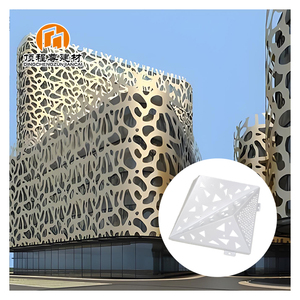
| Laser-Cut Perforated Metal Guard | Solid Aluminum Sheet 3003-H14 (3mm - 5mm) | Custom CNC Perforated Pattern (<50mm Aperture) | Interpon D2525 Super Durable | 2.5 kPa Wind Pressure | Architectural Exterior Podiums, Car Park Screens |
| Stainless Steel Post & Wire System | AISI 316 / 316L Marine Grade Stainless | 7x19 Stainless Steel Wire Rope / Mesh | Satin Polished / Electro-polished | 1.0 kN/m Point Load | Coastal Promenade Walkways, Pedestrian Bridges |
| Hybrid Curtain Wall Railing Integration | Thermally Broken Extruded Aluminum Frame | Low-E Double Insulated Glass + Integrated Spandrel | PPG Kynar 500 3-Coat PVDF | 5.0 kPa Extreme Wind Load | High-Rise Window Wall Slab-Edge Protection |
*Note: All values must be confirmed with factory structural calculations for project-specific seismic, thermal, and wind load combinations.
As global sustainability directives (LEED v4.1, BREEAM, CBAM) and advanced construction technologies reshape building envelopes, Chinese export manufacturers are pioneering several critical innovations:
Leading Chinese factories are adopting hydroelectric-smelted aluminum and post-industrial recycled scrap, reducing the embodied carbon footprint from 18 kg CO2e/kg to under 4.0 kg CO2e/kg. Specifiers earn crucial EPD (Environmental Product Declaration) points for green building certifications.
To combat surging on-site labor costs in North America and Europe, Chinese factories pre-assemble balustrade modules complete with factory-cured silicone sealant and pre-drilled anchorage brackets, reducing site installation time by up to 65%.
Balustrades are no longer passive barriers. Next-generation glass railings integrate micro-thin cadmium telluride (CdTe) or crystalline silicon solar cells within the laminated glass layer, transforming balcony perimeters into clean energy generators.
Integrating the proven manufacturing philosophies of established fenestration leaders—such as in-house extrusion-to-installation control, rigorous air/water/structural testing, and occupied retrofit capabilities—our recommended Chinese export facilities operate on a model of absolute engineering transparency.
Every stage of production—from raw aluminum billet alloy blending, matrix extrusion, T5/T6 artificial aging, top-coat fluoropolymer spraying, glass cutting, tempering, to final unit assembly—is managed in-house to guarantee total quality control.
Export product lines feature modular replacement profiles specifically engineered for suite-by-suite balcony railing and window upgrades in occupied high-rise towers. Turnaround times average less than one working day per suite with zero displacement of residents.
Every shipment includes mill test reports (MTR), glass impact test certifications (ANSI Z97.1 / EN 12600), coating cross-hatch adhesion tests, and full traceably serialized production batches for complete peace of mind.
Clear, definitive answers to complex structural, logistical, and engineering questions frequently asked by overseas procurement managers and architects.
Tier-1 Chinese exporters work with third-party testing agencies such as Intertek, SGS, TUV, and UL. They conduct physical load testing according to ASTM E935 (Permanent Metal Railing Systems), ASTM E985, CSA A234 (Canadian standard), and BS 6180. Before mass production, physical mock-ups are tested in certified laboratories to verify horizontal line loads, concentrated loads, and infill impact resistance.
SentryGlas® Plus (SGP) ionoplast interlayers are 5 times stiffer and up to 100 times tougher than traditional Polyvinyl Butyral (PVB) interlayers. SGP allows frameless glass balustrades to withstand higher wind pressures with thinner glass. Crucially, if both glass panes break, an SGP laminate maintains structural standing integrity, whereas PVB laminates sag and collapse, presenting a safety hazard at height.
For coastal environments within 5 km of saltwater, we strongly recommend either Class I Anodizing (minimum 25-micron thickness) or 70% Fluoropolymer PVDF Coating meeting AAMA 2605 specifications. Standard powder coatings (AAMA 2603) will suffer from filiform corrosion and salt spray degradation within 3 to 5 years.
Export packages utilize custom fumigated heavy-duty plywood crates with steel banding, integrated lifting slots, and corner protection. Glass panels are separated by shock-absorbing cork pads and vacuum sealed with desiccant packs to prevent moisture staining during sea transit. Damage rates remain below 0.1% across thousands of container shipments.
Typical lead times range from 30 to 45 days following approval of shop drawings and BIM submittals. Sample fabrication and die creation for custom aluminum extrusions usually take 10 to 15 days. Deliveries are routinely staged floor-by-floor to match the general contractor's tower erection schedule.
To ensure seamless execution, our partner manufacturing facilities follow a standardized, highly disciplined project delivery framework:
Structural engineers audit project drawings, calculate wind pressure coefficients, select structural alloys, and run finite element stress simulations.
Detailed 2D CAD shop drawings and 3D Revit models are created, specifying connection bracket details, anchor bolt embedment depths, and glass tolerances.
Aluminum billets are extruded, heat-treated to T6 temper, CNC machined with sub-millimeter precision, and finished with AAMA-certified coatings.
Components are test-assembled on factory floor jigs to verify fitment, alignment, and structural torque tolerances before container packing.
Staged shipments arrive at site labeled per floor/zone, complete with installation manuals, hardware packages, and remote engineering field support.
Submit your project elevations, window wall schedules, or structural railing specs. Our engineering estimating team will provide full technical evaluation, budget pricing, and sample packages within 24 hours.