
Precision-engineered architectural glass, thermal barrier curtain walls, and custom metallic facade solutions crafted for global commercial and high-density residential towers.
As global building energy codes tighten toward net-zero operational standards, architectural specifications are shifting rapidly from traditional double glazing to advanced triple glazed insulating glass units (IGUs) paired with thermally broken aluminum profiles.
The core objective of specifying triple pane glass units lies in drastically mitigating conductive, convective, and radiant heat transfer through the transparent envelope. Standard double glazing typically yields an overall thermal transmittance ($U$-value) ranging between $1.4$ to $2.8\text{ W/m}^2\text{K}$. In contrast, China’s premier triple glazing manufacturers leverage dual hermetically sealed cavities, argon/krypton inert gas fills, and dual soft-coat Low-E (Low-Emissivity) sputtered layers to achieve center-of-glass $U$-values as low as 0.60 to 0.78 W/m²K (0.10 to 0.14 Btu/h·ft²·°F).
By positioning Low-E silver coatings on surface #2 (facing the exterior cavity) and surface #5 (facing the interior cavity), thermal radiation is reflected back to its source: blocking solar heat gain during extreme summer cooling months while retaining indoor radiant heat during winter heating cycles. This dual-action performance lowers the overall Solar Heat Gain Coefficient (SHGC) to tailored ranges between $0.25$ and $0.45$, optimizing energy consumption for both commercial skyscrapers and residential towers.
Traditional aluminum box spacers create thermal bridges along the glass perimeter, leading to perimeter dew-point failure and condensation risks during severe thermal differentials. Advanced manufacturing protocol mandates the integration of composite warm-edge spacers—such as TPS (Thermoplastic Spacer), silicone-foam flexible warm edge systems, or stainless-steel hybrid polymer spacers.
These non-metallic spacers reduce thermal conductivity at the glass edge by up to 70%, suppressing perimeter condensation risks and elevating the building envelope’s Condensation Resistance Factor (CRF) above 75. Furthermore, automated dual-seal systems—utilizing primary polyisobutylene (PIB) sealants for vapor barrier integrity and secondary structural silicone or polysulfide for mechanical bond endurance—ensure gas retention rates exceeding 90% over a 30-year operational lifecycle.
Navigating decarbonization mandates, supply chain transparency, and emerging technological integrations over the next decade (2025–2035).
Global procurement standards now prioritize low-carbon float glass produced via electric hybrid furnaces and recycled cullet. B2B buyers require Environmental Product Declarations (EPDs) to calculate whole-life carbon under LEED v4.1 and BREEAM systems.
The convergence of Vacuum Insulating Glass (VIG) with a traditional insulating cavity creates ultra-slim hybrid triple units. Achieving $U$-values below $0.4\text{ W/m}^2\text{K}$ in thin profile depths, this trend is revolutionizing retrofits of landmark glass facades.
Integration of electrochromic dynamic glass into triple-glazed configurations permits automated modulation of light transmission (VLT) and solar heat absorption via building management systems (BMS), optimizing tenant glare comfort dynamically.
To bypass rising field labor costs, developers are procuring factory-glazed, fully unitized curtain wall panels containing integrated triple IGUs, motorized blinds, and perforated aluminum shade fins delivered on a just-in-time site schedule.
Comparative analysis of structural, thermal, and acoustic metrics across standard architectural glazing configurations.
| Glazing Configuration | Center $U$-Value (W/m²K) | SHGC Range | Acoustic Rating (STC / OITC) | Relative Weight Impact | Ideal Application Profile |
|---|---|---|---|---|---|
| Standard Double Monolithic (6+12A+6) | 2.70 W/m²K | 0.65 - 0.75 | STC 31 / OITC 26 | Baseline (1.0x) | Mild Climate Low-Rise Commercial |
| Double Low-E Argon (6+16Ar+6 Low-E) | 1.35 W/m²K | 0.38 - 0.50 | STC 35 / OITC 29 | Moderate (1.0x) | Standard High-Rise Residential |
| Triple Low-E Argon (6 LowE+12Ar+6+12Ar+6 LowE) | 0.72 W/m²K | 0.28 - 0.42 | STC 41 / OITC 34 | +50% Load (1.5x) | Cold Climate / Passive House / Net-Zero |
| Triple Laminated Acoustic (6 LowE+12Ar+4+12Ar+6.76PVB) | 0.68 W/m²K | 0.24 - 0.35 | STC 48 / OITC 40 | +65% Load (1.65x) | Airport / Urban Core High Noise Envelope |
| Hybrid Vacuum Triple (VIG + 12Ar + 6 Low-E) | 0.45 W/m²K | 0.22 - 0.32 | STC 44 / OITC 36 | Compact Weight (1.25x) | Luxury Towers & Historical Retrofits |
Combining vertical integration, stringent laboratory quality control, and comprehensive engineering support to solve complex architectural challenges.
From primary aluminum extrusion billet casting, precision CNC machining, and polyamide thermal break insertion to automated dual-seal insulating glass unit production—every phase operates under unified internal governance, eliminating vendor friction and delay.
Product lines undergo rigorous structural, air infiltration, and water penetration testing in strict accordance with CSA A440, AAMA/WDMA/CSA 101/I.S.2/A440 (NAFS), ASTM E283, ASTM E330, and ASTM E331 standards. Submittal packages include third-party certified test reports.
Specialized expertise in phased suite-by-suite window, door, and balcony glass replacement. Our custom unitized frame designs enable rapid single-day unit turnaround in occupied buildings, minimizing resident disruption and weather exposure risks.
Equipped with advanced 5-axis CNC machining centers, hydroforming tools, and automated powder coating plants capable of producing complex 3D sculptural faceted panels, hyper-durable PVDF coatings, laser-cut perforated sunscreens, and wood-grain sublimations.
Heavy-duty steel A-frame crate packaging with shock-absorbing foam spacers, moisture-proof vacuum wrapping, and desiccated containers ensures zero glass edge chipping or coating degradation during long-distance oceanic freight transport.
Our in-house facade engineering office delivers comprehensive structural calculations, thermal wind-load modeling, structural silicone bite calculations, and Revit BIM model submittals aligned to your project’s exact architectural specifications.
Expert answers to common engineering, commercial, and technical queries regarding Chinese triple glazing procurement.
China’s leading architectural glass manufacturers feature world-class automated processing lines (e.g., Bystronic, Lisec, Glaston) paired with highly integrated supply chains for raw float glass (Glaverbel, PPG, Jinjing, SG). Procurement from top-tier Chinese factories yields substantial cost savings (typically 30% to 45%) without sacrificing quality. Furthermore, Chinese manufacturers offer larger maximum glass sizes (up to 18-meter jumbo lengths), shorter lead times for high-volume orders, and fully certified compliance with North American (ASTM, NAFS) and European (CE, EN 1279) standards.
Adding a third pane of 6mm glass increases the dead load weight of the glazing assembly by approximately 50% (from ~30 kg/m² for double glazing to ~45 kg/m² for triple glazing). This additional weight requires reinforced mullions, heavier structural dead-load anchors, and adjusted glazing pocket widths within the aluminum framing or curtain wall system. Our engineering department provides full structural load distribution analysis to ensure your facade framing safely accommodates the increased dead load and dynamic wind deflection.
Because the middle pane of a triple glazed unit absorbs solar radiation from both adjacent air cavities, it experiences elevated center-of-glass temperatures. To mitigate thermal stress fractures, we recommend heat strengthening or fully tempering the middle pane. Additionally, all glass edges undergo precision automated CNC polishing (flat edge with arris) to remove micro-cracks before thermal processing, ensuring structural resilience against extreme diurnal thermal shocks.
Our factory utilizes automated robot-applied primary polyisobutylene (PIB) sealants combined with secondary structural silicone or polysulfide sealants. Combined with TPS or warm-edge spacers filled with molecular sieve desiccant, our units demonstrate an argon gas leak rate of less than 0.5% per annum under EN 1279-3 testing. This guarantees an operational gas concentration above 80% for over 25 to 30 years.
Upon final shop drawing approval and color sample sign-off, standard manufacturing turnaround ranges from 25 to 35 calendar days depending on batch volume and processing complexity (e.g., custom ceramic frit, lamination, or curved glass). Shipping via heavy-duty ocean freight containers (40ft OT or Open Top for jumbo glass) typically requires 18 to 30 days depending on the destination port. We coordinate door-to-door delivery staging synchronized with your project’s construction erection sequence.
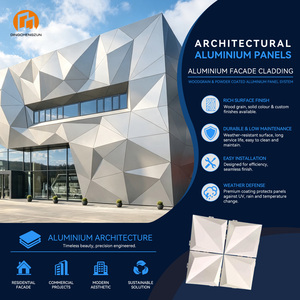
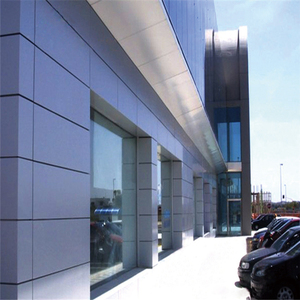
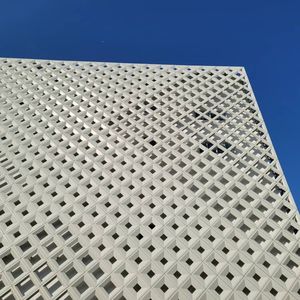
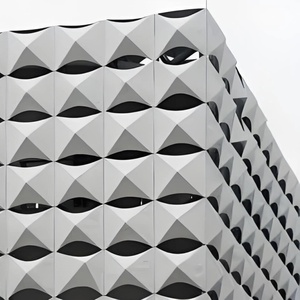
Yes. As a comprehensive building envelope manufacturer, we fabricate matching solid aluminum panels, aluminum composite panels (ACP), perforated laser-cut screens, 3D faceted cladding, and metal louvers under the same roof. Finishing options include PPG Kynar 500 PVDF, anodizing, powder coating, and wood grain sublimations, ensuring uniform color consistency across both vision and spandrel elevations.
Connect directly with our senior architectural glass engineering team for detailed technical consultations, thermal performance simulations, shop drawing reviews, and competitive B2B factory-direct quotations.