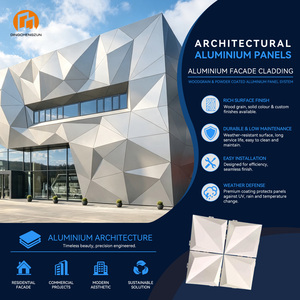

Explore our certified architectural fire protection panels, aluminum cladding, and precision curtain wall systems manufactured under strict international quality controls.
In modern high-density architectural design, fire-rated glazing systems serve a critical dual role: facilitating natural daylight transmission while providing life-saving passive fire containment. As a premiere OEM/ODM Fire Glass Manufacturer & Factory, our engineering core revolves around solving the physical dilemma of transparent silica structures subjected to extreme thermal stress. During a fully developed building fire, ambient temperatures rapidly surpass 1,000°C within the first 60 minutes following the standard ISO 834 and ASTM E119 time-temperature curves. Standard float glass shatters under thermal shock within 1 to 3 minutes due to severe temperature differentials across its surface. Advanced fire glass engineering prevents structural breach, flame propagation, and radiant heat transfer.
Global fire safety codes—including North American standards (UL 9, UL 10B, UL 10C, NFPA 252, NFPA 257, ASTM E119) and European EN standards (EN 1363-1, EN 1634-1, EN 13501-2)—categorize fire-rated glazing into three distinct performance classifications. Understanding these classifications is fundamental for architects, façade engineers, and B2B procurement leaders when specifying products for high-rise commercial structures, institutional facilities, and multi-family residential towers.
Monolithic wired glass or specially processed borosilicate float glass designed to block flames, smoke, and hot toxic gases. Class E prevents flame passage but does not restrict radiant heat transfer through the glass plane.
Advanced clear fire glass that maintains structural integrity while significantly reducing the transmission of radiant thermal energy across the glazing surface, maintaining heat flux below 15 kW/m² at a 1-meter distance.
Multi-laminated glass containing clear intumescent gel interlayers. Under fire conditions, the gel turns opaque, foams into a thick insulated thermal barrier, limiting average unexposed surface temperature rise to < 140°C.
Our manufacturing plant specializes in both monolithic ceramic/borosilicate technologies and multi-layered intumescent gel laminates ranging from 30 minutes (EI30) up to 120 minutes (EI120) of continuous thermal insulation. By integrating single-source framing and glazing manufacturing expertise, we guarantee total assembly integrity under extreme fire conditions.
Vertically integrated production control—from raw profile extrusions and thermal breaking to automated glass lamination and rigorous quality testing.
Our OEM production workflow is tailored for global architectural brands, window systems suppliers, and curtain wall fabricators who require exact dimensional accuracy and certified fire-rated performance.
Collaborating with facade engineering consultants, our internal R&D team develops turnkey fire-rated assemblies, including thermally broken steel and aluminum fire-rated curtain wall framing systems.
Comprehensive benchmark data highlighting physical performance metrics across clear ceramic glass, intumescent laminates, borosilicate 3.3, and standard tempered glass.
| Glazing Technology Type | Fire Classification | Fire Rating Range | Radiant Heat Protection | Hose Stream Test Pass Rate | U-Factor (W/m²K) | STC Acoustic Rating |
|---|---|---|---|---|---|---|
| Standard Tempered Float Glass | Non-Fire Rated | 0 Mins | 0% (Shatters <3 mins) | Failed | 5.7 | 31 dB |
| Monolithic Wired Glass | Class E (Integrity) | 45 - 90 Mins | Low (< 15%) | Passed (45 min) | 5.6 | 32 dB |
| Monolithic Borosilicate 3.3 Glass | Class E / EW | 30 - 120 Mins | Moderate (30-45%) | Passed (90 min) | 5.2 | 34 dB |
| Polished Clear Ceramic Fire Glass | Class E / EW | 45 - 180 Mins | Moderate (40-60%) | Passed (180 min) | 4.9 | 35 dB |
| Intumescent Multi-Layer Laminate (EI) | Class EI (Insulation) | 30 - 120 Mins | High (> 99% Radiation Block) | Passed (120 min) | 2.8 | 42 dB |
| Hybrid Fire-Rated Double Glazed IGU | Class EI + Solar Control | 60 - 120 Mins | High (> 99.5%) | Passed (120 min) | 1.1 (Argon + Low-E) | 46 dB |
*Data verified via standardized ISO 834 / ASTM E119 test furnace calibrations. Custom IGU configurations engineered per project specification.
Analysis of evolving architectural specifications, regulatory directives, and supply chain strategies driving global fire-rated fenestration sourcing.
Global green building certifications (LEED v4.1, BREEAM, WELL) now mandate Environmental Product Declarations (EPDs). B2B buyers are prioritizing OEM factories with low-carbon manufacturing processes, recycled aluminum extrusions, and energy-optimized float glass melting furnaces.
Standalone fire resistance is no longer sufficient. Modern specifications demand multi-performance insulating glass units (IGUs) that unify EI-class fire protection, acoustic reduction (>45 dB STC), extreme hurricane impact resistance, and ultra-low U-factors within a single architectural glazing frame.
To combat rising on-site labor costs and accelerated construction schedules, procurement trends are shifting toward factory-assembled, unitized fire-rated curtain wall panels. Pre-glazed modules arrive on-site ready for crane hoisting, dramatically accelerating site erection timelines.
The intersection of materials science and smart building automation is reshaping passive fire protection systems. As an innovative ODM manufacturer, our research and development initiative is currently pioneering three breakthrough technological frontiers:
Integrating dynamic electrochromic switchable tinting with intumescent fire-rated cores, allowing building envelopes to auto-adjust solar heat gain during normal operation while instantly clearing or opacifying upon receiving fire alarm signals.
Embedding micro-optical fiber sensors within the gel interlayer. These smart sensors monitor real-time thermal gradient anomalies, structural deflection, and UV degradation, transmitting structural health metrics directly to the Building Management System (BMS).
Developing next-generation organic-inorganic hybrid nanocomposite gels. These ultra-thin interlayers reduce overall glass weight by up to 30% while expanding operational UV resilience from -40°C to +80°C without risk of clouding or delamination.
Closing the gap between structural engineering, automated factory fabrication, and strict international code compliance.
We manage every phase: from initial system design and aluminum profile extrusion to thermal barrier insertion, glass lamination, factory glazing, and final export packing. No divided accountability.
Our factory features pilot-scale vertical testing furnaces capable of running standard ISO and UL fire curves up to 4 hours. Every production batch undergoes strict sample destructive testing prior to shipment.
Logistics engineered around your site installation schedule. Products are custom crated, tagged, and delivered in exact sequence to eliminate job-site congestion and double handling risks.
Expert responses to essential technical, regulatory, and sourcing questions asked by architects, facade engineers, and general contractors.
Class E (Integrity only) glass prevents flames, hot gases, and smoke from penetrating the opening for a specified duration (e.g., 60 minutes), but it allows radiant heat to pass through freely. Spontaneous ignition of combustible materials can occur on the unexposed side. Class EI (Integrity + Thermal Insulation) contains intumescent interlayers that react to heat, forming an opaque insulating foam shield that blocks flame, smoke, AND heat radiation, keeping unexposed glass surfaces cool to the touch (<140°C average rise). Class EI is mandatory for egress stairwells, fire escape corridors, and fire compartment walls.
Yes. As a dedicated OEM/ODM manufacturer, we offer fully customized glass sizing up to 3000mm x 2000mm per panel, custom edge profile machining, internal ceramic fritting, and tailored frame integration. We engineer thermally broken aluminum and heavy-duty steel fire-rated framing profiles specifically matched to your project’s aesthetic and structural criteria.
Our fire-rated glass and framing assemblies are tested and certified to major global standards including North American UL 9, UL 10B, UL 10C, NFPA 252, NFPA 257, ASTM E119, Canadian CAN/ULC-S104 / S106, European EN 1363-1, EN 1634-1, EN 13501-2, and British Standards BS 476 Part 22. Certifications and complete laboratory test reports are provided with all OEM contract orders.
Absolutely. We routinely assemble high-performance multi-functional Insulating Glass Units (IGUs). We pair our fire-rated glass pane (intumescent laminate or monolithic ceramic) with Low-E energy efficiency coatings, argon gas filling, warm-edge spacers, and laminated safety glass (PVB/SGP) on the exterior pane to achieve U-factors as low as 1.1 W/m²K alongside superior sound attenuation (STC > 45 dB).
The Hose Stream Test (per UL 10C / ASTM E119) evaluates structural integrity and thermal shock resistance. Immediately following a furnace fire exposure test, the red-hot glass assembly is blasted with high-pressure water from a firefighter’s hose nozzle at 30 psi. Standard toughened glass explodes instantly under thermal shock. Our clear ceramic glass and reinforced intumescent laminated assemblies easily pass the hose stream impact without breach or dislodgement from the frame.
Standard OEM production lead time is typically 2 to 4 weeks post shop drawing approval, depending on panel quantity and complexity. For large-scale multi-phase developments, we execute scheduled containerized deliveries staged elevation-by-elevation to sync perfectly with on-site crane hoisting schedules.
Submit your project elevations, architectural window schedules, or custom OEM specification requirements today. Our senior engineering team will provide rapid technical feasibility reviews, thermal/structural calculations, and direct factory quotation packages within 24 hours.