Custom 3D Faceted Aluminum & Glass Wall Panel System
High-precision 3D geometric sculptural cladding combining structural tempered glass inserts with PVDF-coated aluminum profiles for modern architectural exteriors.
Send an Inquiry
Explore our OEM/ODM custom manufactured tempered glass units, curtain wall assemblies, and structural aluminum facade systems designed to meet international building standards (CSA A440, ASTM C1048, EN 12150).
High-precision 3D geometric sculptural cladding combining structural tempered glass inserts with PVDF-coated aluminum profiles for modern architectural exteriors.
Send an Inquiry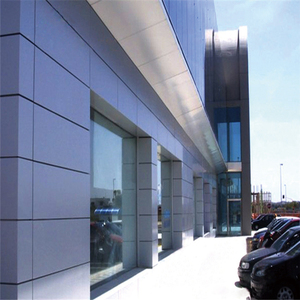
Weather-resistant exterior cladding engineered with fire-rated cores, anti-UV coatings, and high-impact structural resistance for mid-rise & high-rise envelopes.
Send an Inquiry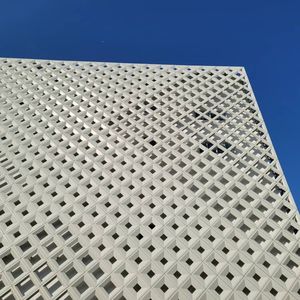
CNC precision-engineered perforated panels integrated with thermal-break glass glazing for solar shading and high-performance exterior wall systems.
Send an Inquiry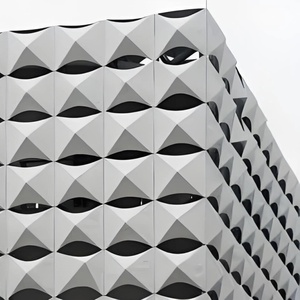
Eco-friendly, fireproof unitized glass curtain wall panels engineered for shopping malls, commercial centers, and institutional headquarters.
Send an Inquiry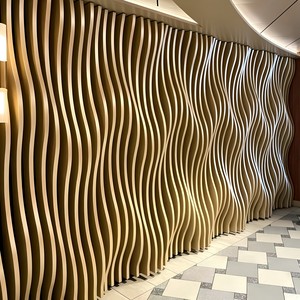
Bespoke curved glass and metallic facade assemblies combining natural aesthetic finishes with structural safety glass performance for modern landmarks.
Send an Inquiry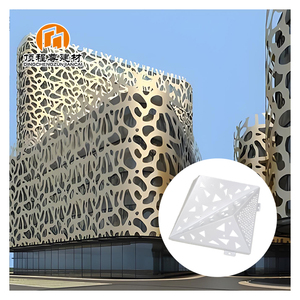
Customizable modern exterior fenestration with high STC sound insulation, optimized U-factor thermal control, and severe wind-load resistance.
Send an Inquiry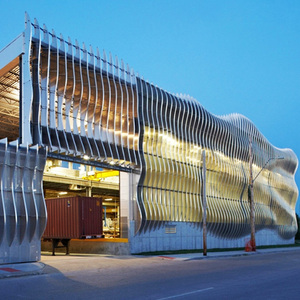
Next-generation kinetic building envelope featuring moving aluminum louvers paired with triple-glazed tempered glass units for dynamic solar management.
Send an Inquiry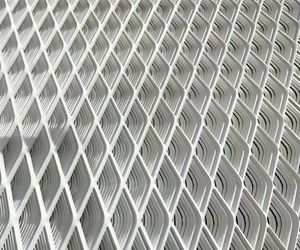
Heavy-duty outdoor architectural mesh combined with heat-strengthened laminated safety glass for security, ventilation, and dramatic lighting aesthetics.
Send an InquiryIn modern commercial architecture, the glass envelope is no longer merely a transparent barrier; it is an active, engineered thermal and structural shield. As global building codes enforce stricter energy conservation targets (such as ASHRAE 90.1, Canada National Building Code, and EU EPBD directives), civil contractors, facade engineers, and developers require uncompromising quality control, precise OEM customization, and verifiable E-E-A-T credentials from glass fabricators and exporters.
This industry document outlines the critical manufacturing standards, procurement methodologies, material engineering specifications, and technical trends shaping high-rise, mid-rise, and commercial glass fenestration today.
Eliminating fragmentation between glass processing, extrusion fabrication, submittals, and on-site delivery.
Our dedicated engineering department produces full shop drawings, structural wind-load calculations, thermal modeling (U-Factor, SHGC, CRF), and anchoring submittals tailored to architectural specifications prior to glass cutting or thermal tempering.
Spontaneous breakage caused by Nickel Sulfide (NiS) inclusions in tempered glass is a major liability for high-rise elevations. Our automated EN 14179-compliant Heat Soak Testing furnaces subject all tempered panels to rigorous thermal cycles, virtually eliminating field failure risks.
With decades of field experience in mid-rise and high-rise envelope replacement, our OEM glass solutions support suite-by-suite installation. We custom-engineer replacement unit dimensions to allow single-day unit turnover without displacing occupants.
All safety glass products, insulated glass units (IGU), and curtain wall assemblies are tested for air infiltration, water penetration resistance, and structural integrity under extreme wind pressures according to CSA A440, AAMA/WDMA/CSA 101/I.S.2/A440 (NAFS), and SGCC requirements.
From glass tempering and ceramic fritting to aluminum frame integration and seaworthy export packing, controlling 100% of production under one roof prevents supplier disputes and guarantees floor-by-floor site delivery alignment.
By pairing ultra-clear low-iron float glass with double-pass Low-E coatings, warm-edge spacers, and recyclable aluminum framing profiles, our custom glass packages significantly reduce long-term operational carbon emissions for LEED-certified projects.
Standard engineering parameters for international project tenders and OEM customization.
| Specification Category | Technical Capabilities & Parameters | International Standard Compliance |
|---|---|---|
| Glass Thickness Range | 4mm, 5mm, 6mm, 8mm, 10mm, 12mm, 15mm, 19mm monolithic; custom laminated buildups up to 60mm | ASTM C1048, EN 12150, BS 6206 |
| Max Tempering Dimensions | 3300mm × 12000mm (Jumbo format processing for structural curtain walls & fins) | ISO 9001, SGCC Certified |
| Edge Finish Options | Flat polished edge, arris edge, pencil edge, bevel edge, CNC complex shape grinding | DIN 1249 Standard tolerances |
| Insulating Unit Configurations | Double Glazed (IGU), Triple Glazed, Vacuum Insulated Glass (VIG), Argon gas fill 90%+ | IGCC / IGMA Certified, EN 1279 |
| Specialty Treatments | Ceramic frit spandrel printing, anti-reflective coating, hydrophobic self-cleaning, low-iron clarity | ASTM C1048 / EN 14179 HST |
| Lamination Interlayers | PVB (Polyvinyl Butyral), SGP (SentryGlas® Structural Interlayer), EVA acoustic dampening films | ANSI Z97.1, CPSC 16 CFR 1201 |
Key technological developments and purchasing criteria driving the international facade market.
Commercial procurement is rapidly shifting from conventional double glazing to ultra-thin Vacuum Insulated Glass (VIG). Achieving U-factors below 0.60 W/m²K (U-0.10 Btu/h·ft²·°F) in profiles under 10mm thickness, VIG eliminates the need for bulky triple-glazed frames while providing superior center-of-glass thermal resistance.
Structural engineers and global buyers increasingly mandate SentryGlas® (SGP) interlayers for tempered glass balcony railings and frameless curtain wall fins. Unlike standard PVB, SGP interlayers offer 5 times the tear strength and 100 times the rigidity, ensuring the glass panel remains upright and load-bearing even in the event of double-pane fracture.
Modern developers are transforming passive exterior spandrels into active power-generating assets. OEM exporters offering BIPV-integrated tempered glass panels allow facades to generate clean electricity while maintaining sleek, uniform architectural aesthetics. Furthermore, electrochromic smart glass—capable of dynamically tinting based on solar irradiance—is becoming standard in Grade-A office developments.
Procurement departments in North America, Europe, and Australia now require third-party verified EPDs documenting the embodied carbon of float glass manufacturing, tempering electricity consumption, and frame extrusion recycling percentages. Partnering with zero-waste, energy-efficient glass fabricators is essential to meeting project sustainability benchmarks.
Understanding the transition in structural engineering and thermal management.
Urban density demands higher Sound Transmission Class (STC) ratings. Modern OEM glass manufacturing achieves STC values exceeding 45 dB by pairing asymmetrical glass panel thicknesses (e.g., 8mm tempered outdoor pane + 6mm acoustic laminated indoor pane) with gas-filled air cavities, dramatically muffling low-frequency transit and aircraft noise.
The manual handling of glass is being replaced by robotic glass cutting lines, automated double-edge grinding machines, and continuous furnace feeding. This guarantees edge quality free of micro-cracks, which are the primary initiation points for thermal stress fractures in heat-treated architectural glass.
Representative mid-rise, high-rise, and commercial envelope developments executed under strict performance oversight.
Direct technical guidance for facade consultants, general contractors, and overseas buyers.
Fully Tempered glass undergoes rapid thermal cooling, giving it 4 to 5 times the mechanical strength of annealed glass and breaking into small, blunt dice-like fragments (safety glass). Heat-Strengthened glass cools more slowly, yielding 2 times the strength of annealed glass. Heat-strengthened glass is preferred for vision curtain wall applications where optical distortion (roller wave) must be minimized and post-breakage pane retention is required, whereas fully tempered glass is required for safety balustrades and doors.
Float glass raw material can naturally contain microscopic Nickel Sulfide (NiS) inclusions. When glass is tempered, these inclusions undergo a phase transformation. Over time in a building elevation, solar heating can trigger NiS expansion, causing spontaneous glass explosion without external impact. Heat Soak Testing (HST) per EN 14179 artificially heats tempered glass to 290°C for several hours to force defective panels to break inside the factory chamber before export shipment.
Low-Emissivity (Low-E) coatings consist of microscopically thin metallic silver layers applied to float glass. They selectively allow visible light to pass while reflecting long-wave infrared thermal energy (heat). Solar control Low-E coatings reduce Solar Heat Gain Coefficient (SHGC) during summer cooling months, while passive Low-E coatings trap indoor furnace heat inside during cold winter months, significantly reducing HVAC operational costs.
All OEM glass exports are packed in custom heavy-duty plywood crates with inter-layer anti-frictional mildew powder or cork pads. Crates are vacuum-sealed with desiccant packs to prevent atmospheric moisture condensation during ocean transit, which can etch uncoated glass surfaces. Crates are reinforced with steel bands and designed for crane and forklift container unloading on site.
Yes. Our in-house engineering team works directly from structural architectural plans to produce detailed shop drawings, glass stress analysis, wind load calculations, edge stress verifications, and thermal performance schedules ready for architect approval and local building authority permits.
Standard custom tempered and insulating glass production cycles are completed within 14 to 21 days following final shop drawing approval and deposit receipt. Staggered containers or floor-by-floor site erection deliveries are scheduled according to construction site progress.
Submit your project specifications, architectural elevations, or tender schedules. Our technical engineering team will review your U-factor requirements, structural load profiles, and deliver an accurate OEM quote.