Top China Aluminum Extrusions Suppliers & Exporters

Architectural & Industrial Extrusion Solutions: Engineering Rigor, Advanced Surface Metallurgy, and Global Supply Chain Integration

High-Performance Portfolio

Featured Architectural Aluminum Extrusions & Facade Systems

Engineered for extreme structural loads, precise thermal performance, and long-term aesthetic durability. Explore our top-tier extruded profiles, unitized cladding assemblies, and custom architectural systems supplied to international commercial developments.

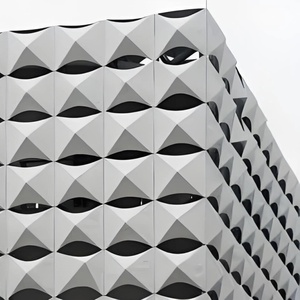
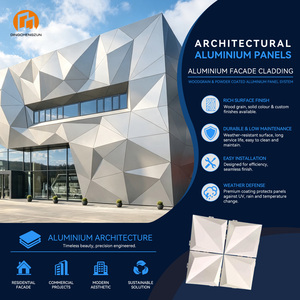
Custom 3D Faceted Aluminum Wall Panel Sculptural Facade Cladding System

Custom 3D Faceted Aluminum Wall Panel Sculptural Facade Cladding System for Modern Architecture Exterior

Precision multi-axis CNC bent and extruded structural sub-frames. Features high-durability fluoropolymer PVDF coating designed for complex geometric exterior dynamic envelopes.

Inquire Now
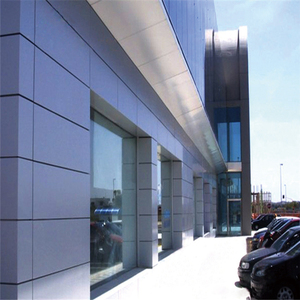
Alucobond 4mm Pvdf Acm Acp Facades Exterior Wall Cladding

Alucobond 4mm Pvdf Acm Acp Facades Ceiling Outdoor Indoor Partition Exterior Wall Cladding Aluminum Composite Panel Material

Commercial grade 4mm ACM panel with heavy-gauge aluminum skins, mineral-filled fire-retardant core, and 70% Kynar 500 PVDF finish for weatherability.

Inquire Now
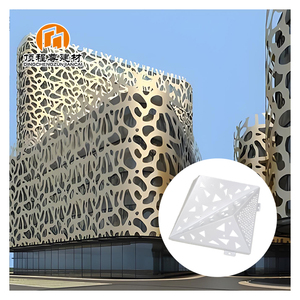
Custom Laser Cut Aluminum Facade Panels External Wall Panel

Custom Laser Cut Aluminum Facade Panels External Wall Panel for Curtain Walls High Quality External Metal Wall Cladding

Computer-guided high-precision laser-perforated structural panels integrated with continuous extruded aluminium carrier channels for ventilated facade systems.

Inquire Now
Large Exterior Wall Cladding Panels Aluminum Alloy Curtain Walls Facade System

Large Exterior Wall Cladding Panels Aluminum Alloy Curtain Walls Facade System Shopping Mall Decoration Eco-Friendly Fireproof

Heavy-duty aluminum extrusion framing systems engineered to satisfy rigid ASTM E330 structural wind loading requirements for high-span retail & commercial facades.

Inquire Now
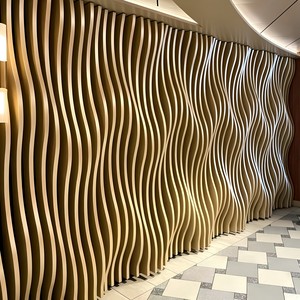
Custom Wood Grain Curved Aluminum Facade Panels

Custom Wood Grain Curved Aluminum Facade Panels for Exterior Wall Cladding and Decoration

Architectural roll-curved extruded profiles featuring heat-transfer sublimated wood-grain finishes. Offers organic wood aesthetics with zero maintenance and Class A fire rating.

Inquire Now
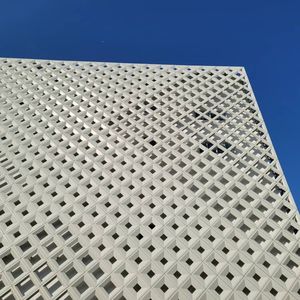
Perforated Aluminum Curtain Walls Metal Aluminum Panel

Customizable Modern Design Perforated Aluminum Curtain Walls Metal Aluminum Panel Hotel Facades Panel Wall Cladding

Solar shading architectural screen systems engineered from extruded 6063-T5 aluminum framing. Optimizes building envelope energy efficiency and acoustic dampening.

Inquire Now
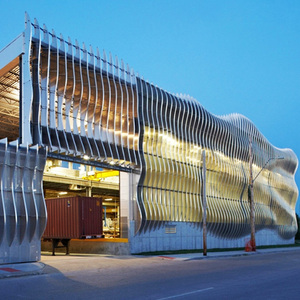
Building Aluminum Corrugated Wall Panel Exterior Kinetic Facade

Building Aluminum Corrugated Wall Panel Exterior Aluminum Curtain Wall Profile System Aluminum Wall Cladding Kinetic Facade

Roll-formed and extruded corrugated structural profiles. Designed for dynamic kinetic facade articulation, optimized rain-screen ventilation, and structural rigidity.

Inquire Now
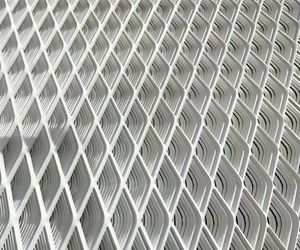
Outdoor Decorative Perforated Expanded Metal Mesh Facade Cladding

Modern Outdoor Decorative Perforated Expanded Metal Mesh Facade Cladding Curtain Wall Aluminum Alloy

Expanded structural mesh screens mounted on extruded structural perimeter channels. Provides high strength-to-weight ratio, dynamic lighting diffusion, and ventilation.

Inquire Now
10,000+
Die Tooling Shapes In-Stock
±0.1mm
Precision CNC Extrusion Tolerance
CSA A440
North American Tested Standards
25-Year
PVDF Finish Warranty Guarantee
Technical Metallurgy & Engineering Guide

Evaluating China's Top Aluminum Extrusion Manufacturers

An engineering deep-dive for procurement directors, facade consultants, and structural engineers specifying industrial and architectural aluminum extrusions from tier-1 Chinese exporters.

Alloy Selection & Temper Optimization

Securing maximum structural integrity starts with selecting the precise aluminum alloy matrix. For architectural applications—such as curtain wall mullions, entrance framing, and window extrusions—6063-T5 and 6063-T6 represent the industry standard due to their exceptional extrudability, surface smoothness, and anodizing response.

When structural load-bearing parameters dominate—such as high-span glass fins, unitized curtain wall anchors, or solar racking profiles—6061-T6 and 6082-T6 alloys yield yield strengths exceeding 240 MPa. Leading Chinese exporters utilize continuous homogenizing furnaces for billets to eliminate segregation defects, ensuring uniform grain structure during matrix extrusion.

Advanced Surface Metallurgy & Finishing

In coastal, industrial, or high-UV environments, surface degradation is the primary failure vector for exterior architectural profiles. World-class aluminum extrusion factories integrate automated vertical anodizing lines capable of delivering Qualanod Class I (20-25µm) coatings resistant to salt-spray corrosion for over 3,000 hours (ASTM B117).

For color consistency across massive commercial developments, 3-coat fluoropolymer 70% Kynar 500 PVDF (Polyvinylidene Fluoride) coatings compliant with AAMA 2605 specifications provide unmatched resistance to chalking, color fading, and environmental chemical attack.

Thermal Barrier & Energy Efficiency Engineering

Modern energy codes—including ASHRAE 90.1, IECC, and Canadian SB-10—mandate stringent building envelope U-factors. Modern aluminum extrusions eliminate thermal bridging by integrating polyamide (PA66-GF25) structural insulation strips via mechanized crimping.

By separating interior and exterior extruded aluminum profiles with 25% glass-fiber reinforced polyamide struts, thermal conductivity is reduced from 200 W/m·K (solid aluminum) down to less than 0.3 W/m·K across the thermal isolation zone, preventing internal condensation and boosting total window assembly thermal ratings.

Comparative Data Matrix

Architectural & Structural Extrusion Alloy Specifications

Review the physical parameters, mechanical benchmarks, and recommended architectural applications across primary extrusion alloys produced by leading Chinese exporters.

Alloy & Temper Tensile Strength (MPa) Yield Strength (MPa) Elongation (%) Corrosion Resistance Primary Architectural / Industrial Use
6063-T5 ≥ 150 ≥ 110 8% Excellent Window frames, door profiles, light curtain walls, interior decorative trims.
6063-T6 ≥ 205 ≥ 180 8% Excellent Balcony railings, structural window walls, commercial entrance framing.
6061-T6 ≥ 290 ≥ 240 10% Very Good Structural curtain wall mullions, solar racking, heavy machinery frames, structural walkways.
6082-T6 ≥ 310 ≥ 260 10% Very Good High-stress structural components, bridges, offshore architectural applications.
6005A-T6 ≥ 270 ≥ 225 8% Excellent Railway passenger cars, structural tubes, heavy building facade reinforcement.
Market Intelligence

Emerging Development Trends in Aluminum Extrusion

Discover how technological shifts in manufacturing, alloy micro-structure manipulation, and automated processing are reshaping global extrusion procurement.

1. Precision Deep CNC Machining Integration

Global buyers are shifting away from raw profile procurement toward ready-to-assemble fabricated components. Premier suppliers offer 5-axis CNC machining centers capable of milling, drilling, tapping, and notch-bending extrusions up to 7.5 meters in a single setup.

This eliminates secondary field processing errors, reduces job-site labor requirements by up to 40%, and ensures seamless alignment during curtain wall field installation.

2. Unitized Facade Prefabrication & Modular Systems

Accelerated construction schedules are driving the adoption of factory-assembled unitized curtain wall profiles. Extrusion suppliers now manufacture pre-mitered, thermally isolated, and gasketed frame modules.

These profiles incorporate continuous EPDM weather-stripping channels and interlocking stack joints designed to absorb floor-to-floor structural live loads and seismic displacement.

3. Smart Photovoltaic (BIPV) Extrusion Sub-structures

With net-zero building directives taking effect globally, extrusion profiles are being engineered specifically to house Building-Integrated Photovoltaic (BIPV) electrical harnesses within internal profile cavities.

These multi-functional extruded shapes double as structural facade glazing mullions and weather-tight electrical conduits, satisfying both structural ASTM E330 and electrical safety standards.

Strategic Sourcing

Future Procurement Trends: Carbon Border Compliance & TCO

How forward-thinking procurement teams manage risk, reduce Total Cost of Ownership (TCO), and satisfy international carbon auditing mandates.

Decarbonization & Green-Pass Eco-Aluminum

With the implementation of the European Union's Carbon Border Adjustment Mechanism (CBAM) and global ESG reporting requirements, the carbon footprint of primary aluminum smelting has become a critical procurement variable.

Top Chinese suppliers are transitioning to hydro-powered smelting and utilizing up to 75% post-industrial recycled scrap content, lowering embodied carbon from 16 kg CO2/kg Al down to under 4 kg CO2/kg Al without compromising mechanical tensile purity.

Total Cost of Ownership (TCO) & Tooling Amortization

Evaluating suppliers purely on per-ton billet pricing frequently leads to budget overruns caused by die failure, surface rework, or shipping damage. Enterprise procurement strategies now focus on Total Cost of Ownership (TCO).

By partnering with Tier-1 manufacturers that provide in-house die design, automated extrusion speed control, and multi-stage quality gates, buyers achieve 99.4% first-pass acceptance rates and fully amortize custom die costs over production runs exceeding 5 metric tons.

Digital Twin QC & Automated Laser Profilometry

Quality assurance in high-volume extrusion export is evolving from manual caliper sampling to continuous inline 3D laser profilometry. Advanced extrusion presses are monitored by optical sensors that measure cross-sectional tolerances against CAD master files in real time.

Out-of-tolerance profiles are flagged and removed instantly, guaranteeing strict compliance with EN 755-9 and EN 12020 dimensional tolerance requirements prior to aging oven treatment.

Manufacturing Authority

Single-Source Control: From Extrusion Billet to Site Installation

Eliminate multi-vendor friction, divided accountability, and delivery delays with vertically integrated manufacturing and engineering.

In-House Die Engineering & Metallurgy Control

Our manufacturing footprint encompasses a complete vertical integration model. We control every variable—starting from high-purity aluminum billet alloy casting and custom die design through to 3500-ton hydraulic press extrusion, precision heat-treatment aging, and custom CNC fabrication.

Rigid North American & European Standards Compliance

Products are fully engineered and tested to satisfy CSA A440, AAMA-NAFS, ASTM E330, and EN 13830 standards. Every shipping lot is delivered with complete Material Test Certificates (MTC to EN 10204 3.1), detailing chemical composition, yield strength, tensile elongation, and anodizing/coating film thickness test results.

Specialized Occupied Building Retrofit Capability

Beyond new construction commercial supply, our specialized engineering units support occupied building window, door, and facade retrofits. We supply pre-glazed, thermally broken extrusion assemblies packed in staged floor-by-floor sequences—enabling rapid suite-by-suite replacement without tenant displacement.

Clear Answers

Frequently Asked Technical & Procurement Questions

Expert guidance addressing the common commercial, technical, and logistical inquiries raised by international B2B buyers.

What minimum order quantities (MOQ) apply for custom die profiles vs. standard shapes?

For standard, existing extrusion dies (such as standard structural angles, tubes, or channels), our standard MOQ starts at 500 kg per section. For custom-engineered architectural profiles requiring dedicated tooling, the initial die development fee applies, but die costs are fully refunded once cumulative order volumes exceed 5 metric tons. Production lead times for custom dies typically range between 7 to 10 working days, with sample approval within 5 days post-extrusion.

How do you ensure color uniformity across multi-container PVDF coating orders?

Color batch consistency is maintained using computer-controlled spectrophotometer readings (Delta E < 0.5) against master color samples. All aluminum profiles for a single project elevation are coated in continuous production runs using premium AkzoNobel or PPG 70% Kynar 500 fluoropolymer resins. Furthermore, pre-treatment conversion coatings utilize chromium-free zirconium systems to ensure maximum coating adhesion complying with AAMA 2605 testing protocols.

What dimensional tolerance standards govern your aluminum extrusion manufacturing?

All extrusions are produced in strict accordance with EN 755-9 and EN 12020 (Precision Tolerances) specifications, as well as ASTM B221 standards. Standard cross-sectional tolerances are maintained within ±0.15mm for critical mating channels. For high-precision unitized curtain wall assemblies requiring tighter joints, high-precision laser-calibrated dies guarantee tolerances as tight as ±0.08mm.

How are finished aluminum profiles protected against damage during ocean transit?

Finished profiles undergo multi-layer protective packaging. Individual profiles are layered with heat-shrink protective polyethylene film or interleave paper. Bundles are wrapped in heavy-duty waterproof woven fabric, reinforced with edge-corner guards, and loaded into fumigated ISPM-15 compliant wooden crates or steel-framed export racks. Bundles are organized floor-by-floor to streamline site un-crating and minimize handling damage.

Can your factory provide complete shop drawings and structural wind-load engineering?

Yes. Our in-house engineering department consists of 35+ facade structural engineers equipped with advanced FEA (Finite Element Analysis) software. We review architectural elevation drawings, perform wind load calculations per local building codes, generate detailed CAD shop drawings, and provide thermal performance calculations (U-factor, CRF, SHGC) prior to releasing extrusion dies for manufacturing.

Ready to Optimize Your Aluminum Extrusion Procurement?

Submit your CAD drawings, profile specifications, or project tender documents. Our engineering team provides comprehensive DFM (Design for Manufacturing) reviews, alloy optimization, and competitive factory-direct pricing within 24 hours.

Inquire Now