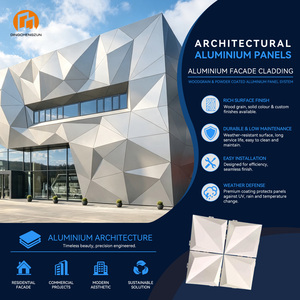

Engineered for compliance with Hungarian Building Regulations (TNM / ÉKM directives) and EU Energy Performance Standards (EPBD).
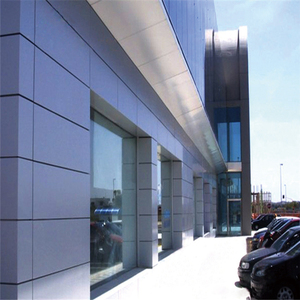
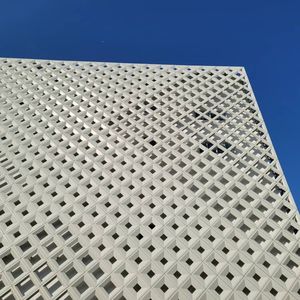
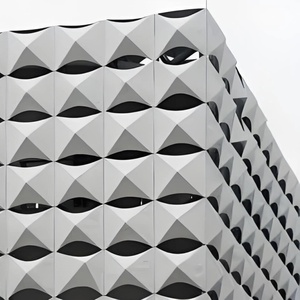
Hungary’s geographic position in Central Europe subjects its architectural envelope design to rigorous environmental demands. Characterized by a continental climate featuring severe winter freezes and hot, dry summers, the Hungarian building sector enforces strict thermal insulation, structural integrity, and fire safety mandates. Driven by the European Union’s revised Energy Performance of Buildings Directive (EPBD) and Hungary’s updated national building regulations (7/2006. TNM & 9/2023. ÉKM directives), architectural requirements for commercial, industrial, and multi-family developments have reached an unprecedented level of precision.
As general contractors, architectural consultants, and facade engineers across Budapest, Debrecen, Szeged, and Győr strive to fulfill Nearly Zero Energy Building (NZEB / Közel nulla energiaigény) targets, selecting the appropriate aluminum fenestration and structural cladding manufacturer becomes a critical strategic decision. Standard uninsulated or low-spec aluminum profiles no longer satisfy legal insulation limits. Today’s projects demand advanced multi-chamber polyamide thermal breaks, warm-edge spacers, Low-E triple glazing, and non-combustible A2-rated architectural aluminum panel systems.
Our manufacturing division provides Hungarian real estate developers and procurement managers direct access to high-precision aluminum extrusion, custom CNC sheet fabrication, architectural PVDF finishing, and engineered curtain wall systems. By combining single-source factory accountability with complete CE documentation (EN 14351-1 and EN 13830 standards), we bridge the gap between complex architectural intent and rapid on-site installation across the Hungarian market.
Tailored structural configurations designed to meet regional microclimates, urban zoning guidelines, and functional building typologies.
Renovating heritage and mid-century multi-family buildings in central Budapest requires balancing strict architectural heritage protection with modern energy conservation codes.
Modern Class-A office buildings and corporate centers require unitized stick-built curtain walls and dynamic kinetic facades that maximize daylighting while mitigating solar thermal gain.
The rapid expansion of automotive, battery manufacturing, and logistics plants in Debrecen and Győr calls for ultra-durable, fireproof, and low-maintenance envelope panel systems.
Waterfront villas and boutique hotels along Lake Balaton demand expansive panoramic openings that resist severe wind shifts and high summer humidity levels.
Understanding the statutory, environmental, and design shifts driving aluminum specification in Central Europe.
Following recent updates to Hungarian building regulations, all new constructions must meet NZEB energy benchmarks. Envelope specifications now demand whole-window thermal transmittance ($U_w$) values below $1.0\text{ W/m}^2\text{K}$. Our multi-cavity thermally broken profiles utilize high-density polyisocyanurate (PIR) foam inserts and 34mm polyamide isolators to comfortably surpass these standards.
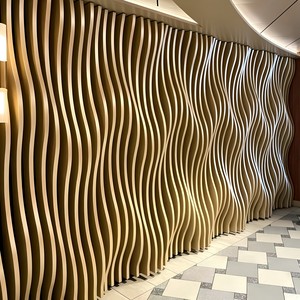
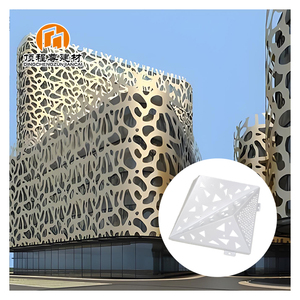
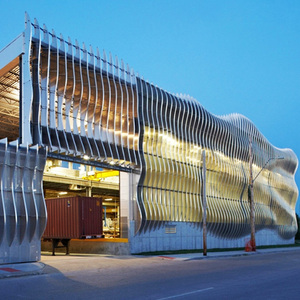
Architectural firms in Budapest are moving away from flat glass box designs toward dynamic visual textures. Sculptural 3D faceted panels, kinetic moving facade modules, and customized laser-cut aluminum sheets allow developers to create landmark signatures while actively managing building shading and natural ventilation.
With thousands of post-war apartment structures undergoing deep energy retrofits under municipal green funding programs, there is high demand for replacement aluminum windows and balcony enclosure systems that can be installed quickly without disrupting tenant residency.
Selecting fenestration systems requires matching physical performance metrics with local building codes. Below is a comprehensive engineering comparison of our aluminum fenestration and structural facade systems formatted for architectural specifiers and structural engineers.
| System Type | Frame Profile Tech | Thermal Transmittance (Uw) | Sound Insulation (Rw) | Wind Load Class (EN 12210) | Fire Reaction Rating |
|---|---|---|---|---|---|
| Passive Thermally Broken Windows | 34mm PA66 Polyamide Break + PIR Insulation | 0.78 - 0.95 W/m²K | Up to 45 dB | Class C5 (2000 Pa) | B-s1, d0 / Non-combustible frame |
| Structural Unitized Curtain Wall | Pressure Plate / Structural Silicone Seal | 1.0 - 1.2 W/m²K | Up to 48 dB | Class E2400 (2400 Pa) | EI 60 / EI 120 Fire Stop Rated |
| 3D Faceted & Solid Wall Panels | 2.5mm - 4.0mm High-Grade AA3003 Aluminum | N/A (Rain-Screen Rainscreen) | N/A (Vapor permeable) | Class C4 / Custom Sub-frame | Class A2-s1, d0 (EN 13501-1) |
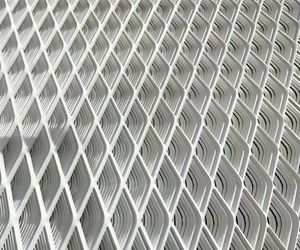
| Laser-Cut Perforated Facade Screens | Custom Perforated Aluminum Alloy Sheets | Solar Shading (g-value mitigation) | Diffuses air velocity | Engineered Sub-construction | Class A1 (Non-combustible) |
| Heavy-Duty Commercial Sliding Doors | Lift & Slide Multi-Lock Track System | 0.90 - 1.1 W/m²K | Up to 41 dB | Class C4 (1600 Pa) | Standard Architectural Grade |
* Note: Thermal performance values ($U_w$) are derived in accordance with EN ISO 10077-1 using Low-E triple insulating glass units ($U_g = 0.5\text{ W/m}^2\text{K}$, Argon 90%, Warm-Edge Swisspacer).
Eliminating supply chain fragmentation through vertically integrated production, rigorous QA testing, and seamless export logistics to Central Europe.
Unlike assemblers dependent on third-party suppliers, we maintain complete control over raw alloy selection (AA6063-T5/T6), extrusion die engineering, polyamide thermal strip insertion, and automated EPDM gasket integration.
Every fenestration batch shipped to Hungary carries full CE Marking backed by factory production control (FPC) audit documentation. We provide certified initial type testing (ITT) reports for air permeability (EN 12207), watertightness (EN 12208), and resistance to wind load (EN 12210).
To eliminate maritime and overland transport damage, all unitized frames, glass panels, and cladding sheets are packed in heavy-duty steel A-frames or fumigated wooden crates. Containers are routed directly through European freight hubs (such as Koper or Hamburg) straight to job sites across Hungary.
Addressing technical compliance, import logistics, custom fabrication, and warranty terms for project managers.
Yes. All of our aluminum fenestration and facade products meet EU standards (EN 14351-1 for windows and doors; EN 13830 for curtain walling), allowing seamless compliance with Hungary’s national building codes (7/2006. (V. 24.) TNM and 9/2023. ÉKM rendelet). Full CE declaration documentation, U-value calculation sheets, and acoustic test reports are supplied with every order submittal package.
Our multi-chamber thermally broken profile series incorporate 34mm polyacrylamide structural breaks, insulated perimeter cavity foams, and triple Low-E argon glass combinations. This engineering achieves overall window thermal transmittance values ($U_w$) down to $0.78\text{ W/m}^2\text{K}$, easily satisfying Hungary’s stringent Nearly Zero Energy Building (NZEB) requirements.
We provide comprehensive FOB, CIF, or DDP (Delivered Duty Paid) shipping solutions. Products are packed in reinforced, weather-sealed steel stillages and sea-freighted directly to key European logistics hubs (such as the Port of Koper or Hamburg), from where they are transported via overland heavy trucking directly to your construction site in Budapest, Debrecen, or any regional municipality in Hungary.
Absolutely. We operate advanced 5-axis CNC machining centers, automated laser cutting tables, and CNC hydraulic bending machinery. Our engineering team converts your DWG/BIM structural models directly into shop production files, ensuring custom 3D faceted panels, wood-grain curved shapes, or perforated screens align with job site sub-structure tolerances.
Our solid aluminum cladding plates and fire-retardant aluminum composite panels meet European Class A2-s1,d0 and Class A1 non-combustibility standards (EN 13501-1). These ratings comply fully with Hungary’s National Fire Safety Code (OTSZ) requirements for high-rise residential buildings, public institutions, and commercial centers.
Standard profile fabrication and thermal assembly typically require 3 to 4 weeks following final shop drawing and engineering sign-off. Surface finishing (powder coating or PVDF) and glass unit integration require an additional 1 to 2 weeks. Transit time to Hungarian site locations averages 25 to 35 days depending on final freight routing.
Submit your architectural elevations, tender documents, or structural facade requirements. Our engineering estimation team will provide comprehensive technical submittals, thermal calculations, and competitive factory-direct pricing within 24 business hours.
Send an Inquiry