Custom-engineered exterior architectural railings, perforated facade louvers, kinetic cladding, and high-performance aluminum systems certified to international building codes.
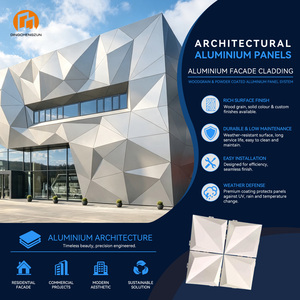
Parametric geometric metal envelope system engineered for extreme solar shading, wind load resistance, and iconic visual depth in modern urban architecture.
Send an Inquiry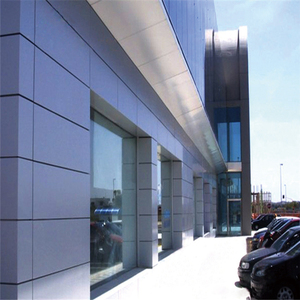
Heavy-duty fire-rated composite panel system featuring 70% Kynar 500 PVDF fluoropolymer coating for maximum UV and salt-spray defense along coastal zones.
Send an Inquiry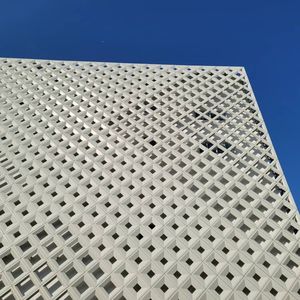
Precision CNC-perforated architectural screening panels combining traditional neo-Moroccan geometric motifs with high-performance solar heat reduction.
Send an Inquiry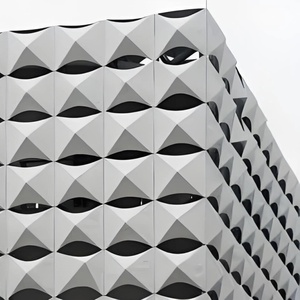
Structural building envelope panels engineered for commercial high-rises, offering A2-grade fire safety, acoustic damping, and seamless joint integration.
Send an Inquiry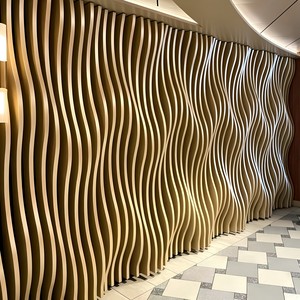
Sublimated architectural timber-finish aluminum cladding offering organic warmth without organic decay, termites, or coastal moisture degradation.
Send an Inquiry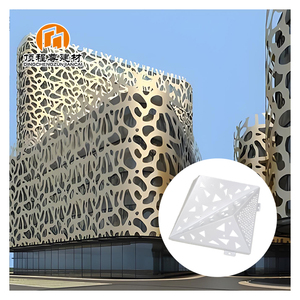
Engineered hotel balcony and curtain wall shading screen featuring custom acoustic insulation and dynamic daylight control for resort hospitality projects.
Send an Inquiry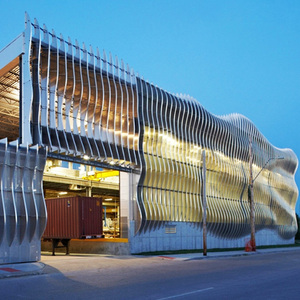
Next-generation dynamic kinetic wall system providing active airflow management, solar deflection, and fluid visual movement for institutional developments.
Send an Inquiry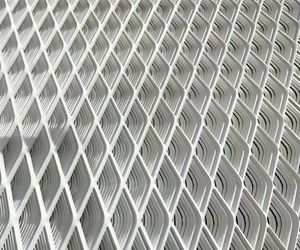
High-tensile aluminum alloy expanded mesh systems designed for perimeter structural balustrades, ventilation screens, and modern architectural shading.
Send an InquiryMorocco is undergoing an unprecedented architectural transformation. Accelerated by nation-wide infrastructure master plans, luxury resort developments along the Atlantic and Mediterranean coastlines, and major urban redevelopment projects in Casablanca, Rabat, Tangier, and Marrakech, the demand for high-performance architectural railings and aluminum exterior envelope systems has scaled exponentially. However, Morocco’s distinct microclimates—ranging from harsh, saline-laden marine atmospheric conditions (C4 to C5-M corrosion classifications) along coastal urban belts to extreme diurnal temperature fluctuations and high solar irradiance in interior regions—present complex engineering challenges for specifiers, structural consultants, and developers.
Selecting an architectural railings supplier serving the Morocco market requires looking far beyond basic aesthetic appeal. Structural balustrades and exterior cladding systems must be rigorously evaluated for structural lateral force resistance, structural anchor fatigue under cyclic wind loads, thermal expansion joint mechanics, and advanced surface coating durability (such as Qualicoat Class 2/3 or PVDF fluoropolymer finishes with 70% Kynar 500 resins). Divided procurement—where railing extrusions, glass infills, structural brackets, and cladding panels originate from separate, uncoordinated fabricators—frequently results in systemic project delays, site fitment failures, electro-galvanic corrosion, and compromised building envelope integrity.
Architectural aluminum railings and glass balustrade systems installed in coastal zones such as the Casablanca Corniche, Tanger-Med port vicinity, or Agadir coastline must withstand severe atmospheric chloride exposure. Untreated aluminum alloys or sub-standard powder coatings experience rapid pitting corrosion, oxidation, and coating delamination within 12 to 24 months of installation. To guarantee a 25+ year operational lifespan without structural degradation, suppliers must utilize structural-grade aluminum alloys (such as EN AW-6063 T6 or EN AW-6005A T6) subjected to multi-stage pre-treatment chromating or zirconium conversion, topped with 2-coat or 3-coat PVDF system coatings engineered to meet ISO 12944 and ASTM B117 salt spray standards exceeding 3,000 hours.
Furthermore, structural railings installed on high-rise residential towers (such as those in Casablanca Finance City) must comply with stringent lateral load parameters under Eurocode 1 (EN 1991-1-4 wind actions) and Eurocode 9 (EN 1999 design of aluminum structures). Balustrades must absorb wind pressure peaks exceeding 2.5 kPa while resisting line-load horizontal impacts up to 1.5 kN/m without residual plastic deformation or fastener shearing.
Analyzing procurement queries and engineering submittal requirements across Morocco highlights three dominant architectural trends shaping specifications for railings, curtain walls, and architectural metal panels:
Architects are increasingly merging traditional Islamic geometric lattice aesthetics with modern high-rise performance. Laser-cut aluminum screens, 3D faceted panels, and perforated solar shades allow natural daylighting while cutting solar heat gain coefficient (SHGC) by up to 65%.
Luxury residential projects along Taghazout Bay and Marrakech palm groves demand unobstructed panoramic sightlines. Structural base-shoe glass balustrades engineered with laminated tempered glass (PVB/SentryGlas interlayers) and concealed aluminum structural channels are replacing bulky steel railings.
Morocco’s Thermal Regulation for Building Construction (Règlement Thermique de Construction au Maroc - RTCM) demands strict thermal envelope performance. Thermally broken aluminum framing, insulated composite cladding, and solar-deflecting railings prevent thermal bridging in hot arid climates.
With Morocco hosting major international events—including co-hosting the 2030 FIFA World Cup—the nation’s hospitality, transport, and sports infrastructure sector is experiencing unprecedented capital investment. Projects such as the expansion of Marrakech Menara Airport, new high-speed rail hubs (ONCF network extension), modern stadiums like the Grand Stade de Casablanca, and over 100 high-end hotel developments require dependable, large-capacity architectural metal suppliers who can fulfill thousands of linear meters of certified railing systems and cladding panels on strict delivery timetables.
Drawing on over 35 years of dedicated extrusion, fabrication, and building envelope manufacturing heritage, our centralized manufacturing facility provides Moroccan contractors and developer consortiums with complete single-source accountability. Unlike intermediary trading entities or fragmented local workshops, our vertically integrated manufacturing ecosystem guarantees complete quality control from raw aluminum ingot extrusion to site delivery.
Locations: Casablanca Corniche, Tangier City Center, Taghazout Bay, Saidia Marina.
Application: Heavy-duty glass balustrades with continuous bottom shoe channels and PVDF-coated aluminum top cap rails. Integrated with 4mm PVDF composite cladding or 3D faceted aluminum panels to resist continuous marine airflow, high humidity, and direct salt fog.
Locations: Casablanca Finance City (CFC), Rabat Agdal Commercial District.
Application: Structural stick-built curtain walls integrated with custom laser-cut exterior aluminum sunscreens (Mashrabiya louvers). Picket or glass balcony guards installed on executive amenity floors to meet strict fire, acoustic, and energy efficiency ratings.
Locations: Marrakech Palmeraie, Essaouira Coastal Retreats, Fez Heritage District.
Application: Wood-grain curved aluminum cladding panels combined with perforated expanded metal mesh facades. Delivers authentic architectural aesthetics with zero maintenance demands, resisting dry heat, dust accumulation, and strong sunlight degradation.
Locations: Al Boraq High-Speed Railway Stations, Regional Airport Expansions, Municipal Venues.
Application: High-traffic architectural railings, heavy-duty barrier-free entrance framing, and corrugated kinetic aluminum facades engineered for maximum crowd impact resistance, vandal resistance, and low life-cycle maintenance costs.
The following guidance matrix assists structural engineers, facade consultants, and procurement directors in selecting the optimal structural aluminum metalwork systems based on project exposure, building height, and functional requirements in Morocco:
| System Category | Material Specification | Surface Coating & Finish | Wind Load / Structural Rating | Recommended Morocco Application |
|---|---|---|---|---|
| Glass Structural Railings | Aluminum Base Channel AW-6063 T6 / 12-21.5mm Laminated Glass | 25 Micron Anodized / PVDF 2-Coat Class 2 | Up to 2.5 kN/m Horizontal Line Load | High-rise residential balconies, sea-front corniche developments. |
| 3D Faceted Cladding | 2.5mm - 3.0mm Solid Aluminum Sheet AW-3003 H14 | 70% Kynar 500 PVDF Finish (Min 35-40 Micron) | Tested to EN 1991 (Eurocode 1 Wind Actions) | Iconic commercial tower facades, hotel podium feature walls. |
| Perforated Sunshades | CNC Laser-Cut Aluminum Sheet (2.0mm - 4.0mm) | Super-Durable Architectural Powder Coating | Custom Shade Coefficient (0.25 - 0.45) | Neo-Moroccan Mashrabiya screens for office buildings & resorts. |
| PVDF Composite Panels | 4mm Aluminum Composite Material (0.5mm Skin / FR Core) | PVDF Fluoropolymer Coating (ASTM B117 >3000 hr) | Class A2-s1, d0 Fire Retardant Rating | Large-scale shopping malls, institutional facades, retrofit projects. |
| Wood-Grain Curved Panels | Extruded & Roll-Formed Aluminum Alloy AW-6063 T5 | Heat-Transfer Sublimated Timber Finish | Thermal Expansion Joint Engineered | Luxury hotel villas, eco-resort balustrades, wall accents. |
| Kinetic Corrugated Facade | High-Tensile Dynamic Aluminum Profiles | Fluoropolymer Clear Sealant Coating | Dynamic Airflow Deflection Engineered | Sports arenas, cultural centers, transport hubs. |
Direct responses to common questions asked by Moroccan developers, procurement managers, structural consultants, and main contractors during tendering:
Our architectural systems are designed and tested to international Eurocode standards (specifically EN 1991-1-4 for wind actions, EN 1999 for aluminum design, and EN 12206-1 for architectural coatings), which are widely accepted and enforced by major Moroccan technical control offices (Bureaux de Contrôle such as SOCOTEC, Dekra, and Bureau Veritas). Complete structural calculations, material mill certificates, and lab test reports are provided with shop drawing submittals.
For saline coastal environments, we specify 316 stainless steel mechanical fasteners isolated with high-density EPDM gaskets or nylon sleeves to completely break electrical contact between dissimilar metals. Furthermore, aluminum extrusions receive specialized C5-M grade PVDF or anodized surface pretreatments to resist sea-spray pitting and atmosphere-induced corrosion.
Yes. Our multi-axis CNC laser cutting centers routinely execute complex architectural patterns, ranging from traditional geometric patterns to modern parametric gradient perforations. Our engineering office provides full DWG pattern mock-ups and solar shading simulations prior to production.
We provide full-service export packaging in reinforced wooden crates with moisture-barrier wrapping. Direct containerized shipping lines operate regularly to Casablanca Port and Tanger-Med Port. Typical manufacturing lead times range from 3 to 5 weeks following final shop drawing and sample approval, with maritime transit taking approximately 18-25 days depending on shipping route availability.
Yes. While we do not act as local general installation laborers, we offer comprehensive technical supervision services. Senior field installation engineers can be dispatched to Moroccan job sites to guide local installation teams, conduct anchor pull-out verification tests, and oversee initial installation alignment.
Our thermally broken framing systems utilize high-grade polyamide PA66 GF25 thermal barriers combined with double or triple insulated glass units (IGUs) featuring low-emissivity coatings and argon gas fill. This construction dramatically reduces thermal conduction (U-values below 1.4 W/m²K), maintaining indoor cooling efficiency and reducing building HVAC energy consumption.
Send us your architectural drawings, tender schedules, or facade specifications. Our technical engineering team will deliver a comprehensive project review, structural compliance feedback, material samples, and competitive quotation within 48 hours.
Send an Inquiry