
Discover our CE-marked, thermally broken aluminum casement window systems and integrated architectural cladding panels engineered specifically for Austrian building standards and extreme alpine weather resistance.
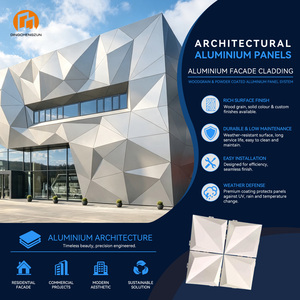
Custom sculptural aluminum cladding seamlessly integrated with high-insulation casement ventilation modules for modern Austrian urban projects.
Send an Inquiry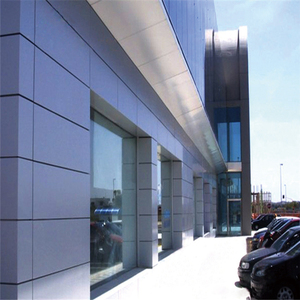
4mm PVDF coated fire-rated aluminum composite facade system engineered for weather-tight exterior wall integration in alpine elevation zones.
Send an Inquiry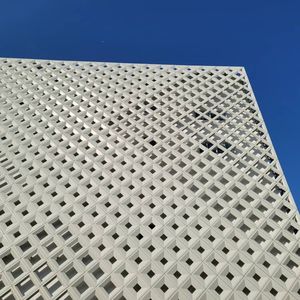
Custom perforated exterior curtain wall casement panels providing solar shading, structural stiffness, and optimized natural air circulation.
Send an Inquiry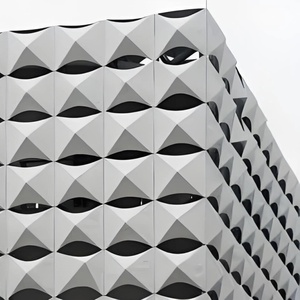
Eco-friendly fireproof aluminum alloy envelope panels built for high-rise commercial developments and institutional complexes in Vienna & Graz.
Send an Inquiry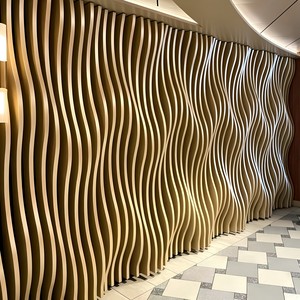
Curved architectural aluminum featuring hyper-realistic weather-resistant wood finishes, bridging natural aesthetics with structural durability.
Send an Inquiry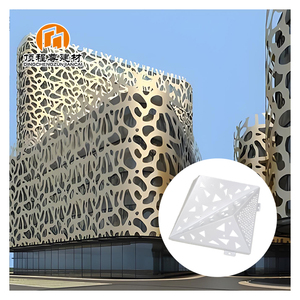
High-specification exterior metal panel systems designed for hotel elevations, balancing daylight intake, micro-ventilation, and noise attenuation.
Send an Inquiry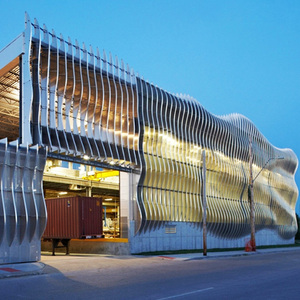
State-of-the-art kinetic building envelope system allowing dynamic facade movement while maintaining ultra-low thermal transmittance standards.
Send an Inquiry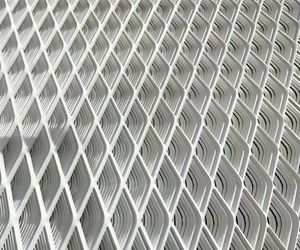
Rigid expanded aluminum alloy mesh facade system delivering hurricane-grade wind load resistance and modern aesthetic accents for Austrian projects.
Send an InquiryAs a premiere Casement Windows Exporter serving the Austria market, our engineering core centers on overcoming the rigorous thermodynamic and structural challenges presented by Central European and Alpine climates. Building envelopes in Austria are subject to stringent federal energy directives, localized regional codes (OIB-Richtlinie 6), and extreme seasonal fluctuations ranging from severe sub-zero mountain winters to high solar-radiation summer periods.
Modern Austrian architectural specifications require fenestration exporters to move beyond basic light-gauge window profiles. Achieving compliance demands structural thermal integrity, low whole-window heat transfer coefficients ($U_w$), multi-stage weather stripping, and structural resilience capable of handling severe snow loads, high altitude wind pressures, and rapid temperature cycles.
Austria’s Austrian Institute of Construction Engineering (OIB) sets strict legal frameworks across all nine federal states. In particular, OIB Richtlinie 6 (Energieeinsparung und Wärmeschutz) demands aggressive energy optimization for both new construction and deep urban retrofits. To seamlessly pass Austrian building control inspections (Bauordnung), imported casement windows must demonstrate certified thermal performance metrics:
Our custom aluminum casement windows incorporate multi-chamber polyamide thermal breaks (PA66 GF25 reinforced with 25% glass fiber), low-emissivity (Low-E) triple glazing filled with 90% argon gas, and warm-edge spacer technology (Swisspacer / Technoform). This allows our window units to reach whole-window $U_w$ values as low as 0.72 to 0.85 W/m²K, exceeding the mandatory Austrian standard and fulfilling rigorous Passivhaus Institut Darmstadt targets.
Full alignment with Austrian national building codes for thermal performance, air permeability, and condensation protection in residential and commercial sectors.
Multi-cavity thermal barrier designs with high-density polyurethane foam inserts achieving ultra-low thermal transmittance ($U_f \le 0.9 \text{ W/m}^2\text{K}$).
Factory-controlled production guaranteeing certified compliance with European Harmonized Standards for windows and external pedestrian doorsets.
Austria’s diverse geography—ranging from the Danube basin in Vienna to the high alpine zones of Tyrol, Vorarlberg, and Carinthia—exposes fenestration products to severe atmospheric strains. Windows in alpine resorts face intense gusting wind pressures (EN 12210 Class C5/B5), driving rain penetration (EN 12208 Class E1500), and rapid thermal expansion/contraction cycles between interior heated rooms and freeze-thaw exterior air.
Our exported aluminum casement window profiles utilize high-tensile 6063-T6 or 6060-T66 architectural aluminum alloys extruded with wall thicknesses up to 2.2mm. We deploy continuous co-extruded EPDM triple gasket seals that retain flexibility at -40°C. Coupled with multi-point perimeter locking hardware from top European suppliers (Siegenia / Winkhaus / Roto), our casement windows create an airtight pressure-equalized drainage chamber that completely prevents moisture ingress and air leakage even under wind pressures exceeding 2000 Pascals.
As a specialized exporter serving the Austrian architectural landscape, we tailor our casement window framing, glazing specifications, and mounting hardware to match distinct regional structural requirements and urban design codes:
Combining slim sightline aluminum casement frames with high acoustic insulation ($R_w \ge 45\text{ dB}$) to isolate heavy city traffic noise along the Gürtel and Ringstraße while respecting strict urban aesthetics.
Heavy-duty structural casements paired with sublimated wood-grain aluminum finishes. Designed to resist extreme mountain wind loads, snow drifting, and high UV radiation without warping or requiring surface re-staining.
Integration of large-format casement venting elements within automated curtain wall envelope grids. Includes motor-driven actuators tied to modern Building Management Systems (BMS) for night-purge natural ventilation.
To assist Austrian procurement managers, general contractors, and facade consultants in evaluating material specifications, the matrix below details the mechanical and thermal characteristics of our export-grade aluminum casement systems:
| Performance Characteristic | Export Alpine-Grade Casement System | Standard Commercial Window | Testing Standard / Compliance |
|---|---|---|---|
| Thermal Transmittance ($U_w$) | 0.72 – 0.85 W/m²K (Triple Low-E) | 1.4 – 1.8 W/m²K (Double Glazed) | EN ISO 10077-1 / OIB Richtlinie 6 |
| Air Permeability | Class 4 (Highest Rating, 600 Pa) | Class 2 or 3 (300 Pa) | EN 12207 / ÖNORM EN 1026 |
| Watertightness | Class E1500 (1500 Pa pressure) | Class 7A/9A (300 - 600 Pa) | EN 12208 / ÖNORM EN 1027 |
| Wind Load Resistance | Class C5 / B5 (2000 Pa design load) | Class C3 (1200 Pa) | EN 12210 / ÖNORM EN 12211 |
| Acoustic Insulation ($R_w$) | Up to 48 dB (with acoustic PVB laminate) | 30 – 34 dB | EN ISO 717-1 / ÖNORM B 8115 |
| Surface Coating Durability | Qualicoat Class 2 / PVDF 3-Coat (AAMA 2605) | Standard Anodized / Powder 1-Coat | EN 12206-1 Salt Spray 2000+ Hours |
| Burglar Resistance | RC2 / RC3 Resistance Class Options | Basic Latching (Non-rated) | EN 1627 - EN 1630 Compliance |
The Austrian architectural window sector is undergoing a profound transformation driven by three major market forces: decarbonization initiatives under the Austrian Green Deal 2040, urban noise mitigation mandates, and a demand for low-maintenance, long-lifecycle building materials.
With Austria pushing aggressively toward climate neutrality, property owners and housing associations (Genossenschaften) are receiving significant federal subsidies (such as the Sanierungsscheck) for upgrading outdated fenestration. Our export casement windows are engineered for suite-by-suite replacement programs, enabling fast single-day installations per residential unit without displacing tenants. Custom frame adapters and pre-engineered thermal sub-frames ensure seamless integration into existing Austrian brick, concrete, or cross-laminated timber (CLT) structural walls.
Architects in Vienna, Salzburg, and Innsbruck increasingly favor ultra-slim outer frame profiles with fully concealed casement sashes. From the exterior elevation, fixed glazing and operable casement windows appear visually identical, maintaining strict geometric symmetry across large glass facades. Our hidden-hinge casement systems accommodate heavy triple-glazed insulated glass units (IGUs) weighing up to 180 kg per sash while providing clean, modern minimal frame lines.
Austrian developers demand external finishes capable of enduring high atmospheric pollution in urban traffic nodes as well as intense freeze-thaw-sun cycles in high-altitude ski regions. We employ Qualicoat Class 2 super-durable powder coatings and PVDF wet spray treatments. Furthermore, our proprietary timber-grain sublimation technology allows architects to specify warmth-emitting interior wood looks with structural, weather-proof aluminum exteriors—eliminating traditional timber maintenance costs entirely.
Selecting an overseas manufacturing partner requires total confidence in quality assurance, structural engineering rigor, and logistical execution. Built upon decades of advanced fenestration manufacturing leadership, our factory operating structure guarantees seamless single-source delivery for major Austrian commercial and residential developments.
From aluminum ingot extrusion and thermal bar insertion to automated CNC profile machining, robotic glass glazing, and final unit packaging, we control 100% of the manufacturing chain under one roof.
State-of-the-art 5-axis German CNC machining centers ensure corner crimping, lock mortising, and drainage slotting achieve sub-millimeter tolerances for flawless weather-tight field assembly.
Products are packed in custom heavy-duty steel crates, moisture-sealed with vacuum foil, and sequenced floor-by-floor. Deliveries arrive at Austrian jobsites ready for direct crane hoisting and immediate installation.
Our in-house engineering office produces detailed shop drawings, thermal simulation reports ($U$-value modeling via THERM software), and structural anchorage calculations coordinated directly with local Austrian project consultants prior to profile cutting. This eliminates costly jobsite misfits and guarantees effortless compliance sign-offs from local building inspectors (Sachverständige).
Here are clear technical answers to the most common questions raised by Austrian architects, project developers, and window installation firms considering importing our high-performance casement window systems:
Yes. All exported casement window systems carry complete CE Marking certified under EN 14351-1. We supply complete Factory Production Control (FPC) documentation, Declaration of Performance (DoP) certificates, and third-party laboratory test reports validating compliance with ÖNORM B 5300, ÖNORM EN 12207 (Air), ÖNORM EN 12208 (Water), and ÖNORM EN 12210 (Wind Load).
Equipped with our standard 48mm triple-pane Low-E insulated glass units (4Xn-16Ar-4-16Ar-Xn4), warm-edge Swisspacer bars, and high-insulation thermal break profiles ($U_f = 0.95 \text{ W/m}^2\text{K}$), our casement windows achieve certified whole-window $U_w$ performance ranging from 0.72 to 0.85 W/m²K, easily fulfilling both OIB Richtlinie 6 energy codes and Passivhaus standards.
We offer flexible Incoterms including FOB, CIF, and full DDP (Delivered Duty Paid) to any destination in Austria, including Vienna, Linz, Graz, Salzburg, and Innsbruck. We handle all export customs paperwork, EU import clearance, and EU VAT tax compliance. Windows are crated in sea-freight/road-freight ready steel racks labeled floor-by-floor for direct jobsite unload.
Absolutely. We partner directly with premium European hardware manufacturers such as Siegenia, Roto, and Winkhaus. We incorporate perimeter multi-point gear locking mechanisms, mushroom-head security cams, and anti-drill steel plates capable of achieving certified RC2 and RC3 burglar resistance ratings according to EN 1627 standards.
For high-noise urban zones, we supply custom acoustic insulated glass units incorporating asymmetric glass thickness configurations (e.g., 8mm outer toughened glass + 16mm argon gap + 6.76mm acoustic PVB laminated inner glass). This configuration yields sound reduction ratings up to $R_w = 46\text{ to }48\text{ dB}$, meeting strict ÖNORM B 8115 sound insulation requirements for residential developments along busy arterial roads.
Once architectural shop drawings and thermal specifications are signed off, profile extrusion, CNC machining, glazing assembly, and quality sign-off typically require 3 to 4 weeks. Transit via direct freight shipping to Austrian ports/hubs takes approximately 3 to 4 weeks. For urgent phased developments, we can stage partial container shipments to match your site crane and erection schedules.
Partner with a trusted, engineering-driven Casement Windows Exporter. Submit your architectural drawings, window schedules, or tender requirements today for a comprehensive engineering review and competitive export pricing.
Send an Inquiry