
Strategic Procurement Guide: Sourcing Window Frames from Premier Chinese Manufacturers for Greater Houston Projects
The Greater Houston building market presents one of the most demanding environmental and code-compliance landscapes in North America. Spanning Climate Zone 2A under the International Energy Conservation Code (IECC) and facing rigorous windstorm criteria defined by the Texas Department of Insurance (TDI) along the Gulf Coast, fenestration packages for Houston residential, commercial, and multi-family developments must balance intense solar heat gain mitigation, extreme wind-driven rain resistance, structural stability during hurricane events, and precise thermal efficiency.
As general contractors, architectural specifiers, and real estate developers in Houston seek to mitigate rising domestic material costs and supply chain bottlenecks, direct sourcing from top-tier Chinese window frame factories has evolved into a strategic advantage. However, realizing the financial and architectural benefits of overseas procurement requires choosing manufacturing partners capable of delivering engineered aluminum alloy profiles, thermal break technology, and factory-glazed fenestration systems that meet or exceed American Architectural Manufacturers Association (AAMA), WDMA, and CSA performance benchmarks.
Information Gain Insight: Sourcing high-performance aluminum window frames directly from Chinese Tier-1 manufacturing facilities can reduce total fenestration procurement costs by 28% to 42% compared to domestic Tier-1 distributors, while providing access to custom extrusion dies, advanced European hardware integration (Hoppe, Siegenia, Sobinco), and factory-installed thermal break isolators customized for Texas solar radiation profile.
6063-T5 / T6 Aluminum Extrusions
High-tensile architectural aluminum profiles engineered for multi-story wind load structural stability and slim line sightlines.
PA66GF25 Polyamide Thermal Barrier
25% glass fiber reinforced polyamide thermal break strips preventing heat transfer across exterior and interior frame profiles.
TDI & ASTM Large Missile Impact
Laminated safety glass integration certified under ASTM E1886 / E1996 for Gulf Coast hurricane pressure zones (DP50–DP70+).
1. Localized Application Scenarios: Fenestration Demands Across Houston Micro-Climates
The Greater Houston metropolitan region—from the urban core of Downtown Houston, Midtown, and the Texas Medical Center to coastal areas like Galveston Bay, League City, and suburban developments in The Woodlands, Sugar Land, and Katy—demands localized fenestration configurations. A standard off-the-shelf window frame profile designed for mild climates will fail prematurely when subjected to Houston's humidity, salt spray, and extreme thermal delta.
A. Coastal & Bay Area Impact Zones (Galveston, Pasadena, Clear Lake)
Projects positioned along the Gulf Coast and Galveston Bay require window frame assemblies with high Design Pressure (DP) ratings and superior corrosion protection. Exposure to saline-laden atmospheric conditions causes rapid oxidation in non-treated metals and breakdown of low-grade powder coatings.
- Structural Requirement: Minimum DP50 to DP70+ (capable of enduring sustained wind pressures up to 140–160 mph).
- Finishing Standard: Architectural Fluoropolymer / PVDF (Kynar 500) coatings tested to AAMA 2605 specifications, enduring 3,000+ hours of continuous salt spray testing under ASTM B117 without blistering or chalking.
- Glazing Spec: Laminated safety glass with PVB or SentryGlas® (SGP) interlayers embedded within thermally isolated aluminum frames to prevent frame blow-out under atmospheric pressure pulses.
B. Urban High-Rise & Mid-Rise Towers (Downtown Houston, River Oaks, Galleria Area)
Mid-rise multi-family developments and high-rise luxury residential projects require heavy-duty aluminum window wall systems, structural curtain wall framing, and operable double-hung or casement units that maintain tight air-infiltration seals despite continuous floor-slab deflection.
- Air & Water Infiltration: Water resistance thresholds up to 720 Pa (15 PSF) per ASTM E331, preventing water intrusion during severe convective summer thunderstorms.
- Acoustic Performance: Sound Transmission Class (STC) ratings of STC 36 to STC 42 using asymmetrical double glazing (e.g., 6mm exterior + 12mm argon gap + 8mm laminated interior) to attenuate heavy traffic noise along I-45, I-10, and Loop 610 corridors.
C. Suburban Residential & Mixed-Use Communities (The Woodlands, Cypress, Katy)
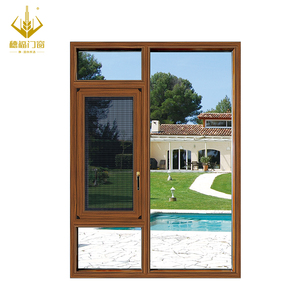
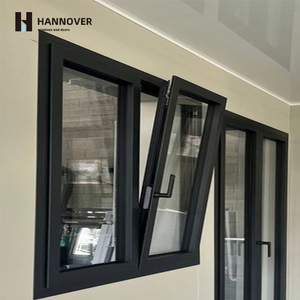
In master-planned suburban developments, energy efficiency and aesthetic versatility drive procurement decisions. High performance aluminum-clad wood windows and thermal break aluminum double-hung/crank-open casements provide a vintage wood aesthetic on the interior while offering a maintenance-free, weather-resistant extruded aluminum shell on the exterior.
2. Houston Local Development Trends & IECC Zone 2A Energy Mandates
Driven by updated Texas energy conservation building codes and net-zero sustainability benchmarks, the Houston real estate market is transitioning rapidly toward hyper-efficient building envelopes. Fenestration systems represent up to 40% of a commercial building’s total thermal gain, making frame design a critical focal point for MEP engineers and sustainability consultants.
| Performance Indicator | IECC Zone 2A Baseline (Houston) | High-Performance China Factory Spec | Impact on Building Operating Cost |
|---|---|---|---|
| U-Factor (Btu/h·ft²·°F) | ≤ 0.40 (Prescriptive) | ≤ 0.24 to 0.28 (Thermal Break PA66) | Reduces HVAC cooling load by up to 22% during July-August peaks. |
| Solar Heat Gain Coefficient (SHGC) | ≤ 0.25 | ≤ 0.18 to 0.22 (Double Low-E + Argon) | Blocks over 78% of infrared solar radiation entering the occupied space. |
| Air Infiltration (cfm/ft²) | ≤ 0.30 at 1.57 PSF | ≤ 0.04 to 0.08 (Triple EPDM Gasket) | Prevents moisture-laden humid air infiltration and indoor mold risks. |
| Condensation Resistance Factor (CRF) | ≥ 45 | ≥ 62 to 68 | Eliminates interior frame sweat during extreme indoor air conditioning cycles. |
Key Emerging Trends in the Texas Market:
- Ultra-Narrow Sightline Minimalist Profiles: Modern architectural designs in Houston favor ultra-slim aluminum profiles that maximize daylighting while retaining high moment of inertia ($I_x$) values in structural mullions.
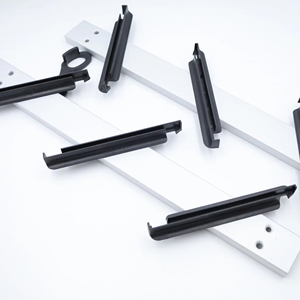
- Integration of Thermal Break Louvers for Hybrid Ventilation: Custom-size aluminum louver window frame modules (such as featured in product series) are increasingly deployed in high-rise mechanical penthouses, parking structures, and residential breezeways to provide regulated continuous ventilation.
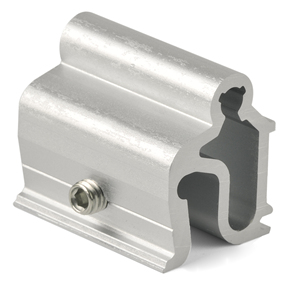
- Die-Cast T-Joint Precision Assembly: Advanced mechanical joining methods, such as Anudal die-cast T-shaped joint systems (Model U14), replace traditional field crimping. This creates leak-proof frame corners capable of enduring continuous thermal expansion and contraction cycles typical of hot Texas summers.
3. Technical Sourcing Matrix: Direct Chinese Factory vs. Domestic US Stockists
When evaluating window frame suppliers, procurement teams must look beyond initial unit pricing to compare technical engineering, extrusion quality, custom fabrication capabilities, and total landed cost to the Port of Houston (Barbours Cut / Bayport Terminals).
| Evaluation Parameter | Direct Chinese OEM/ODM Factory | US National Brand Distributors | B2B Strategic Benefit |
|---|---|---|---|
| Raw Material Alloy | Primary 6063-T5/T6 Billet (Pure Aluminum) | Standard Recycled/Secondary Billet Blend | Higher structural yield strength and smoother anodized/powder surface finish. |
| Thermal Isolator Tech | Technoform / Polyamide PA66GF25 Strips | Poured-and-Debridged Urethane or PVC | Polyamide strips maintain structural integrity under high exterior heat without cracking. |
| Custom Die Engineering | In-house die tooling; 10–14 day prototype cycle | Restricted to catalog extrusion profiles | Enables architects to specify custom exterior snap caps, mullion depths, and sills. |
| Glazing Integration | Factory Pre-Glazed with Automated Robot Sealant | Un-glazed frames shipped for jobsite field glazing | Eliminates costly US jobsite labor errors; speeds up floor-by-floor enclosure cycles. |
| Landed Cost Efficiency | Factory Direct Price + Containerized Freight | Multi-tier markup (Distributor + Dealer + Rep) | Delivers 30%+ net savings on large-scale commercial window packages. |
4. Enterprise Advantages: In-House Extrusion to Installation Quality Control
Exceptional fenestration performance is not achieved by superior raw materials alone; it demands a single source of responsibility that controls every link in the manufacturing chain. Mirroring the proven vertical integration model of industry leaders like Norstar Windows & Doors Ltd., premier Chinese export factories eliminate divided accountability by controlling process stages under one roof:
- In-House Profile Extrusion & Billet Casting: Utilizing multi-thousand-ton extrusion presses to draw precision aluminum profiles with strict wall thickness tolerances (±0.15mm), ensuring structural integrity across large span glass openings.
- Automated Thermal Break Insertion: Precision knurling and strip insertion lines lock PA66 nylon structural insulation strips into inner and outer aluminum extrusions, eliminating cold/heat bridges.
- Advanced Surface Treatment Facilities: In-house horizontal and vertical powder coating lines certified by AkzoNobel and PPG, ensuring color batch consistency across thousands of window units.
- Factory Glazing & Quality Checkpoints: Double and triple glazed insulating glass units (IGUs) are assembled in clean-room environments using dual-sealed structural silicone (Dow Corning / Tremco) and warm-edge spacers, mitigating argon gas leakage risks over a 25-year service life.
Logistics Staging for Houston Job Sites: Premium factories package window frames in heavy-duty, sea-worthy steel crates organized floor-by-floor or elevation-by-elevation. Crates are containerized and shipped directly to the Port of Houston, allowing site installation crews to crane packages directly onto building slabs without double-handling.
5. Frequently Asked Questions (FAQ) for Houston Importers & Procurement Officers
Top-tier Chinese export factories design window systems to meet ASTM E1886 and ASTM E1996 large missile impact standards. Products undergo structural wind load, air infiltration, and water penetration testing at IAS-accredited third-party laboratories (such as Intertek, UL, or SGS). Submittal packages—including structural calculations stamped by a licensed Texas Professional Engineer (PE)—are provided for TDI submittal and local Houston building department approval.
For optimal energy efficiency in Climate Zone 2A, we recommend double-glazed sealed units featuring an exterior 6mm tempered glass pane with a high-performance spectrally selective Low-E coating (such as Solarban 60 or Solarban 70 equivalent on surface #2), a 12mm or 16mm 90% Argon gas-filled space with warm-edge Technospacer, and an interior 6mm clear or laminated pane. This configuration achieves SHGC ratings as low as 0.18 to 0.22 and U-factors below 0.26.
Following final shop drawing sign-off and custom sample approval, profile extrusion and thermal assembly take approximately 20 to 25 days. Factory glazing and quality sign-off require an additional 10 to 15 days. Ocean transit from major Chinese ports (Ningbo, Shanghai, Shenzhen) to the Port of Houston via direct container routes takes 24 to 28 days. Overall lead time typically ranges between 8 to 11 weeks.
Yes. Chinese factories frequently engineer extrusion hardware tracks to accommodate North American standard hardware (such as Truth Hardware / AmesburyTruth operators) or premium European multi-point locking systems (Hoppe, Siegenia, Roto). Hardware can be factory-installed or shipped pre-routed for jobsite fitting based on project specs.
Products are packed into fully enclosed, fumigated steel or plywood A-frame crates with rubber isolator corner pads and shrink wrapping. All shipments carry full marine cargo insurance (All Risks policy). Furthermore, factories include a 1% to 2% spare glass and hardware buffer within each container shipment to ensure immediate replacement without slowing down on-site installation schedules.