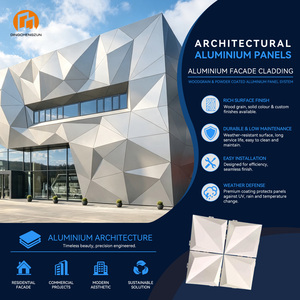
Custom 3D Faceted Architectural Aluminum Facade System
- Sculptural exterior wall cladding
- High-durability PVDF finish coating
- Engineered for high wind pressures

Engineered for commercial, residential, and high-rise developments across Greater Istanbul and the Marmara region.
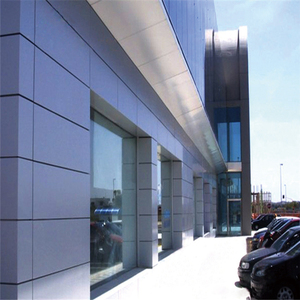
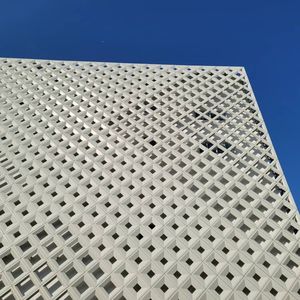
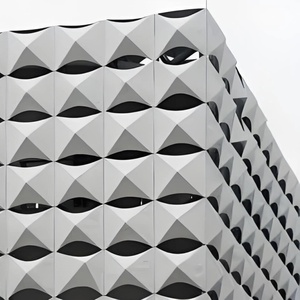
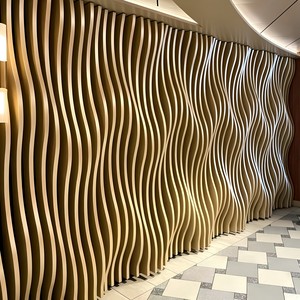
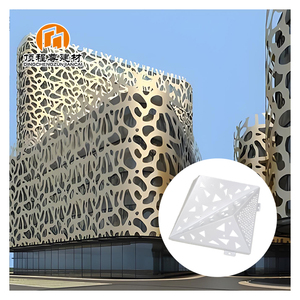
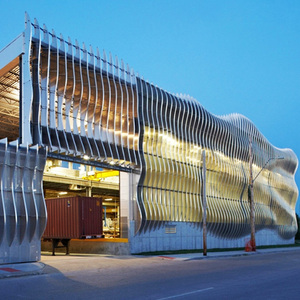
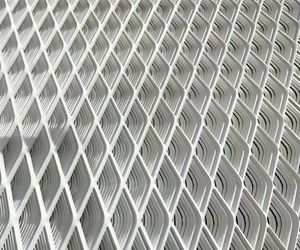
Analyzing microclimatic stress, seismic dynamics, and thermal insulation mandates across Turkey's commercial and residential sectors.
Istanbul’s financial district demands high-altitude wind load resistance (up to 2.4 kPa) and acoustic attenuation (>42 dB) to offset urban noise. Our thermally broken aluminum doors utilize multi-chambered PA66-GF25 polyamide strips and triple-glazed Low-E units to eliminate cold bridging and structural deflection under extreme pressure.
Coastal developments in Sarıyer, Bebek, and Üsküdar face humid sea air, intense salt fog, and damp winds. Chinese export packages supplied to Istanbul feature Qualicoat Class 2 anodized finishes (minimum 25-micron thickness) and PVDF coatings that withstand severe oxidation, preventing filiform corrosion on door profiles.
Preserving heritage aesthetic integrity while achieving modern thermal compliance (TS 825) requires ultra-slim sightlines. Custom laser-cut panels and narrow-stile thermally broken aluminum swing and lift-and-slide doors allow developers to maintain historical facade proportions without compromising U-values.
Market forces, green building certifications, and engineering innovations defining Chinese B2B exports to Turkey.
With Turkey expanding its Nearly Zero Energy Buildings (nZEB) standards for projects exceeding 2,000 sqm, developers in Istanbul prioritize thermal break door systems featuring continuous EPDM weather-stripping gaskets, multi-point locking systems, and thermal barriers capable of reaching overall fenestration U-values down to 0.9 W/m²K.
Istanbul’s location near the North Anatolian Fault line requires fenestration to accommodate inter-story drift under earthquake forces (TS EN 13830 compliance). High-strength extruded 6063-T6 aluminum door frames paired with flexible silicone structural glazing absorb seismic shock without glass-to-metal contact failure.
Modern luxury villas in Zekeriyaköy and Bodrum favor seamless visual blending between sliding terrace doors and exterior cladding. Chinese manufacturers excel at providing unified architectural packages—matching wood-grain curved aluminum panels, 3D faceted facades, and entrance door hardware under one quality-control process.
A detailed engineering baseline for Turkish specifiers, facade consultants, and procurement heads.
| Performance Parameter | Standard Non-Thermal Aluminum Door | High-Efficiency Thermal Break Door (Export Grade) | Turkish Code / Standards Target (TS EN / TS 825) |
|---|---|---|---|
| Thermal Transmittance (U-Value) | 3.8 – 5.2 W/m²K | 0.9 – 1.4 W/m²K | ≤ 1.8 W/m²K (Istanbul Zone 2 Target) |
| Polyamide Barrier Material | None / Low-grade PVC insert | PA66-GF25 (25% Glass Fiber Reinforced) | Structural & Thermal Integrity Rated |
| Air Infiltration (TS EN 12207) | Class 2 (Basic seal) | Class 4 (Maximum Airtightness) | Class 3 Minimum required for high-rises |
| Water Tightness (TS EN 12208) | Class 5A (300 Pa) | Class E1050 (1050 Pa Hurricane/Lodos Rated) | Class 7A+ for coastal exposure |
| Acoustic Attenuation (Rw) | 22 – 28 dB | 38 – 45 dB (Multi-Layer Laminated Glass) | ≥ 35 dB for urban arterial roads |
| Aluminum Alloy Profile | Standard Recycled Scrap Extrusion | Virgin 6063-T6 / 6061-T6 Primary Billet | Architectural Structural Grade |
| Surface Finish & Warranty | Standard Anodizing (10 microns) | PVDF 3-Coat / Powder Coating (25-30 yr warranty) | Qualicoat / Qualanod Certified |
How leading Chinese exporters eliminate supply chain friction for Turkish general contractors.
Controlling over 15 extrusion presses ranging from 800 to 5,000 tons allows the production of complex custom profiles with wall thicknesses up to 3.0mm, ideal for high-span commercial doors and structural curtain walls.
Every lot undergoes rigorous testing: spectrographic alloy composition analysis, cross-hatch adhesion testing on coatings, thermal break shear testing, and chamber testing for air, water, and structural deflection.
Shipments are packaged using protective micro-foam, wooden crating, and steel frame racks. Delivery schedules are mapped directly to erection sequences, reducing job-site clutter and handling damage in busy Istanbul construction sites.
Addressing custom duties, certification compliance, sea freight dynamics, and technical installation requirements.
Leading Chinese exporters provide comprehensive test documentation from international laboratories (such as Intertek or SGS) aligned with EN standards (TS EN 14351-1 for doors/windows and TS EN 13830 for curtain walling). Factory Mutual and ISO quality management certificates ensure smooth customs clearance under Turkish CE marking regulations.
Production cycles generally require 20 to 25 days following shop drawing sign-off. Maritime transit from Ningbo, Shanghai, or Shenzhen to Istanbul ports (Ambarlı, Kumport, or Gebze) typically spans 24 to 28 days via direct vessel routes, making total lead times highly predictable for construction staging.
While PVC is common in low-rise construction, high-rise and luxury commercial projects in Istanbul require the structural strength of aluminum to support large floor-to-ceiling glass sizes without sagging. Thermally broken aluminum with PA66 polyamide barriers matches PVC's U-value performance while providing superior wind load resistance, fire safety (Class A), and a 50+ year service life.
Yes. OEM exporters maintain dedicated in-house engineering departments equipped with AutoCAD, Revit, and thermal calculation software (THERM/WINDOW). They generate complete shop drawing packages, including anchor connection details, structural calculations for wind loads, and thermal simulation reports tailored to your architect's project specifications.
Systems exported to Istanbul are engineered with reinforced internal steel mullion inserts, heavy-duty 304/316 stainless steel friction hinges, and multi-point perimeter gear locks. They are tested to withstand pressure spikes exceeding 1050 Pa (Class E1050), ensuring absolute water tightness during heavy rains accompanied by strong Lodos winds.
Importers should account for standard Turkish customs tariffs on aluminum profiles under HS Code 7610. Partnering with established Chinese exporters guarantees accurate HS code documentation, certificates of origin (Form A/EUR.1 where applicable), and weight manifest optimization to minimize customs delays and additional fees.
Elevate your next Istanbul development with energy-efficient thermal break doors, custom 3D architectural paneling, and structural curtain wall systems engineered to exceed Turkish building codes.