
Precision-engineered aluminum envelope solutions designed for structural integrity, extreme weather resistance, and dynamic aesthetic expression.
Evaluating macro-construction trends, urban growth in Metropolitan Lima, and architectural requirements for resilient building envelopes across Peru.
Peru's commercial construction and real estate sectors are undergoing a structural transformation. Driven by institutional investments in corporate office towers across San Isidro and Surco, expanding retail infrastructure in regional hubs such as Arequipa and Trujillo, and massive public sector modernization projects, the demand for premium architectural fenestration has reached an all-time high. Commercial curtain wall systems represent the cornerstone of modern Peruvian commercial design—offering structural elegance, natural light optimization, and robust thermal envelope protection.
However, specifyng commercial aluminum curtain walls and metal facade cladding in Peru requires an in-depth understanding of the country's unique environmental and regulatory environment. Peru spans multiple challenging microclimates: high saline, high humidity coastal zones (Metropolitan Lima and Callao), extreme UV radiation and severe thermal swings in high-altitude Andean environments (Cusco and Arequipa), and humid tropical zones in the east. Crucially, the entirety of Peru's coastal belt resides within Zone 4 seismic activity under the Reglamento Nacional de Edificaciones (RNE) Norm E.030, demanding building envelopes that can withstand severe dynamic displacement and lateral drift without structural failure or glass fallout.
Key Market Insight for Developers & Technical Specifiers in Peru: Standard off-the-shelf curtain wall framing cannot safely accommodate Peru's dual requirements of high-frequency seismic movement (E.030) and severe coastal corrosion. Sourcing engineered unitized or stick curtain wall systems directly from an established manufacturer with single-source extrusion, fabrication, and thermal break engineering guarantees compliance, structural safety, and long-term asset value.
As a global leader in high-performance aluminum fenestration and facade systems, our manufacturing factory combines decades of specialized engineering, continuous extrusion control, and rigid AAMA/CSA testing. By controlling every stage—from raw aluminum alloy extrusion, precision CNC machining, and PVDF structural coating to factory glazing and shipping coordination—we supply project developers, architectural firms, and general contractors in Peru with fully certified, custom curtain wall systems tailored to local building codes.
Comprehensive structural breakdown of unitized vs. stick curtain wall systems, seismic movement capacity, and thermal break technology.
Building envelope design for high-rise commercial structures in Peru demands precise mechanical calculation. Commercial curtain wall systems function as non-load-bearing exterior cladding walls attached to the building structure, typically spanning floor slab to floor slab. They must safely withstand dead loads, wind pressure forces up to 2.5 kPa, seismic forces, air infiltration, thermal expansion, and water ingress.
During seismic events along the South American Tectonic Plate boundary, high-rise buildings undergo substantial inter-story drift (lateral horizontal movement between structural floor slabs). Standard rigid window frames risk catastrophic glass fracture or seal failure under these conditions. Our commercial curtain wall systems incorporate dynamic split-mullion unitized frames and flexible structural silicone glazing joints (SSG). Key seismic design mechanisms include:
Dense urban corridors in Lima—such as Avenida Javier Prado, Avenida Paseo de la República, and Avenida Larco—exhibit high ambient acoustic pollution levels exceeding 75 dB. Commercial office spaces require interior acoustic levels below 40 dB to ensure productivity and tenant comfort. By engineering double and triple-glazed curtain wall assemblies featuring acoustic laminated glass interlayers (PVB/SGP) and argon gas cavity fills, our systems achieve Sound Transmission Class (STC) ratings from STC 38 up to STC 45.
Extruded from high-strength 6063-T5/T6 architectural aluminum alloy with reinforced wall thickness (2.5mm to 4.0mm) to handle high-wind pressure elevation profiles.
Integrated Polyamide PA66 GF25 thermal barrier strips eliminate thermal bridging, lowering U-factors to hit strict energy efficiency metrics.
EPDM pressure-equalized rainscreen seals prevent water penetration under dynamic wind pressures exceeding 600 Pa (ASTM E331 certified).
Choosing between stick-built and unitized curtain wall systems depends directly on project scale, construction schedule, crane logistics, and job site budget in Peru:
| System Type | Fabrication Method | Installation Speed | Seismic Performance | Ideal Application in Peru |
|---|---|---|---|---|
| Unitized Curtain Wall | 100% Factory Assembled & Glazed under strict QC | Ultra-Fast (Slab-by-Slab Crane Erection) | Superior (Interlocking male/female split mullions) | High-rise commercial office towers, luxury residential high-rises in San Isidro & Miraflores. |
| Stick Curtain Wall | Field Assembled (Mullions & Transoms site cut/installed) | Moderate (Requires scaffolding / swing stage) | High (When specified with expansion shear anchors) | Low to mid-rise podiums, retail storefronts, hotel lobbies, boutique commercial centers. |
| Structural Silicone (SSG) | Factory Glazed to Aluminum Sub-Frames | Fast (Modular panel hook installation) | Exceptional (Elastic silicone shear absorption) | Seamless flush glass facades, continuous architectural glass skins, modern airport terminals. |
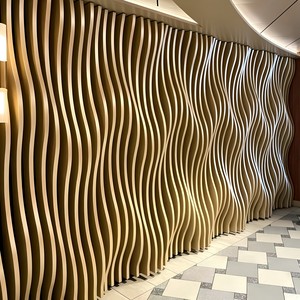
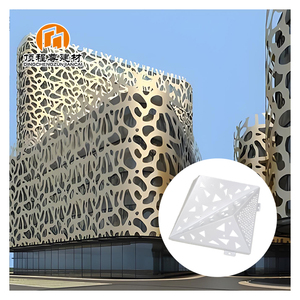
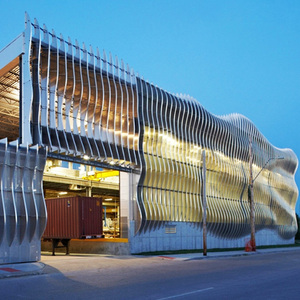
| Perforated & Kinetic Facades | CNC Laser Cut Aluminum Panel Framing | Fast (Bracing grid installation) | High (Lightweight ventilated outer screen) | Shopping centers, parking structures, sun shading outer envelopes in coastal/desert regions. |
Tailoring metal finishes, glass compositions, and structural framing to thrive in coastal, high-altitude, and desert environments.
A major failure of generic imported building envelope products is their lack of regional customization. Peru's geography is immensely diverse, requiring specific surface treatments and glass specifications across different municipalities:
Environmental Hazards: High atmospheric humidity, dense coastal fog (Garúa), elevated salt aerosol exposure from the Pacific Ocean, and moderate solar radiation.
Engineering Solution: Coastal curtain walls and exterior cladding must use marine-grade aluminum alloys treated with 70% PVDF (Kynar 500) fluoropolymer coating or Class I Anodized surface finishes (25 microns minimum thickness). PVDF finishes resist chemical degradation, salt spray oxidation, and chalking under severe maritime weather. Glazing systems utilize Double Low-E insulated glass units (IGUs) with solar control coatings to mitigate infrared heat build-up while maximizing natural light transmission.
Environmental Hazards: Extreme daily temperature fluctuations (ranging from -5°C at night to +25°C at noon), intense ultraviolet radiation (UV Index 14+), and wind loading.
Engineering Solution: Extreme thermal expansion and contraction require structural expansion mullion splices with high-grade EPDM gaskets. Frame profiles incorporate wide 24mm to 34mm Polyamide (PA66 GF25) thermal break strips to eliminate indoor energy loss. Glazing makeups require UV-reflective glass coatings with double-sealed butyl and structural silicone secondary seals to prevent seal failure caused by atmospheric pressure variations between sea-level manufacturing facilities and high-altitude installation sites.
Environmental Hazards: High ambient temperatures, airborne dust, heavy wind-driven sand, and direct solar radiation.
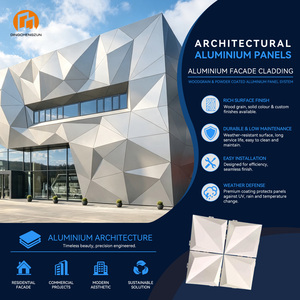
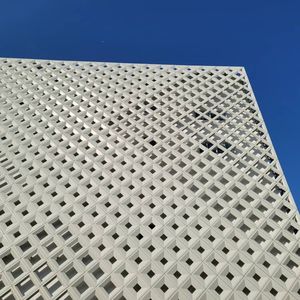
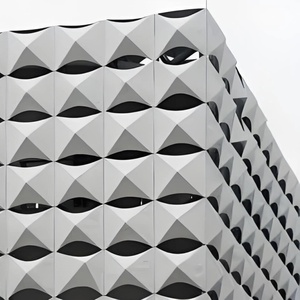
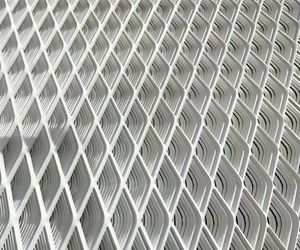
Engineering Solution: Dual-skin ventilated curtain walls paired with custom perforated aluminum panels or 3D faceted exterior cladding act as secondary solar shades (Brise-Soleil). These shading envelopes dramatically lower solar heat gain coefficient (SHGC) values, reducing building HVAC energy consumption by up to 35% while protecting the glass perimeter seals from sand abrasion.
Why single-source manufacturing control guarantees flawless delivery, precise tolerances, and long-term structural reliability.
Building envelope failures—such as water leaks, structural rattling during windstorms, or glass seal clouding—almost always stem from fragmented supply chains. When extrusion, thermal break assembly, metal fabrication, powder coating, and structural glazing are outsourced to separate vendors, accountability is divided and quality control lapses occur.
Our direct-from-factory business model completely eliminates divided accountability. Operating from advanced production facilities equipped with multi-axis automated CNC machining centers, automated thermal breaking lines, precision dual-head saws, and robotic structural silicone glazing bays, we control 100% of the manufacturing workflow.
Computer-controlled CNC milling ensures bolt-hole center tolerances within ±0.2mm, guaranteeing perfect alignment of unitized panel hooks during high-speed site installation in Peru.
Insulating glass units are manufactured using automated dual-seal lines with warm-edge spacers, filled with 90%+ pure argon gas, and batch-tested for dew point and seal adhesion.
Systems are tested and certified under international standards including ASTM E283 (Air Leakage), ASTM E331 (Water Penetration), ASTM E330 (Structural Performance), and AAMA 501.1 (Dynamic Water Testing).
In addition to new construction high-rises, our factory specializes in engineered curtain wall and window wall retrofit systems for existing commercial assets across Peru. Using specialized framing profiles, occupied mid-rise and high-rise commercial or residential towers can undergo full facade modernization floor-by-floor without requiring tenant relocation or business interruption. Pre-glazed unitized retrofits replace aged, single-glazed steel or aluminum frames with high-efficiency thermally broken curtain wall modules rapidly and safely.
Direct technical answers to common procurement, engineering, import, and compliance queries for projects in Peru.
Our curtain wall systems—specifically our unitized split-mullion and structural silicone glazing (SSG) lines—are engineered specifically to handle Zone 4 inter-story drift requirements. The aluminum split mullions utilize telescoping male/female interlocking joints with elastic EPDM gaskets and slotted expansion anchors. This design allows floor slabs to move laterally and vertically up to ±25mm during an earthquake without transferring structural stress to the glass, preventing panel popping or frame buckling.
For coastal environments within 10 km of the Pacific Ocean (such as Miraflores, San Isidro, Callao, and Costa Verde), we strictly recommend 70% PVDF (Kynar 500) fluoropolymer resin coatings or Class I Anodized finishes (minimum 25-micron coating depth). PVDF coatings pass 4,000+ hours of continuous salt spray testing under ASTM B117, ensuring zero blistering, peeling, or color fading despite Lima's high humidity and saline ocean air.
Once shop drawings and structural engineering calculations are approved by your technical consultant, standard manufacturing lead time is approximately 4 to 6 weeks. Ocean freight transportation from our factory to Callao Port (Lima) typically takes 22 to 30 days. We provide comprehensive logistics management, including floor-by-floor container packing, protective wooden crating, and complete export documentation (Bill of Lading, Certificate of Origin, Mill Test Reports).
Yes. Every commercial project is backed by our dedicated structural engineering department. We deliver comprehensive AutoCAD/BIM 3D shop drawings, anchor detail views, thermal analysis reports (U-factor, SHGC, CRF), structural wind load calculations, and structural silicone stress analyses tailored to your specific building geometry and Peru code requirements.
Yes. Unitized curtain wall panels can be efficiently hoisted from inside the building structure using lightweight floor-mounted floor cranes or mini-monorail hoists. Panels are lifted from the floor slab above, lowered into place, and locked into the lower split-mullion receiver. This eliminates expensive scaffolding rental costs and significantly accelerates installation cycles in tight urban lots across downtown Lima.
For high altitude and high solar radiation zones, we recommend double-glazed units comprising a high-performance spectrally selective Low-E outer lite, an argon gas-filled cavity with warm-edge composite spacers, and a clear or acoustic laminated inner lite. This configuration achieves SHGC values below 0.25 while maintaining high Visible Light Transmittance (VLT > 50%), dramatically reducing indoor air conditioning power consumption.
Uncompromising quality, single-source factory accountability, and direct manufacturer pricing for developers and contractors.
When selecting a commercial curtain wall manufacturer for projects in Peru, choosing an experienced, vertically integrated manufacturer provides distinct operational and financial advantages:
Contact our engineering and technical sales department today for a complimentary drawing review, structural feasibility assessment, and direct factory pricing quote for your project in Peru.