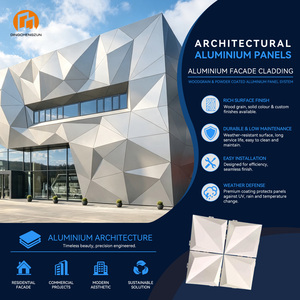

Direct OEM/ODM manufacturing solutions tested for high structural load, thermal efficiency, and severe tropical weather resistance across West African commercial projects.
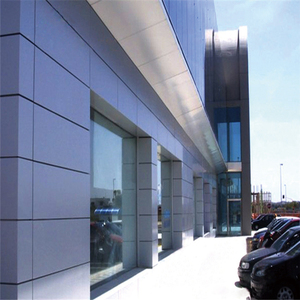
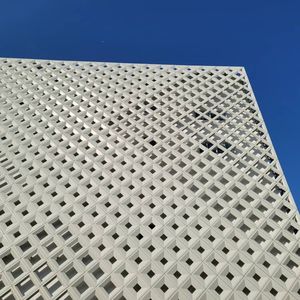
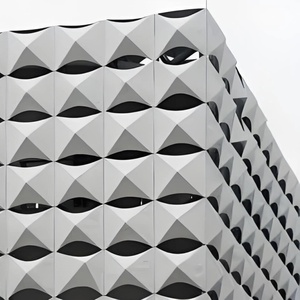
The Republic of Ghana is undergoing a monumental architectural transformation. Driven by rapid urban population growth in the Greater Accra Metropolitan Area (GAMA), Kumasi, and Sekondi-Takoradi, commercial real estate developers, civil engineering contractors, and private homeowners are elevating their demand for high-performance fenestration, commercial entrance hardware, structural aluminum doors, and architectural facade cladding systems. Navigating the door hardware supplier landscape in West Africa requires a clear technical understanding of material composition, environmental stress factors, local building codes, and international manufacturing benchmarks.
Unlike standard interior joinery, architectural door hardware and exterior cladding in Ghana must withstand severe local climatic pressures: extreme relative atmospheric humidity along the Atlantic coastline, high ultraviolet (UV) index radiation, aggressive saline air corrosion, and periodic abrasive dust deposition caused by the seasonal Harmattan wind originating from the Sahara Desert. Consequently, Tier-1 developers across Accra’s luxury hubs—such as Cantonments, East Legon, Airport Residential Area, and Ridge Financial District—are systematically pivoting away from cheap untreated mild steel and low-grade aluminum toward high-grade, thermally improved extruded aluminum profiles (AA6063-T5/T6), PVDF fluorocarbon coatings, and heavy-duty 316-grade stainless steel door hardware assemblies.
Standard architectural door hardware installed within 15 km of the Gulf of Guinea coastline experiences oxide degradation up to 6 times faster than inland installations due to airborne salt ions combined with relative humidity exceeding 85%. Specifying PVDF-coated aluminum profile assemblies and marine-grade stainless steel hardware ensures long-term structural integrity and zero aesthetic fading.
To assist Ghanaian project architects, structural engineering consultants, and procurement directors in selecting optimal door hardware and architectural panel systems, the following comparative specification matrix outlines the baseline material performance requirements mandated for commercial and high-density residential developments in Ghana.
| System Component | Material / Alloy Grade | Surface Treatment / Coating | Environmental Tolerance | Recommended Application |
|---|---|---|---|---|
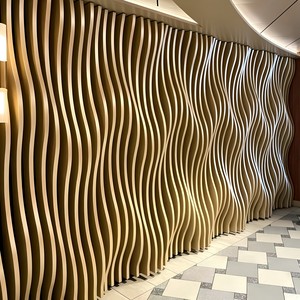
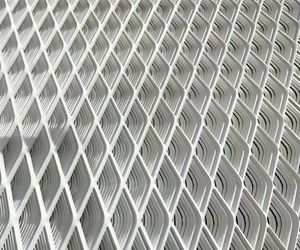
| 3D Faceted Cladding & Door Surrounds | AA6063-T6 Extruded Aluminum | PVDF 3-Coat System (≥50 microns) | C4 / C5 Marine Salt Resistance | High-Rise Facades, Entrance Portals |
| Aluminum Composite Panels (ACP) | AA3003 / AA5005 Skins (0.5mm) | PVDF Kynar 500 Resin Finish | Class A / B1 Fireproof Core | Commercial Retail, Canopy Framing |
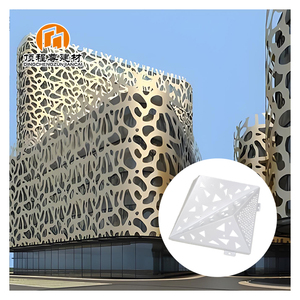
| Laser-Cut Solar Screens & Louvers | AA1100 / AA3003 Sheet Aluminum | Anodized (25µm) or PVDF | Harmattan Dust & Solar Heat Gain Mitigation | Curtain Wall Covers, Balcony Guards |
| Heavy-Duty Commercial Door Hardware | SUS316 / SUS304 Stainless Steel | PVD Anti-Fingerprint Finish | 200,000+ Operational Cycles | High-Traffic Lobby & Office Entrances |
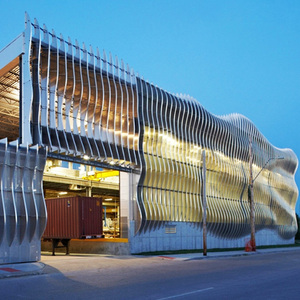
| Kinetic & Corrugated Profiles | AA6061-T6 High-Yield Alloy | Fluorocarbon Powder Coat | Wind Load Pressure up to 4.5 kPa | Institutional Complexes, Arenas |
The versatility of advanced aluminum door hardware systems and custom exterior cladding allows architects to resolve specific structural challenges across diverse Ghanaian microclimates and real estate sectors:
Projects in Labone, Osu, and South Shiashie require window and door systems that block coastal humidity while maintaining high sound dampening. Thermally broken aluminum door profiles combined with double-glazed low-E glass prevent internal AC thermal bridging and lower household utility bills by up to 28%.
High-rise financial centers demand heavy-duty door hardware capable of handling millions of annual actuations. Multipoint locking mechanisms, automatic sliding door operators, and floor-spring hardware integrated with 3D faceted exterior aluminum cladding panels provide structural rigidity against strong tropical wind pressure.
Industrial logistics hubs surrounding Tema Port require robust, fire-rated aluminum entrance doors, corrugated cladding panels, and industrial security hardware. Non-combustible A2-rated aluminum composite panels ensure complete compliance with Ghana National Fire Service (GNFS) safety codes.
With institutions like the International Finance Corporation (IFC) advocating for EDGE (Excellence in Design for Greater Efficiencies) certification across West Africa, developers in Ghana are prioritizing eco-friendly, energy-saving building materials. Recyclable aluminum cladding panels and thermally insulated aluminum entrance doors significantly reduce solar thermal gain, directly minimizing the operational carbon footprint of modern commercial assets.
During the Harmattan season (November to March), fine silica dust particles penetrate sub-standard door hinges, floor springs, and sliding track assemblies, causing mechanical friction and premature failure. Industry-leading factories now supply sealed, maintenance-free bearing systems and EPDM synthetic rubber weather-stripping gaskets designed to repel micro-dust infiltration entirely.
Due to high land acquisition costs and construction finance interest rates in Ghana, project execution speed is critical. Factory-prefabricated aluminum unitized curtain walls, pre-hung commercial doors, and pre-drilled laser-cut facade panels allow installation teams in Kumasi and Accra to reduce on-site labor times by up to 40%, ensuring on-schedule building commissioning.
Partnering directly with a vertically integrated aluminum fenestration and door hardware manufacturer eliminates intermediate trading markups while offering customized engineering control tailored to the specific architectural submittals of your project.
Our centralized manufacturing plant integrates raw aluminum billet extrusion, automated CNC machining, precision laser perforation, thermal breaking, and high-velocity PVDF spray-coating under one rigorous Quality Assurance protocol.
Expert answers addressing customs clearance, coastal warranties, freight logistics, and hardware customization for the Ghana market.
Send us your project architectural drawings, door schedules, or cladding bill of quantities. Our technical engineering team will deliver a comprehensive cost breakdown and material specification proposal within 24 hours.