1. Architectural Fenestration Strategy for the Kazakhstan Construction Market
Kazakhstan represents one of the most demanding physical geography and climate profiles for building envelope design in Central Asia. Spanning from the windswept steppes of Astana (Nur-Sultan) to the seismically active mountainous zones of Almaty, exterior architectural glazing must withstand extreme thermal differentials exceeding 80°C annually, intense wind gust pressures, and localized seismic forces. Partnering with experienced double glazing factories capable of customizing Insulating Glass Units (IGUs) and structural aluminum framing is essential for developers, general contractors, and facade consultants operating across the Republic of Kazakhstan.
Modern commercial and multi-family residential projects across Kazakhstan are transitioning toward strict energy conservation compliance mandated by modernized state construction norms (SNiP and GOST standards). As HVAC operational costs climb during sub-zero Eurasian winters, building envelopes equipped with standard single or unoptimized double glazing suffer severe heat loss, thermal bridging, and interior condensation. Factory-direct double glazing solutions—engineered with double-silver Low-E coatings, warm-edge spacer bars, inert argon gas filling, and polyamide thermal breaks—provide the necessary thermal performance to achieve LEED, BREEAM, and Kazakh green building targets.
Critical Technical Challenges in Kazakh Fenestration Engineering
Building envelopes deployed in northern and central Kazakhstan face severe environmental dynamics. Below is a summary of the performance metrics guaranteed by our direct manufacturing line:
Environmental Vector
Engineering Demand
Factory Structural Solution
Tested Performance Level
Extreme Sub-Zero Thermal Gradient
Prevention of frost formation & interior heat loss down to -40°C.
Absorbing dynamic structural sway without glass pane fracture.
Structural silicone glazing (SSG) with flexible EPDM rubber gaskets.
Inter-story drift displacement up to 1/50
Solar Radiation (Summer Steppe)
Reducing interior solar heat gain and air conditioning loads.
Magnetron glass solar control coatings with tuned Solar Heat Gain Coefficient (SHGC).
SHGC ≤ 0.32 / Light Transmittance ≥ 68%
2. Regional Application Scenarios: Tailoring Glazing to Kazakh Municipalities
Different administrative regions across Kazakhstan present distinct micro-climates and architectural needs. A standardized, one-size-fits-all window or curtain wall profile often leads to systemic failures such as sealant degradation, glass unit desiccant saturation, or structural air infiltration.
Astana High-Rise Towers & Administrative Centers
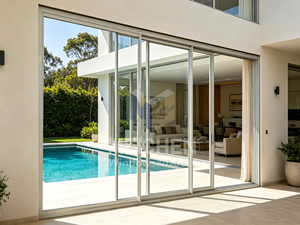
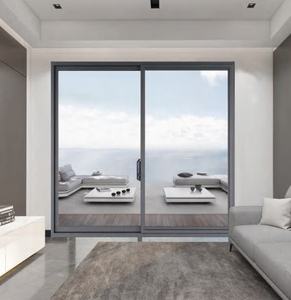
Exposed to severe steppe winds and winter frost. Projects require heavy-duty aluminum sliding profiles (such as the RG110 system) combined with double-sealed argon IGUs to maintain indoor climate stability and withstand gust pressures up to 3500 Pa.
Almaty Commercial & Residential Developments
Situated in a high-seismic zone surrounded by mountains. Architectural plans emphasize dynamic glass facades, curved tempered IGUs, and continuous structural silicone glazing engineered to absorb horizontal seismic displacement without structural compromise.
Shymkent & Southern Industrial Logistics Hubs
Characterized by long, hot summers and high UV radiation. Glazing configurations focus heavily on Solar Control Low-E glass units paired with heat-resistant tempered safety panels to reduce cooling loads for commercial warehouses and municipal complexes.
Custom OEM Engineering: Curved & 3D Faceted Cladding
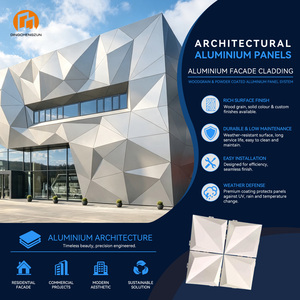
Modern Kazakh architecture increasingly incorporates fluid geometry, curved corner windows, and 3D sculptural metal envelope panels. Our factory is equipped with advanced CNC glass bending furnaces and automated aluminum fabrication lines capable of delivering OEM Custom Curved Tempered Insulated Glass alongside 3D faceted aluminum facade systems. By manufacturing both the structural glazing and exterior architectural cladding under one roof, we eliminate dimensional discrepancies between sub-frames and glass panels during on-site assembly.
3. Kazakhstan Market Trends & Direct Factory Supply Chain Logistics
The construction sector in Central Asia is undergoing rapid modernization. Key trends influencing procurement strategy for developers and procurement managers include:
1. Adoption of Modernized Energy Rating Systems: State regulations in Kazakhstan increasingly penalize energy-inefficient developments. Construction documents now specify maximum permissible U-factors for whole window assemblies (frame + glass), shifting demand away from non-thermally broken aluminum toward high-grade thermally broken systems filled with noble gases.
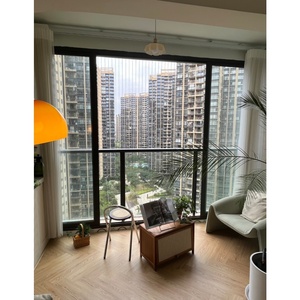
2. Rapid Urbanization and Phased Retrofitting: In cities like Karaganda, Aktobe, and Shymkent, legacy building stock is undergoing extensive retrofit programs. Modern double glazed replacement windows and balcony sliding doors are installed suite-by-suite, providing noise attenuation against urban traffic while cutting heating bills.
3. Direct Cross-Border Rail & Truck Freight Routes: Benefiting from strategic Eurasian transit corridors (including the Khorgos Dry Port logistics hub), our factory offers streamlined direct container delivery to major Kazakh freight terminals in Almaty and Astana. Fast-track customs clearance compliance (EAEU standards) guarantees predictable project delivery cycles without jobsite delays.
4. Vertical Integration: Why Direct Factory Sourcing Matters
Fenestration failure—such as seal failure leading to internal condensation, frame warping under wind loads, or air leakage—rarely stems from a single raw material defect. It is typically caused by divided accountability between aluminum profile extruders, glass coaters, insulated glass unit assemblers, and system fabricators.
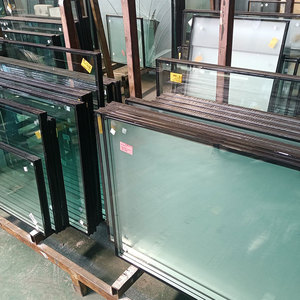
Our organization operates as a fully vertically integrated manufacturer. From aluminum profile extrusion, thermal break insertion, and precision CNC machining, to offline Low-E glass coating, automated IGU argon gas filling, and dual-seal structural silicone application, every step occurs within our quality-controlled production plant. Every lot undergoes rigorous testing according to CSA A440, AAMA/WDMA/CSA 101/I.S.2/A440, and EN 1279 standards prior to export packing.
Factory Quality Assurance Standards for Export Cargo
All double glazing shipments dispatched to the Kazakhstan market undergo 5 critical quality checkpoints:
Argon Gas Concentration Inspection: Non-destructive spark emission testing ensuring > 90% gas retention in seal gaps.
Dew Point Verification: Cold plate test verifying internal dew point ≤ -60°C to guarantee zero internal fogging under winter conditions.
Structural Sealant Adhesion: Butterfly and pull testing for secondary silicone edge seals.
Dimension & Diagonal Tolerance: Laser calibration checks ensuring frame and glass squareness within ± 1.0 mm.
Export Steel-Frame Crating: Heavy-duty timber and steel frame packaging with desiccated moisture barrier wrapping designed for long-distance rail transport.
Procurement Guidance
Frequently Asked Questions for Kazakh Buyers & Developers
Essential technical and logistical answers for architects, project managers, and importers sourcing double glazing from our factory.
1. What U-values can your double glazed window units achieve for northern Kazakhstan winter conditions?
Our standard double glazed Low-E insulating glass units with 16mm argon gas gaps achieve center-of-glass U-values as low as 1.1 W/m²·K. When paired with our thermally broken 110mm aluminum frames, the overall window assembly U-factor reaches 1.3 - 1.4 W/m²·K. For extreme northern regions like Astana or Petropavl requiring even higher insulation, we manufacture triple-glazed IGUs with dual Low-E coatings achieving whole-window U-factors below 0.8 W/m²·K.
2. How do you handle shipping and customs clearance into Almaty and Astana?
We provide full logistics support, offering containerized rail transport direct to major container yards (Almaty 1/2, Astana, Shymkent) via border crossings such as Khorgos/Alashankou. All export packages include full commercial documentation, Eurasian Economic Union (EAEU) compliance certificates, packing lists, and origin certificates to facilitate seamless customs clearance by your importing broker.
3. Are your double glazed units resistant to condensation and seal failure in severe sub-zero temperatures?
Yes. Internal fogging and seal failure are prevented through our dual-seal manufacturing process. Primary butyl sealant forms an impenetrable vapor barrier, while secondary structural silicone seals the perimeter against physical strain. Furthermore, we use warm-edge composite spacer bars instead of conductive aluminum spacers, reducing edge thermal bridging and maintaining internal glass edge dew points below -60°C.
4. Can your factory supply custom architectural shapes, such as curved IGUs or 3D facade panels?
Absolutely. We specialize in OEM customization for modern architectural projects. Our facility is equipped with automated glass bending furnaces capable of producing tempered curved double glazed IGUs, as well as 3D faceted aluminum facade cladding panels. We engineer these systems from your approved BIM or CAD drawings to ensure exact fit and structural integrity.
5. What is the typical production lead time and minimum order quantity (MOQ) for commercial orders?
Standard production lead time is 15 to 25 calendar days following shop drawing approval and deposit receipt. For standard profile configurations, our flexible manufacturing lines accommodate both full container loads (20GP/40HQ) for major developments and mixed project lots for specialized commercial developments.
6. What warranties do you provide on double glazed units and aluminum frame finishes?
We provide a 10-year factory warranty covering Insulated Glass Units against seal failure, internal dust accumulation, and film degradation. Our architectural aluminum frame powder coatings and PVDF surface finishes carry 10 to 20-year performance warranties against cracking, peeling, and color fading under atmospheric exposure.
Partner with a Leading Double Glazing Factory for Your Next Project in Kazakhstan
Get in touch with our technical sales team for comprehensive tender estimates, structural engineering calculations, and physical sample kits delivered to your office in Almaty, Astana, or worldwide.