
Engineered for extreme thermal resistance, structural integrity, and architectural brilliance across Switzerland
Switzerland presents one of the most demanding microclimatic spectrums in European architecture. From the high-altitude, intense ultraviolet exposure of alpine terrain in St. Moritz and Davos to the strict urban energy-efficiency targets of Zurich, Geneva, and Basel, structural glass must balance exceptional thermal insulation (Ug values), precise solar heat gain control (g-value), and optical clarity. As a premier manufacturer and international supplier of specialized Low-Emissivity (Low-E) glass systems, we provide Swiss architects, facade engineers, and general contractors with custom-engineered fenestration solutions that seamlessly align with SIA standards and Minergie sustainability frameworks.
Low-E glass technology functions through an imperceptible, microscopically thin metallic oxide coating applied directly to the glass surface. This coating acts as a selective thermal filter: it permits high levels of natural visible light to pass into the building interior while reflecting long-wave infrared thermal energy (heat) back to its source. In northern and central European climates, particularly across the Swiss plateau and alpine valleys, preventing winter indoor thermal escape while optimizing passive solar gains is paramount to achieving net-zero operational carbon targets.
Off-line nano-scale multi-layer silver coatings applied under high vacuum conditions. Delivers ultra-low U-values down to 0.5 W/m²K in triple-pane configurations with pristine color neutrality.
Combines spectrally selective solar heat rejection with low emissivity. Essential for commercial glass curtain walls in Geneva and Zurich to minimize air-conditioning loads during summer peaks.
Equipped with capillary tubes and special pressure-relief valves for Insulated Glass Units (IGUs) installed at high elevations to prevent glass deflection, optical distortion, or seal failure.
To assist Swiss specifiers, facade consultants, and LEED/Minergie auditors in selecting optimal glass make-ups, the following performance table details our primary Low-E glass configurations evaluated according to EN 410 and EN 673 standards.
| Glazing Configuration | Coating Type | Ug-Value (W/m²K) | Solar Factor (g-Value) | Light Transmittance (Tv %) | Sound Reduction (Rw dB) | Primary Swiss Application Zone |
|---|---|---|---|---|---|---|
| Triple Glazed Double-Low-E (Argon 90%) | Soft Coat Silver (Pos 2 & 5) | 0.5 W/m²K | 52% | 74% | 34 - 42 dB | Swiss Plateau Residential & Minergie-P Single-Family Homes |
| Triple Glazed Solar Control Low-E | Selective Magnetron (Pos 2) | 0.6 W/m²K | 35% | 62% | 36 - 46 dB | Commercial Office Towers in Zurich, Basel & Geneva Lobbies |
| Double Glazed Acoustic Low-E | Pyrolytic / Soft Coat (Pos 3) | 1.1 W/m²K | 60% | 80% | 42 - 50 dB | Urban Heritage Retrofit & Occupied Apartment Renovations |
| Laminated High-Altitude Low-E IGU | Double-Silver Soft Coat + PVB | 0.7 W/m²K | 48% | 70% | 38 - 45 dB | Alpine Resorts, Cable Car Terminals & High-Altitude Villas |
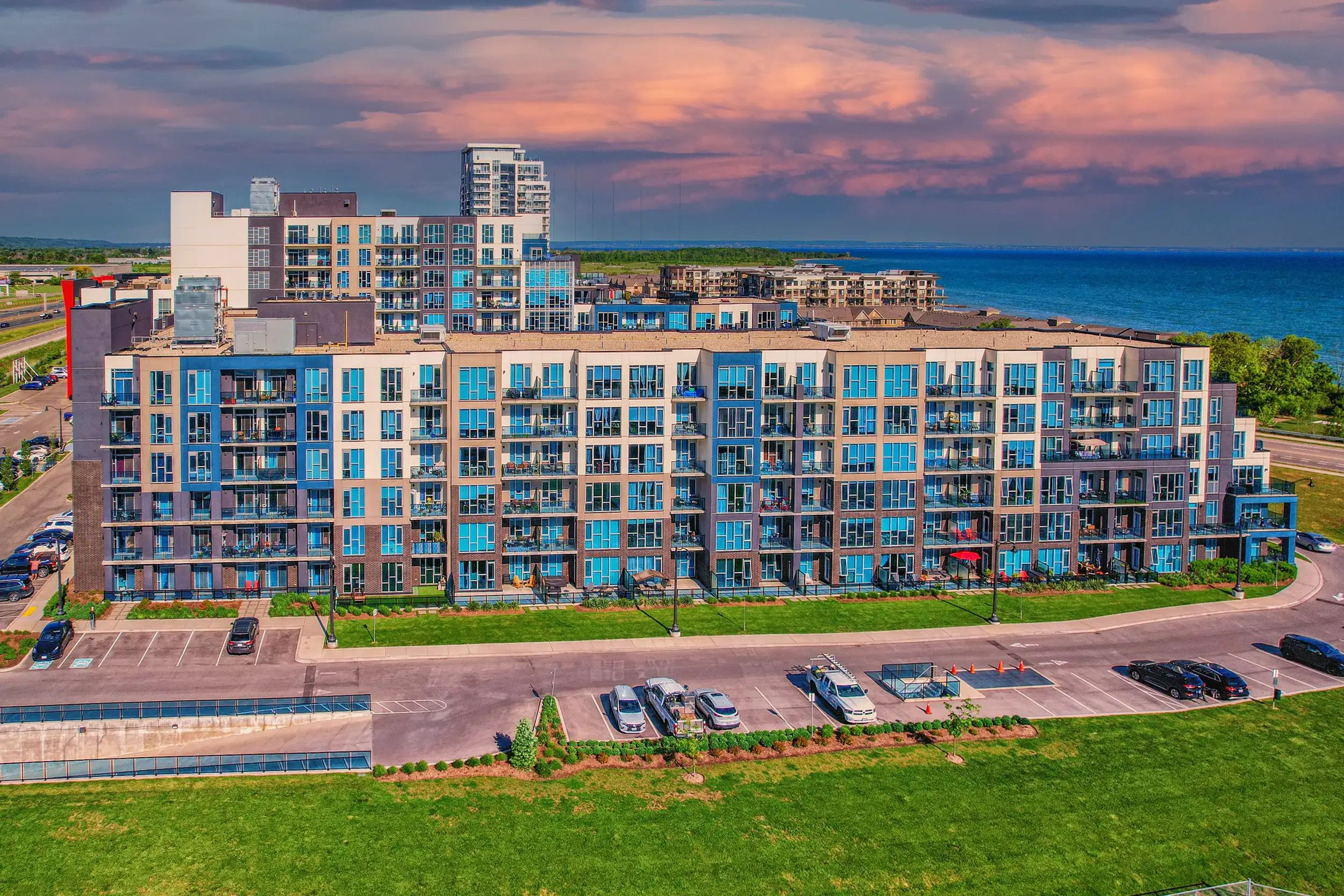
Fenestration performance failures in commercial buildings rarely stem from glass pane defect alone—they frequently occur at the interface between glass, frame thermal break, structural silicone, and installation sealing. We eliminate these coordination risks by providing a completely integrated single-source manufacturing ecosystem.
From our advanced production facilities, we control every critical assembly phase:
Building codes and architectural demands vary significantly across the Swiss Confederation. Our engineering team customizes glazing assemblies to satisfy specific cantonal regulations (MuKEn 2014 / EnDK guidelines):
To meet the ultra-stringent heating energy limit of less than 30 kWh/m² per year required by Minergie-P, windows must achieve overall system U-values ($U_w$) under 0.8 W/m²K. Our triple-pane Low-E systems equipped with warm-edge composite spacers (like Swisspacer Ultimate) easily achieve center-of-glass $U_g$ values of 0.5 W/m²K, eliminating cold downdrafts and perimeter radiator requirements.
Transporting sealed Insulated Glass Units fabricated at sea level up to mountain sites in Valais, Graubünden, or Bernese Oberland (elevations exceeding 1,000 to 2,500 meters) causes significant internal barometric pressure differential. Without proper engineering, the glass panes bow outward, risking sightline distortion or seal destruction. We integrate pressure equalization capillary tubes and factory-sealed altitude valves that allow IGUs to adjust during transit and installation without compromising argon gas retention.
In high-density Swiss urban corridors, sound insulation against tramway, rail, and street traffic is required under SIA 180. By pairing specialized asymmetric glass thicknesses (e.g., 8mm outer pane + 6mm inner pane) with acoustic PVB interlayers in our Low-E IGUs, sound reduction ratings up to $R_w = 48\text{ dB}$ are realized without compromising thermal efficiency.
Switzerland’s urban renewal strategy emphasizes energy renovation of existing residential housing stock rather than demolition. Our specialized retrofit window and facade systems allow multi-family apartment complexes to undergo complete fenestration upgrades without displacing residents.
Utilizing our rapid-turnarounds suite replacement methodology:
Expert answers regarding procurement, certifications, logistics, and technical specifications for the Swiss market
Our triple-pane Low-E insulated glass units achieve center-of-glass thermal transmittance ($U_g$) values as low as 0.5 W/m²K when filled with 90% Argon gas and built with warm-edge spacers. When paired with our thermally broken aluminum profile systems, the complete window system $U_w$ value meets and exceeds the Minergie-P threshold of $\le 0.8\text{ W/m}^2\text{K}$.
Yes. We manufacture jumbo-size Low-E toughened, laminated, and unitized curtain wall glass units up to 3,200mm x 6,000mm. All units are engineered to withstand cantonal wind load and snow load requirements according to SIA 261 (Actions on Structures).
For installations located above 800 meters elevation, we equip insulated glass units with specialized factory-installed altitude pressure-equalization capillary tubes or Schrader valves. This prevents glass deflection, optical distortion, and premature seal failure caused by atmospheric pressure variations between our manufacturing plant and high-altitude job sites.
All glass units exported to Switzerland carry full CE marking compliance and conform strictly to EN 1279 (Insulating Glass Units), EN 12150 (Thermally Toughened Safety Glass), and EN 14449 (Laminated Safety Glass). Full factory inspection certificates and declaration of performance (DoP) documents are provided with every delivery batch.
Standard lead time from final shop drawing sign-off to delivery at Swiss customs (e.g., Basel or Geneva borders) is typically 4 to 6 weeks. We manage sea/rail transport logistics, customs declaration, CH-MWST handling, and deliver directly to your job site in heavy-duty weatherproof timber crates tailored for crane hoisting.
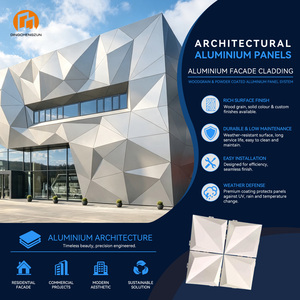
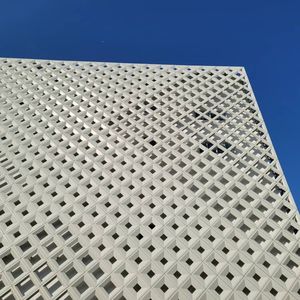
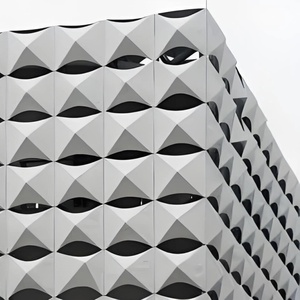
Yes, as a vertically integrated manufacturer, we supply pre-glazed curtain wall systems integrated with matching 3D faceted aluminum panels, PVDF composite cladding, laser-cut mesh screens, and heavy-duty automatic commercial entrance doors for a cohesive building envelope appearance.
Discuss your glass performance schedule, request thermal calculation submittals, or receive a competitive factory-direct quote from our senior facade engineering team today.