
Precision-engineered fenestration and structural curtain wall cladding solutions customized for Nagoya’s coastal climate, seismic loading, and CASBEE green building targets.
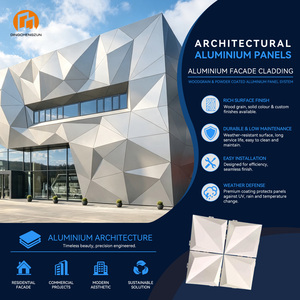
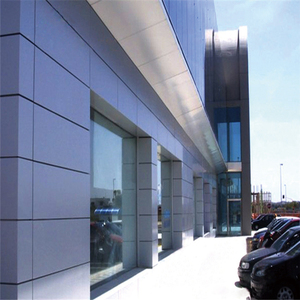
As the industrial heartland of Aichi Prefecture and Japan’s central economic powerhouse, Greater Nagoya presents unique microclimatic and structural challenges for architectural building envelopes. Commercial real estate developments in major hubs such as Meieki (Nagoya Station district), Sakae, and Fushimi, alongside expanding automotive R&D complexes in Toyota City and Kariya, require fenestration systems engineered for extreme seasonal performance shifts.
Nagoya experiences a humid subtropical climate (Köppen Cfa) characterized by stifling summer heat with temperatures exceeding 38°C and high relative humidity, followed by cold winter months dominated by the freezing dry winds known locally as "Ibuki-oroshi" blowing down from Mount Ibuki. This dual-thermal demand requires architectural glass solutions that drastically suppress Solar Heat Gain Coefficient (SHGC) during summer while maintaining minimal U-factor (thermal transmittance) during winter.
During July and August, solar irradiance in Aichi Prefecture causes severe cooling loads. Magnetron Sputtered Vacuum Deposition (MSVD) Triple-Silver Low-E coatings selectively reflect near-infrared radiation while permitting daylight transmission.
The cold Ibuki-oroshi wind generates intense convective heat transfer across glass facades. Gas-filled insulated glass units with warm-edge Thermoplastic Spacers (TPS) stop indoor condensation and edge heat sink effect.
Furthermore, Nagoya's geographic proximity to Ise Bay exposes coastal industrial facilities and marine transit infrastructure to salt-laden atmospheric humidity. Exterior metal framing, spandrels, and glass coatings must demonstrate robust resistance to accelerated corrosion under Japanese Industrial Standards (JIS).
Achieving compliance with Japan’s revised Act on the Rational Use of Energy (Energy Conservation Act) and obtaining high ratings under CASBEE Nagoya (Comprehensive Assessment System for Built Environment Efficiency) requires precise selection of glass coating chemistry, gas purity, and thermal break engineering.
| Low-E Glass Configuration | Visible Light Transmittance (VLT) | Solar Heat Gain (SHGC / η) | U-Factor (W/m²K - JIS R 3209) | Sound Transmission (STC Class) | Recommended Nagoya Application |
|---|---|---|---|---|---|
| Single-Silver Low-E (Double IGU) | 70% - 75% | 0.48 - 0.55 | 1.4 - 1.6 | STC 32 | Low-rise suburban residential & school retrofits |
| Double-Silver Solar Control Low-E | 60% - 65% | 0.30 - 0.35 | 1.0 - 1.2 | STC 36 | Mid-rise office buildings in Kanayama & Atsuta |
| Triple-Silver High-Selective Low-E | 50% - 62% | 0.22 - 0.26 | 0.75 - 0.90 | STC 40 | Meieki & Sakae high-rise commercial curtain walls |
| Triple-Pane Low-E + Argon + TPS Spacer | 45% - 55% | 0.20 - 0.24 | 0.58 - 0.70 | STC 42+ | Net-Zero Energy Buildings (ZEB) & Toyota HQ facilities |
| Acoustic Laminated Low-E (SGP Interlayer) | 65% - 70% | 0.32 - 0.38 | 1.1 - 1.3 | STC 45+ | Hospitality & residential towers adjacent to JR lines |
Our insulated glass units are manufactured using advanced offline coating technology, layering microscopic microscopic layers of silver ($Ag$), titanium dioxide ($TiO_2$), and silicon nitride ($Si_3N_4$) to reach optimal spectral selectivity—maximizing daylight while reflecting up to 98.5% of solar heat energy.
As a leading supplier and exporter supplying foreign-trade project contractors, Japanese general contractors (Taisei, Obayashi, Kajima, Takenaka, Shimizu), and glass glazing specialists in Aichi, our engineering team tailors facade packages to specific local urban topographies:
For high-density urban office towers, wind loads exceeding 3.0 kPa and inter-story structural drift require heavy-duty pressure-equalized stick or unitized curtain wall frames fitted with double-laminated triple-silver Low-E glass.
Large-span automotive research centers and assembly administrative centers require glare control and high daylighting factor. Micro-perforated sunscreens paired with low-reflectance Low-E prevent operator eye fatigue while lowering HVAC demand.
Marine environments require salt-spray resistant PVDF coatings (AAMA 2605 specification) combined with stainless steel warm-edge spacers and sealed edge-deletion Low-E glass to eliminate edge sealant breakdown under salt humidity.
Educational institutions in Chikusa and Showa Wards focus on occupant wellness and sound dampening. Acoustic Low-E glass units reduce urban rail and traffic noise by up to 42 decibels while meeting stringent daylight quotas.
Nagoya City has established aggressive decarbonization goals, mandating energy consumption reductions for all new construction exceeding 2,000 square meters. The rapid adoption of Net Zero Energy Building (ZEB) Ready, ZEB Oriented, and ZEB Super-Oriented standards is reshaping building envelope procurement across Japan.
Traditional single-pane and basic dual-pane un-coated glass are rapidly being phased out in Japanese municipal specs. Specifiers are shifting to triple-pane IGUs integrated with double Low-E surfaces and krypton/argon gas fills to lower envelope energy losses below 0.8 W/m²K.
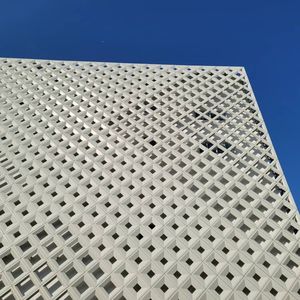
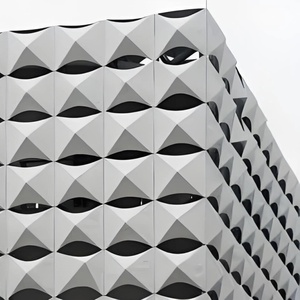
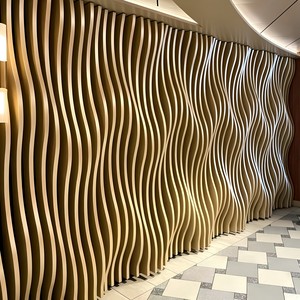
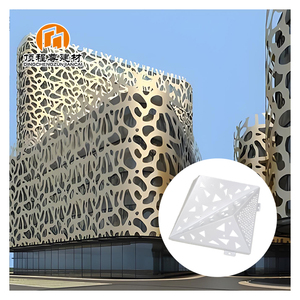
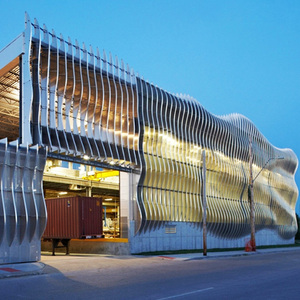
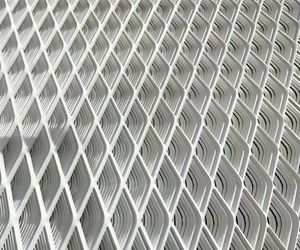
To mitigate the urban heat island effect around Nagoya Station, architects are combining Low-E structural glazing with secondary dynamic facades—such as laser-cut aluminum rainscreen louvers, motorized kinetic sunshades, and corrugated metallic mesh screens that generate natural chimney ventilation.
Located within Japan's active seismic zone along the Nankai Trough boundary, buildings in Nagoya must withstand extreme seismic shear movement. Structural silicone glazing (SSG) systems and dry-glazed aluminum frames supplied by our factory are engineered for cyclic inter-story drift displacements up to 1/100, preventing glass breakage or pop-out during major earthquakes.
With over 35 years of dedicated manufacturing, engineering, and global export experience, our organization provides a vertically integrated supply chain model that eliminates fragmented subcontractor risks between aluminum extrusion, glass coating, unit glazing, and ocean freight logistics.
From primary alloy billet extrusion, thermal break polyamide strip insertion, and CNC machining to automated insulating glass assembly under cleanroom conditions, every process is conducted under unified Quality Control (QC).
Our product lines undergo rigorous testing for air permeability, water tightness under pressure, wind load resistance, and thermal cycle durability, matching JIS, CSA A440, and AAMA-NAFS criteria.
Our engineering division produces detailed structural calculation packages, thermal simulation reports (WINDOW/THERM software), wind tunnel structural analysis, and Revit BIM models tailored for Japanese architects.
We supply heavy-duty steel A-frame sea packaging, moisture-barrier wrapping, and direct container shipping logistics to the Port of Nagoya (Nagoya-ko), ensuring zero breakage upon site arrival.
Planning a commercial curtain wall project, high-rise retrofit, or industrial facility in Greater Nagoya? Contact our engineering team for Low-E glass performance modeling, structural calculations, and factory-direct pricing.