
Engineered for high-density multi-family, commercial developments, and modern institutional facades across Bulgaria and the European Union.
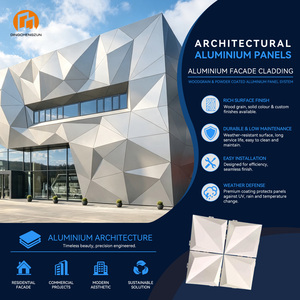
Sculptural architectural facade cladding system designed for parametric building envelopes and modern iconic developments.
Inquire Now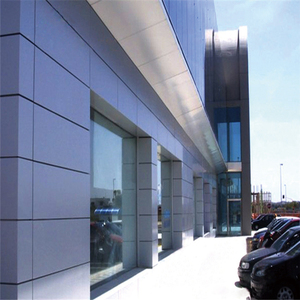
Fire-rated A2 composite wall cladding for exterior interior partitions, commercial envelopes, and retail storefronts.
Inquire Now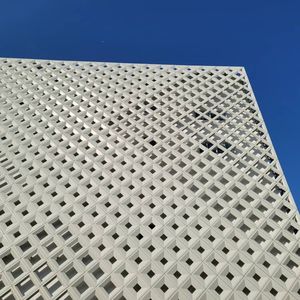
Bespoke perforated curtain wall screen systems for sun shading, architectural ventilation, and decorative envelope overlays.
Inquire Now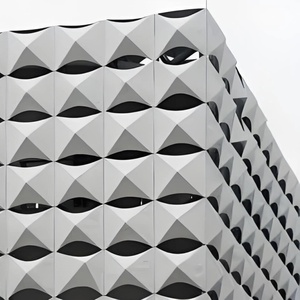
High-span exterior structural framing for shopping malls, office complexes, and high-rise commercial tower envelopes.
Inquire Now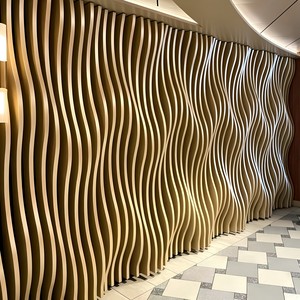
Hyper-realistic sublimate wood-effect curved profile panels combining natural aesthetic warmth with non-combustible metal longevity.
Inquire Now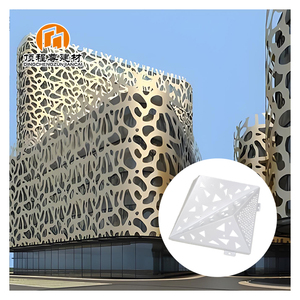
Engineered lightweight metal envelope panels engineered for hospitality, luxury multi-family balconies, and podium elevations.
Inquire Now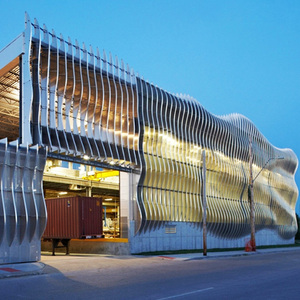
Dynamic wave-profile corrugated wall panel and kinetic facade system providing dramatic shadow lines and wind attenuation.
Inquire Now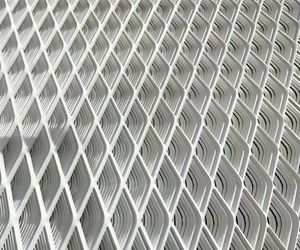
Heavy-duty aluminum mesh screens for parking structures, ventilation louvers, and contemporary commercial building skins.
Inquire NowThe European commercial building envelope market is undergoing a seismic shift driven by the EU’s updated Energy Performance of Buildings Directive (EPBD 2024) and stringent Nearly Zero-Energy Building (nZEB) mandates. Within this landscape, Bulgaria has emerged as an elite industrial hub for new construction window manufacturing, commercial curtain wall fabrication, and high-performance architectural aluminum processing.
Bulgaria’s strategic position within the European Union offers real estate developers, general contractors, and architectural specifiers a unique convergence of benefits: deep metallurgical expertise, competitive operational economics, direct access to Black Sea and Pan-European transport corridors (Corridors IV, VIII, and X), and strict compliance with Harmonized European Standard EN 14351-1 for CE marking.
Factories operating in Bulgaria eliminate third-country customs delays and volatile tariff structures, providing seamless duty-free logistics across all EU member states with full compliance under EPD (Environmental Product Declarations) and REACH regulations.
Bulgarian manufacturing plants utilize state-of-the-art Polyamide (PA66 GF25) thermal insulation bars integrated into multi-chamber aluminum profile extrusions, achieving thermal transmittance values as low as Uw = 0.72 W/m²K.
Modern new construction projects require window systems capable of addressing complex structural loads, severe wind pressures, solar heat gain coefficient (SHGC) optimizations, and rigorous sound attenuation. Facilities in industrial clusters around Plovdiv, Sofia, Ruse, and Burgas are equipped with 5-axis CNC machining centers, automated insulating glass unit (IGU) robot lines, and Qualicoat-certified powder coating operations capable of executing complex custom architectural packages at scale.
Sourcing windows for new construction in Southeastern Europe requires localized thermal, structural, and aesthetic adaptations. Bulgaria’s geography ranges from extreme alpine climates in the Rila and Pirin mountain regions to humid, high-salinity coastal environments along the Black Sea coastline, demanding specialized fenestration engineering.
In rapidly expanding commercial and residential hubs like Sofia’s Business Park district and Plovdiv’s industrial belt, new construction prioritizes structural curtain walls and floor-to-ceiling unitized window systems. High sound insulation values (Rw ≥ 44 dB to 48 dB) are essential to mitigate urban traffic noise. Thermally broken aluminum tilt-and-turn profiles paired with acoustic PVB laminated glass assemblies dominate these tender specifications.
Coastal developments along the Black Sea face intense saline atmospheric conditions and high wind velocities during winter storms. Fenestration systems specified for these zones require Qualanod Class 20 anodized finishes or Qualicoat Seaside-class powder coatings to prevent filiform corrosion. Additionally, high air permeability performance (EN 12207 Class 4) and water tightness (EN 12208 Class E1200) ensure long-term structural integrity against wind-driven rain.
Mountainous regions experience extreme temperature swings between summer heat and sub-zero winter blasts. Window manufacturing for alpine new construction emphasizes multi-chambered thermally broken profiles with polyurethane foam infill, argon-gas filled triple pane glazing, and warm-edge spacers to eliminate condensation and maintain interior thermal comfort under extreme frost conditions.
Over 80% of new commercial office projects in Sofia specify fenestration engineered to contribute directly to LEED Gold/Platinum and BREEAM Outstanding credits through documented lower lifecycle carbon emissions and high recycled aluminum content (up to 75% post-consumer billet).
Lightweight, durable aluminum storefront framing and continuous horizontal glass strip facades are widely deployed across logistics parks in Elin Pelin and Bozhurishte for rapid installation speed and minimal long-term exterior maintenance.
This technical comparative matrix outlines standard engineering parameters for window profiles manufactured in Bulgaria for high-performance commercial and multi-family projects:
| Profile System Type | Depth (mm) | Thermal Transmittance (Uw) | Glazing Thickness | Acoustic Rating (Rw) | Target Application |
|---|---|---|---|---|---|
| Ultra-Thermal Passive Aluminium | 90 mm | 0.72 – 0.85 W/m²K | 48 – 62 mm (Triple) | Up to 48 dB | nZEB Multi-family & Luxury Villas |
| Standard Commercial Architectural | 75 mm | 1.0 – 1.3 W/m²K | 32 – 44 mm (Double/Triple) | 40 – 44 dB | Mid-Rise Apartments & Offices |
| Unitized Curtain Wall (Structural) | 150 - 200 mm | 0.9 – 1.2 W/m²K | 36 – 52 mm (Triple) | 42 – 46 dB | High-Rise Towers & Commercial Envelopes |
| Heavy-Duty Commercial Storefront | 65 mm | 1.4 – 1.7 W/m²K | 24 – 32 mm (Double) | 36 – 40 dB | Ground Floor Retail & Logistics Lobbies |
| Slim-Line Architectural Sliding | 140 mm track | 0.95 – 1.2 W/m²K | 38 – 48 mm (Triple) | 38 – 42 dB | Terraces, Penthouses & Hotels |
*Note: All values verified according to EN ISO 10077-2. Glass configurations assume Low-E coatings with Argon gas fill (90%).
Building envelope failures—whether water leakage, air infiltration, or thermal bridging—frequently result from fragmented responsibilities between profile extruders, glass fabricators, hardware suppliers, and site installers. Our integrated manufacturing framework eliminates these critical operational gaps by governing the entire value chain under one quality control system.
From initial shop drawings and structural wind load calculations to precision extruding, thermal break insertion, CNC milling, unitized assembly, and job-site crane delivery—every step is executed under factory-controlled quality standards.
This vertical integration ensures rapid response times for custom architectural profiles, absolute color consistency across batch anodizing or powder coating, and direct schedule alignment with the general contractor’s floor-by-floor concrete pour sequence.
Products undergo systematic testing across key parameters:
Bulgaria combines full European Union membership (guaranteeing zero tariffs, duty-free trade, and CE marking compliance) with highly skilled metallurgical engineering and optimized labor overhead. This allows factories in Bulgaria to produce high-end, thermally broken aluminum and PVC window systems matching or exceeding Western European standards at significantly more competitive cost structures.
Yes. Window systems manufactured for new construction comply fully with EN 14351-1 and meet the stringent Nearly Zero-Energy Building (nZEB) standards required across EU member states. With Uw values reaching down to 0.72 W/m²K, triple glazing assemblies, and warm-edge technology, these products meet energy efficiency targets for projects in Germany, France, Scandinavia, and the Balkans.
Standard architectural profile systems typically require 4 to 6 weeks from shop drawing sign-off to site delivery. Custom extruded profile dies, bespoke anodized finishes, or specialized acoustic glass make-ups range between 6 to 9 weeks. Delivery across Central and Western Europe is streamlined via direct overland highway trucking.
Absolutely. Modern manufacturing plants in Bulgaria feature in-house R&D teams equipped with 3D CAD/CAM modeling, matrix die creation, CNC profile machining, and automated assembly line capabilities to engineer custom OEM profile systems tailored specifically to architectural specifications.
Profiles intended for coastal microclimates undergo Qualicoat Seaside pretreatment (such as pre-anodization or chrome-free etching) or high-micron hard-coat anodizing (Qualanod Class 20/25). This process prevents filiform corrosion, pitting, and UV degradation caused by salt spray and intense sun exposure.