Engineered glass units, double/triple glazed insulated assemblies, and custom aluminum curtain wall systems tailored for South Korea's demanding urban architecture.
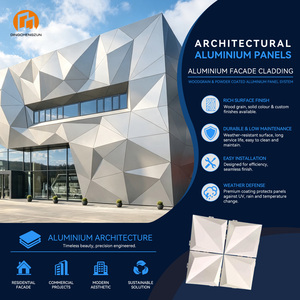
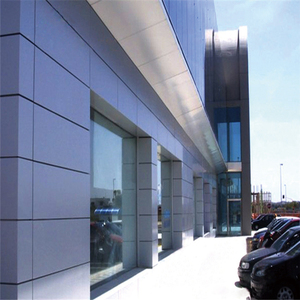
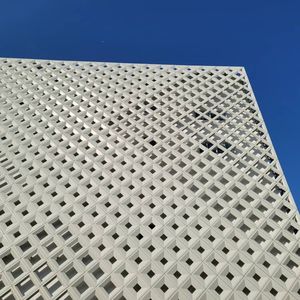
South Korea’s modern architectural landscape is governed by some of the world’s most stringent energy efficiency mandates. With the nationwide implementation of the mandatory Zero Energy Building (ZEB) Certification Roadmap across commercial and public residential developments, building envelopes require exceptional thermal performance. Specifying high-performance Low-Emissivity (Low-E) glass integrated with advanced aluminum curtain wall profiles has shifted from an optional green feature to an essential engineering standard.
As a premier OEM/ODM manufacturer specializing in high-performance architectural glass and custom fenestration, we engineer double-silver and triple-silver Low-E insulated glass units (IGUs) designed specifically to address Korea’s severe climatic dualities—ranging from humid, high-solar summer heatwaves to sub-zero Siberian winter winds in Region 1 (Central South Korea).
Our OEM/ODM manufacturing processes adhere rigorously to Korean Industrial Standards (KS), including KS L 2017 (Coated Glass) and KS L 2003 (Multiple Glass). Every lot undergoes automated thermal imaging and optical quality control to guarantee compliance for tier-1 Korean contractors.
Utilizing state-of-the-art vacuum magnetron sputtering lines, our Low-E glass achieves a high Visible Light Transmittance (VLT > 65%) while suppressing the Solar Heat Gain Coefficient (SHGC < 0.28), ensuring glare-free daylighting without heat overload.
Equipped with warm-edge composite spacers (0.007 W/mK conductivity) and 90%+ pure Argon/Krypton gas filling, our insulated glass units eliminate perimeter condensation risk even under Korean cold snaps down to -15°C.
Custom OEM/ODM solutions tailored for regional structural, environmental, and regulatory challenges across Korea’s primary metropolitan zones.
Urban density in Seoul requires building envelopes to deliver extreme acoustic attenuation (STC 42+) alongside thermal performance. Our custom triple-laminated Low-E curtain wall units absorb low-frequency traffic noise along Gyeongbu Expressway while meeting Seoul Municipality’s strict Green Building Certification (GBCS) score.
Developments in coastal Incheon face intense saline exposure and high wind loads. We supply anodized and PVDF-coated aluminum facade structures paired with marine-grade double-sealed Low-E glass that resists salt spray corrosion and wind pressures up to 3.5 kPa.
Coastal skyscrapers in Busan demand maximum structural integrity to withstand late-summer East Asian typhoons. Our engineered toughened Low-E glass and heavy-duty structural glazing framing systems are dynamic-wind-pressure tested up to 5.0 kPa without deflection.
Next-generation R&D campuses in Pangyo prioritize daylighting harvesting and solar control. Our dynamic ceramic-fritted Low-E facade units regulate interior lux levels, reducing artificial lighting energy consumption by up to 32% while protecting sensitive IT servers from solar radiation.
Comparative technical metrics for Korean architectural procurement teams and facade consultants.
| Glazing Configuration | Visible Light Trans. (VLT) | Solar Heat Gain (SHGC) | U-Value (W/m²K, EN 673) | Acoustic Rating (STC) | Korea Market Suitability |
|---|---|---|---|---|---|
| Double Silver Low-E (6mm + 12Ar + 6mm) | 70% | 0.38 | 1.2 W/m²K | STC 36 dB | Standard Commercial Towers / Public Housing |
| Triple Silver Low-E (6mm + 16Ar + 6mm) | 64% | 0.27 | 1.0 W/m²K | STC 38 dB | ZEB Grade Seoul Office Buildings |
| Triple-Pane Triple Silver (6+12Ar+6+12Ar+6) | 58% | 0.22 | 0.74 W/m²K | STC 42 dB | Passive House Region 1 Cold Zone |
| Laminated Acoustical Low-E (6+1.52PVB+6+16Ar+6) | 62% | 0.31 | 0.98 W/m²K | STC 45 dB | High-Density Highway & Airport Environs |
1. Accelerated Zero Energy Building (ZEB) Mandates: Starting in 2024–2025, South Korea has extended mandatory ZEB Level 5 compliance to private multi-family residential complexes with over 30 units. Building envelopes must maintain overall window U-values of < 0.9 W/m²K, forcing a rapid shift from traditional double glass to argon-filled triple-glazed Low-E systems.
2. BIPV (Building Integrated Photovoltaics) Synergies: Korean urban architectural designs increasingly blend semi-transparent spandrel Low-E glass with customized BIPV modules, creating cohesive, power-generating exterior skins that preserve sleek metallic visual aesthetics.
3. Fire Safety & Non-Combustible Materials Regulations: Following revisions to the Korean Building Act regarding high-rise exterior insulation and cladding, facade systems must strictly utilize Class A fire-rated non-combustible materials. Our aluminum composite panels and solid aluminum cladding panels feature mineral-filled fire-resistant cores paired with high-durability PVDF coatings.
Single-source OEM/ODM fabrication, rigorous quality control, and streamlined direct shipping to Busan and Incheon ports.
From raw aluminum extrusion profile machining, thermal breaking, and CNC laser cutting to glass tempering, Low-E sputtering, and IGU assembly—all operations occur within our controlled facility under ISO 9001/14001 certification.
We provide full structural calculations, thermal finite-element analysis (THERM/WINDOW simulation software), structural silicone compatibility testing reports, and custom 1:1 scale facade mock-ups for Korean project consultant sign-offs.
Custom heavy-duty A-frame crate packaging guarantees 0% breakage during maritime transit. We offer flexible FOB/CIF/DDP incoterms with expedited 12-to-18-day ocean transit times directly to South Korean ports.
Addressing key inquiries from South Korean importers, procurement engineers, and general contractors.
Consult with our structural glazing experts today. Receive thermal performance simulations, KS compliance documentation, and factory-direct OEM/ODM pricing for your project.