
Explore our premium exporter-grade aluminum facade panels, storefront framing extruded profiles, and engineered curtain wall systems tailored for Central American building standards.
An in-depth whitepaper analysis on structural design parameters, thermal insulation requirements, and seismic resilience for commercial building envelopes across Central America.
Designing commercial building envelopes for the Costa Rican construction sector requires a sophisticated engineering approach. Unlike standard North American or European temperate deployments, fenestration and storefront framing systems installed in Costa Rica must simultaneously withstand intense tropical UV radiation, high annual relative humidity (often exceeding 85%), aggressive atmospheric salinity in coastal corridors (such as Guanacaste and Puntarenas), and frequent seismic accelerations mandated under the Código Sísmico de Costa Rica (CSCR 2010).
As a specialized global manufacturer and direct exporter of commercial aluminum windows, entrance doors, kinetic facades, and storefront framing systems, our structural engineering team works in direct alignment with Costa Rican developers, general contractors, and architectural consultants. By maintaining complete vertically integrated control—from billet extrusion and polyamide thermal break insertion to factory-controlled double-seal glazing—we provide high-performance architectural envelopes engineered to eliminate water ingress, reduce solar heat gain coefficients (SHGC), and deliver certified structural stability under severe wind load events.
How specialized storefront framing and architectural facade panels resolve site-specific environmental challenges throughout Costa Rica's key investment zones.
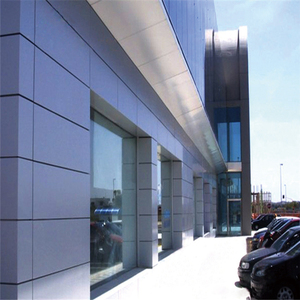
Urban Commercial Hubs & Corporate Parks: High-density urban settings in San José demand storefront systems with elevated Sound Transmission Class (STC 38–42) and Outdoor-Indoor Transmission Class (OITC) ratings to mute dense city traffic. Our pressure-equalized, thermally broken storefront profiles feature integrated polyamide thermal barriers that drastically curtail interior HVAC cooling loads, directly aligning with Costa Rica’s National Decarbonization Plan 2018–2050 and LEED Gold building certifications.
Luxury Hospitality & Eco-Resort Developments: Coastal applications represent one of the most punishing atmospheric environments for commercial metals. High salt spray fog, severe wind-driven rain, and extreme solar irradiance cause rapid pitting corrosion and coating degradation on standard extrusions. We supply heavy-duty storefront frames treated with AAMA 2605-grade 70% Fluoropolymer (PVDF / Kynar 500®) coatings or 25-micron marine anodization, ensuring zero surface oxidation and long-term color retention against maritime salinity (C5-M exposure rating).
Industrial Tech Parks & Logistics Centers: High-frequency commercial entrances and storefront framing in free trade logistics hubs demand extreme cycle durability and reinforced shear resistance. Our heavy-stile entrance doors and wide-profile storefront framing utilize heavy-wall 6063-T6 aluminum alloys, corner-block mechanical keying, and continuous stainless-steel hardware to support continuous foot traffic while resisting wind pressures up to 1.8 kPa under ASCE 7-16 structural guidelines.
Comparative technical data designed to assist structural engineers and specifiers in selecting the correct fenestration system based on building height, wind loads, and thermal targets.
| System Architecture | Typical Profile Depth | Max Wind Load (kPa) | Seismic Drift Rating (CSCR) | Thermal U-Factor (W/m²·K) | Recommended Application |
|---|---|---|---|---|---|
| Standard Non-Thermal Storefront | 1.75" x 4.5" (44.5mm x 114.3mm) | 1.2 - 1.5 kPa | ± 1.5% Story Height | 3.8 - 4.5 | Interior commercial vestibules, shaded street-level retail in GAM. |
| Thermally Broken Storefront System | 2.0" x 4.5" (50.8mm x 114.3mm) | 1.8 - 2.4 kPa | ± 2.5% Story Height | 1.6 - 2.1 | Low-to-mid rise ground retail, office facades, tropical energy efficiency. |
| Heavy-Duty Unitized Curtain Wall | 2.5" x 7.5" (63.5mm x 190.5mm) | 3.0 - 4.5 kPa | ± 4.0% Story Height | 1.2 - 1.7 | High-rise towers, exposed coastal hotel facades, extreme wind zones. |
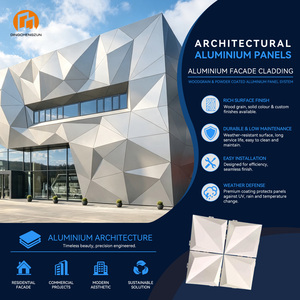
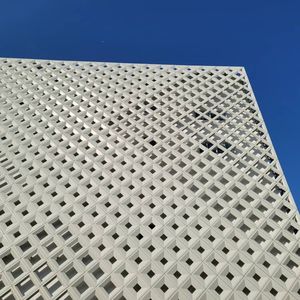
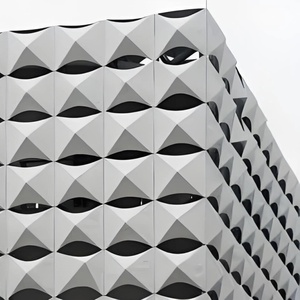
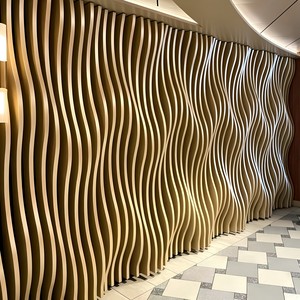
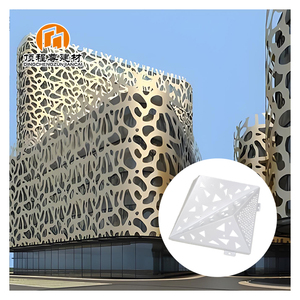
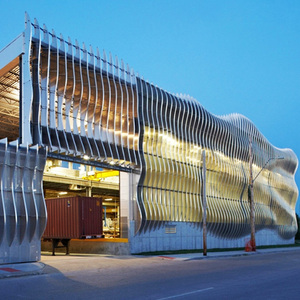
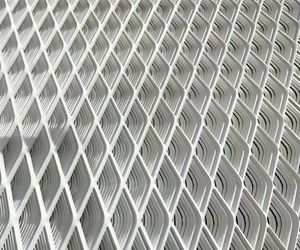
| 3D Faceted / Perforated Rain-screen | Custom Depth (1.5mm - 4.0mm Panel) | 2.5 - 3.5 kPa | Independent Movement Clips | N/A (Shading Envelope) | Exterior architectural shading, kinetic aesthetic facades, solar protection. |
*Note: All performance parameters are laboratory tested under CSA A440 / AAMA-NAFS standards and can be custom-engineered to meet specific Costa Rican CFIA project specifications.
Key economic, environmental, and regulatory factors driving the demand for high-performance exported storefront systems.
Developers in Papagayo, Nosara, and Santa Teresa are prioritizing architectural facades that merge expansive sightlines with minimal environmental footprints. High-performance aluminum storefronts with slim sightlines and warm-edge double-glazed Low-E glass maximize natural light while insulating interiors against extreme heat, lowering hotel operational carbon footprints.
Costa Rica’s local sustainable building standard (RESET) and international LEED guidelines mandate strict energy conservation goals. Our exported thermally broken storefront systems use low-embodied-carbon recycled aluminum billets paired with high-performance double Low-E Argon-filled glazing to achieve compliant U-factors and zero air leakage.
Because Costa Rica is positioned along the active Pacific Ring of Fire, building regulators enforce strict seismic frame displacement allowances. Our engineered storefront framing systems utilize dynamic EPDM perimeter gaskets, split-mullion expansion joints, and structural silicone structural glazing (SSG) that flex safely under lateral seismic stress without compromising glass integrity.
Combining over 35 years of Canadian manufacturing discipline with seamless export logistics designed for Costa Rican port operations.
Unlike regional brokers who source extrusions, glass, and hardware from disparate suppliers, our facility manages aluminum extrusion, CNC machining, thermal break insertion, powder coating, double-seal glass assembly, and final export packing under one centralized Quality Management System. This eliminates supply chain friction and guarantees precise component fitment.
We possess extensive experience delivering full container loads (FCL) directly to major Costa Rican entry points, including Puerto Caldera (Pacific) and Puerto Limón (Atlantic). All export documentation, certificate of origin paperwork under CAFTA-DR (Dominican Republic-Central America Free Trade Agreement), and custom crating are prepared in-house for swift customs clearance.
Our aluminum storefront systems and entrance doors undergo rigorous third-party laboratory testing for air infiltration, water penetration resistance under high wind pressure, dynamic seismic drift, and structural load capacity. Test reports and engineered submittal drawings are provided for architect approval prior to production release.
We provide full structural calculations, wind load modeling, thermal analysis, and detailed CAD/BIM shop drawings tailored to your project elevation requirements. Our engineering team assists local Costa Rican consultants in selecting optimal profile depths, thermal break configurations, and glass tinting options for maximum cost efficiency.
Frequently asked questions by architects, structural engineers, developers, and import managers regarding ordering, shipping, and technical specifications.
Send our export engineering team your architectural elevations, window schedules, or tender specifications. We provide complete structural analysis, U-factor optimization, and competitive factory-direct export quotations.