
Certified Architectural Systems Fabricated to Eurocode Standards, Meeting Strict Lombardy Energy Directives and CAM Sustainability Criteria.
Quantifiable Performance Delivered Across European Architectural Projects
Milan operates under a distinct sub-continental microclimate characterized by severe thermal swings: icy, high-humidity winters with temperatures dropping below freezing, paired with intensely hot, sun-saturated summers reaching upwards of 35°C. For architectural envelope designers, structural engineers, and general contractors in Lombardy, these climate parameters demand advanced Thermally Broken Aluminum (Taglio Termico) assemblies capable of eliminating thermal bridging, stopping interstitial condensation, and satisfying strict Italian national energy codes (NTC 2018 and D.M. Requisiti Minimi).
Aluminum exhibits a naturally high thermal conductivity rate of approximately $200 \text{ W/m}\cdot\text{K}$. Left uninsulated, standard aluminum fenestration frames act as direct thermal conductors, transferring exterior winter chill or summer radiative heat into interior building zones. Our factories utilize precision-extruded Polyamide 66 reinforced with 25% Structural Glass Fiber (PA66 GF25) thermal break strips. Mechanically crimped between inner and outer extruded aluminum profiles, these thermal isolators reduce system conductivity down to less than $0.3 \text{ W/m}\cdot\text{K}$, enabling total window assembly U-values ($U_w$) as low as $0.85 \text{ W/m}^2\text{K}$.
Engineered with 25% glass fiber reinforcement matching aluminum’s linear coefficient of thermal expansion ($\alpha = 2.3 \times 10^{-5}/\text{K}$). Prevents frame distortion under extreme shear stress during hot Milanese summers and cold winters.
High interior surface temperatures ($T_i$) maintain dew point separation during humid Lombardian winters, mitigating indoor mold risks, preserving interior finishes, and improving occupant wellness.
Fully certified under Minimum Environmental Criteria (Criteri Ambientali Minimi - CAM), utilizing over 75% recycled billet material to earn vital LEED Gold/Platinum and BREEAM points on Milan developments.
Milan represents a dynamic architectural synthesis: from high-density commercial skyscrapers in Porta Nuova and CityLife to meticulous historic retrofits in Brera and Navigli, alongside expanding logistics centers in Monza, Rho, and Sesto San Giovanni.
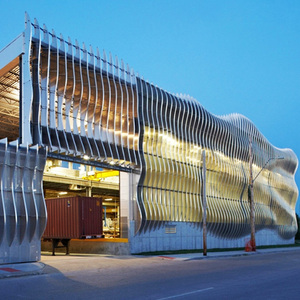
High-rise commercial towers demand pressure-equalized, unitized curtain wall assemblies engineered to withstand extreme wind pressure loads ($P_3 \ge 2400 \text{ Pa}$) according to EN 13830 standards. Our factory pre-assembled unitized panels integrate thermally broken mullions, high-selective double/triple Low-E glazing, and custom kinetic 3D aluminum cladding, allowing rapid crane-assisted installation within dense urban crane zones.
Retrofitting heritage structures in Milan's historic core requires precise balance between architectural conservation and modern thermal performance. Our custom narrow-sightline thermally broken aluminum profiles replicate historical ironwork and timber sightlines while delivering acoustic attenuation up to R_w = 48 dB, shielding occupants from ambient city traffic noise.
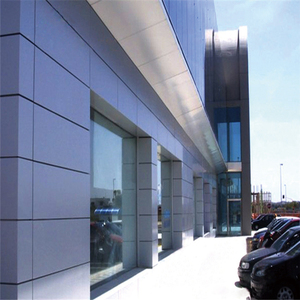
Large-span commercial spaces and distribution hubs surrounding Greater Milan utilize our insulated aluminum composite cladding panels (ACM/ACP) and corrugated aluminum rainscreen systems. Built with non-combustible mineral core fire ratings (EN 13501-1 Class A2-s1, d0), these systems deliver long-term thermal envelope protection with zero maintenance requirements.
Comprehensive Engineering Ratings Verified under European Norm (EN) Testing Protocols
| Performance Parameter | Testing Standard | Achieved Engineering Rating | Application Impact for Milan Projects |
|---|---|---|---|
| Thermal Transmittance (Uw) | EN ISO 10077-2 | 0.85 – 1.2 W/m²K | Exceeds Lombardy Building Code (Uw ≤ 1.3) |
| Air Infiltration | EN 12152 | Class AE 1500 Pa | Prevents draughts & forced HVAC energy loss |
| Water Tightness | EN 12154 | Class RE 1200 Static / Dynamic | Protects interior spaces from heavy wind-driven rain |
| Wind Load Resistance | EN 12210 / EN 13116 | Design Load 2400 Pa / Safety 3600 Pa | Certified for high-rise tower wind shear stresses |
| Acoustic Insulation (Rw) | EN ISO 717-1 | 38 dB – 48 dB (with Laminated Acoustic Glass) | Eliminates urban noise pollution in residential zones |
| Fire Safety Rating | EN 13501-1 | A2-s1, d0 Non-Combustible Core | Complies with strict high-rise facade safety laws |
| Anodizing & Coating Quality | QUALICOAT Class 2 / QUALANOD | PVDF 3-Coat / 25 Micron Anodized | Resists aggressive urban smog and chemical fallout |
In traditional construction workflows, split procurement between aluminum extruders, thermal break assemblers, glass fabricators, and site installers frequently leads to communication breakdowns, site delays, missed tolerances, and disputed warranty claims.
We operate as a fully vertically integrated manufacturer and engineering partner. From raw billet alloy formulation (6063-T6 / 6060-T66) to automated PA66 thermal break insertion, CNC precision machining, double/triple glazing assembly, and structured floor-by-floor logistics, we control every single link of the production chain.
Our structural engineering team generates complete BIM models, thermal modeling simulations (LBNL THERM/WINDOW), and Finite Element Analysis (FEA) for custom anchorage connections before profile extrusion begins.
Units are glazed in factory-controlled environments using dual-sealed structural silicone (ETA-05/0068) with automated robot application, eliminating on-site weather contamination during assembly.
Facilitated delivery logistics packaged floor-by-floor and elevation-by-elevation in dedicated protective stillages, aligned perfectly with site crane schedules in restricted Milan urban centers (ZTL).
Direct Answers to Critical Technical Questions Asked by Lombardy Developers, Specifiers, and General Contractors
All our thermally broken window, door, and curtain wall products carry complete CE marking under EN 14351-1 (Windows & Doors) and EN 13830 (Curtain Walls). They fully comply with the Italian national minimum energy requirements (D.M. 26 Giugno 2015 "Requisiti Minimi") and Lombardy regional regulations (D.d.u.o. 2456/2017), achieving frame U-values ($U_f$) down to $1.0 \text{ W/m}^2\text{K}$ and total window U-values ($U_w$) below $0.85 \text{ W/m}^2\text{K}$ with triple glazing.
Italian public procurements and private developments pursuing Superbonus/Ecobonus credits or green building certifications require strict compliance with CAM guidelines (D.M. 23 Giugno 2022). Our factory utilizes recycled aluminum billets containing a certified minimum of 75% post-consumer recycled content, validated by ISO 14021 Environmental Claims and third-party Environmental Product Declarations (EPD).
For high-frequency commercial entries, hotel doors, and storefronts, we incorporate glass-fiber reinforced Polyamide (PA66 GF25) strips combined with low-density polyolefin foam inserts within the thermal chamber. This construction provides exceptional structural stiffness under high foot traffic and mechanical impact while preventing thermal bridging.
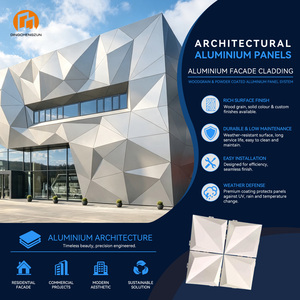
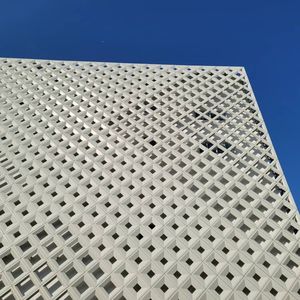
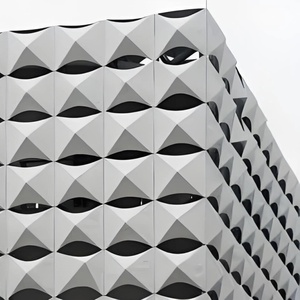
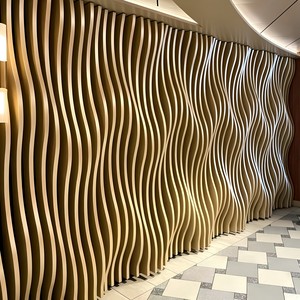
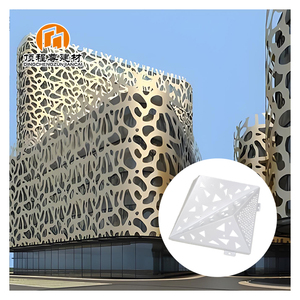
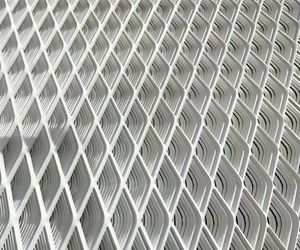
Yes. Our manufacturing facilities are equipped with 5-axis CNC machining centers, high-tonnage stretch bending machinery, and automated laser-cutting systems. We fabricate custom 3D sculptural aluminum panels, perforated sunshades, wood-grain aluminum cladding, and kinetic facades strictly according to architectural drawings and parametric models.
We recommend high-durability fluoropolymer coatings (PVDF 70% Kynar 500) or QUALICOAT Class 2 powder coatings. These finishes offer extreme resistance to sulfur dioxide ($SO_2$), nitrogen oxides ($NO_x$), and particulate matter present in industrial urban climates, guaranteeing color fastness and surface integrity for over 25 years without chalking or fading.
We coordinate directly with local general contractors and logistics operators. Façade packages and unitized curtain wall frames are crated into customized, weather-sealed steel stillages labeled floor-by-floor. Deliveries are scheduled with dedicated small-radius transport vehicles that conform to Milan ZTL access windows, enabling direct offloading by site cranes.