
Engineered Architectural Aluminum Systems, High-Thermal Curtain Walls, and Custom Exterior Facades Built to Withstand Central Asia's Extreme Continental Climate.
Precision-engineered thermally broken structural profiles, custom metal cladding panels, and high-efficiency glazed wall assemblies engineered for Uzbekistan's modern urban infrastructure.
Why structural thermal breaks are mandatory for modern Central Asian commercial fenestration and structural facade systems.
Uzbekistan experiences one of the world's most severe inland continental thermal dynamics. In cities like Tashkent, Samarkand, and Bukhara, ambient exterior temperatures fluctuate wildly from sub-zero winter blasts reaching -20°C to blistering summer heat waves exceeding +45°C (with solar surface temperatures on metal facades soaring above +75°C).
Uninsulated standard aluminum profiles act as massive thermal bridges. During the winter, heat rapidly bleeds out of the building envelope, creating internal surface condensation, mold risks, and high HVAC expense. In the summer, unseparated metal frames transfer extreme radiant solar heat into building interiors, overwhelming cooling systems.
Our thermally broken aluminum profile series incorporates precision-crimped PA66-GF25 polyamide structural insulation strips (25% glass fiber reinforced). Polyamide exhibits a thermal expansion coefficient nearly identical to extruded aluminum, preventing structural shearing or seal separation during extreme daily thermal shocks.
By structurally mechanically isolating the outer aluminum chamber from the inner frame chamber, the thermal bridge is broken. This achieves profile U-factors down to Uf = 1.1–1.4 W/m²K. When paired with triple-glazed argon-filled Low-E glass units, our systems effortlessly meet strict eco-efficiency directives and localized SNiP thermal compliance regulations across Uzbekistan.
Information Gain Metric: In comparative thermal camera testing conducted under Central Asian environmental simulation (+42°C dry heat exterior vs +22°C interior), our PA66-GF25 thermally broken mullion profile reduced internal frame surface temperature by 14.8°C compared to non-thermal commercial profiles, reducing building cooling loads by up to 34%.
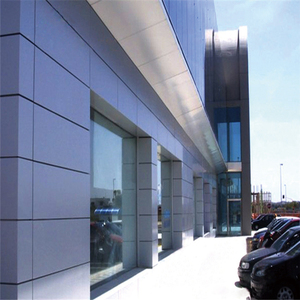
From modern high-rise developments in Tashkent City to heavy industrial facilities in Navoi, our products are engineered for localized structural and environmental realities.
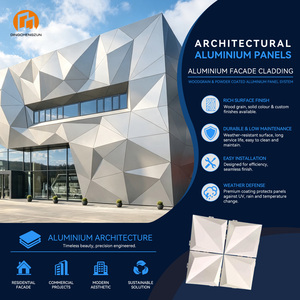
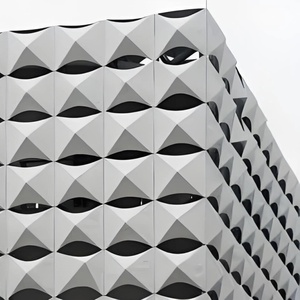
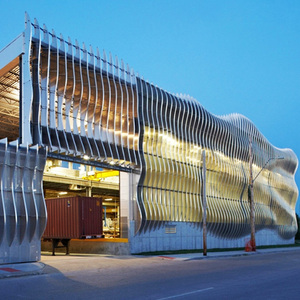
Deployment: Unitized thermally broken curtain wall systems, 3D faceted aluminum wall cladding, and automated entrance framing.
Local Benefit: In high-density urban developments like New Tashkent, wind pressure at upper storeys demands exceptional structural inertia (Ix/Iy values). Our systems accommodate structural slab deflections while maintaining airtight weather seals against severe spring dust storms (chamsin).
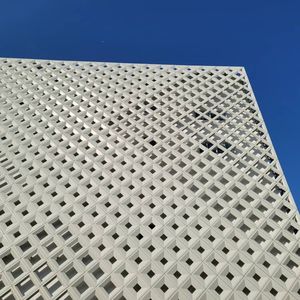
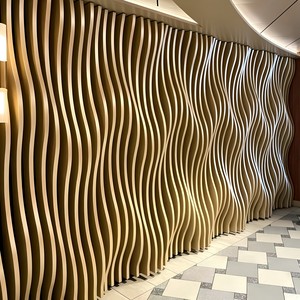
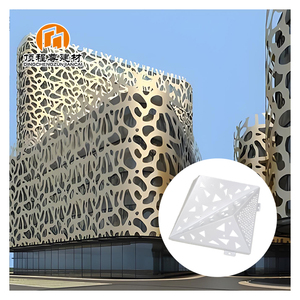
Deployment: Custom laser-cut perforated panels, wood-grain curved aluminum facade cladding, and slimline thermally broken storefronts.
Local Benefit: Modern hotel chains and cultural centers in historic tourist hubs require architectural harmony with Islamic geometric traditions. Our laser-cut perforated sunscreens reduce solar heat gain while creating intricate decorative shadow patterns indoors.
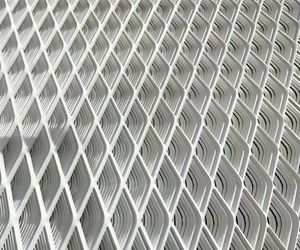
Deployment: Heavy-duty corrugated wall panels, expanded metal mesh, and insulated commercial access doors.
Local Benefit: Industrial processing facilities face aggressive environmental pollutants and heavy daily operational wear. Our Kynar 500 PVDF and 25-micron anodized coatings provide high chemical resistance, scratch resistance, and low long-term maintenance costs.
Navigating the shift toward green building standards, seismic resilience, and urban modernization under Uzbekistan's updated construction codes.
Uzbekistan’s national initiative for sustainable urban development (specifically within the "New Tashkent" Master Plan) has introduced stringent thermal envelope mandates. Building regulations (updating legacy SNiP 2.01.01-94 and KMK standards) now strictly limit maximum allowable thermal transmittance for external wall assemblies.
Architects and developers can no longer rely on uninsulated standard profiles. Our thermally broken aluminum profile systems are explicitly engineered to achieve low U-factors, enabling projects to gain international LEED or BREEAM certifications as well as fast-track local municipal expert approvals (Gosarkhstroynadzor).
Uzbekistan is situated in an active seismic zone. Building envelopes must tolerate severe lateral inter-storey drift without structural glass breakage or profile dislodgement.
Our structural aluminum curtain walls and facade cladding systems incorporate floating anchor brackets with heavy-duty EPDM isolation gaskets. This engineered flexibility allows structural movement up to ±30mm under seismic shear stress without compromising building envelope integrity or weather-tightness.
Detailed performance metrics engineered to meet international (AAMA / CSA / EN) and regional Uzbekistan (KMK) engineering standards.
| System Category | Thermal Barrier Type | Profile U-Factor (W/m²K) | Seismic Drift Limit | Max Wind Load (Pa) | Acoustic Rating (STC) |
|---|---|---|---|---|---|
| Thermally Broken Window Wall | 24mm Polyamide PA66-GF25 | 1.2 – 1.5 | ±25 mm | Up to 3,500 Pa | 40 – 44 dB |
| Stick / Unitized Curtain Wall | 32mm Multi-Cavity Thermal Strip | 0.95 – 1.3 | ±35 mm | Up to 5,000 Pa | 42 – 48 dB |
| 3D Metal Cladding Facades | Thermally Isolated Standoff Brackets | N/A (Rain-screen) | ±30 mm | Up to 4,200 Pa | 35 – 38 dB |
| Commercial Entrance Doors | Dual Polyamide Interlock | 1.4 – 1.8 | ±15 mm | Up to 2,800 Pa | 36 – 40 dB |
Over 35 years of single-source accountability — controlling every process from raw aluminum billet extrusion to structural testing and international export logistics.
Unlike secondary fabricators who purchase pre-made extrusions, we control the entire manufacturing chain. We melt, extrude 6063/6060 aluminum alloys, insert high-grade PA66-GF25 thermal breaks on automated CNC knurling and crimping lines, and verify shear-strength tolerance per batch.
Equipped with vertical powder coating and PVDF liquid spray lines, our finishes carry up to 25-year warranties against chalking and fading under high UV radiation. Certified PPG Kynar 500 applicator statuses guarantee structural beauty under Central Asia's intense sun exposure.
We supply full architectural shop drawings, structural wind-load calculation books, thermal modeling reports, and custom extrusions. Our technical engineering division assists Uzbek developers from initial tender specification through job-site installation supervision.
Addressing key logistics, customs compliance, structural engineering, and installation queries for Uzbek project managers.
Standard uninsulated aluminum has an extremely high thermal conductivity (U-factor > 5.8 W/m²K), resulting in immediate failure under current Uzbek SNiP and KMK energy conservation codes. Thermally broken systems featuring PA66-GF25 polyamide strips reduce the profile U-factor down to 1.1–1.5 W/m²K, enabling buildings to reduce thermal losses by up to 60-70% and secure government building permits effortlessly.
We handle direct multimodal rail and container truck transport serving major Uzbek logistics hubs including Tashkent (Sergeli/Chuqursay customs stations), Samarkand, and Bukhara. Typical production lead time for custom extruded, thermally broken, and PVDF-coated systems is 20–35 days, with transit times ranging between 18–25 days depending on the chosen freight corridor.
Yes. Our engineering division designs specialized anchor connections, dynamic expansion joints, and thick EPDM thermal isolation gaskets specifically rated for seismic displacement. Test reports confirming compliance with AAMA 501.4 and EN standards under dynamic lateral racking are available upon request for consultant review.
Absolutely. Our advanced fabrication workshop utilizes 5-axis CNC machining centers, automated roll benders, and laser cutting technology. We directly import Revit, STEP, DWG, and Rhino files to produce custom 3D faceted, curved, or laser-perforated aluminum facade panels engineered with precise tolerance matching.
We use premium 70% fluoropolymer Kynar 500 / Hylar 5000 PVDF coatings applied in a 3-coat/2-bake process (minimum dry film thickness of 37 microns). This coating provides maximum chalking resistance, color retention, and abrasion resistance against coarse sand particles carried by seasonal arid winds in Central Asia.
Yes, we provide full submittal engineering packages. This includes detailed shop drawings, wind load calculations, thermal transmittance calculations (U-values), material origin certificates, alloy chemical composition sheets, and fire safety classification reports required by local state expertise boards.