
Explore our precision-manufactured dual-action window solutions. Built with multi-chamber profiles, advanced weather seals, and structural thermal isolation to deliver unmatched durability, acousticproofing, and energy efficiency.
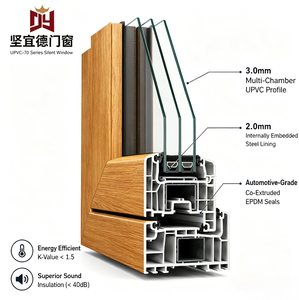
Triple-glazed Low-E vinyl frame system with multi-chamber thermal breaks designed for extreme energy conservation and ultra-low air infiltration rates.
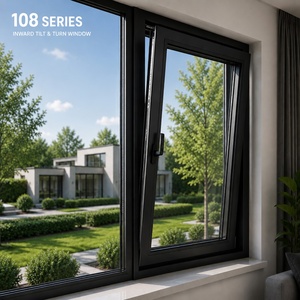
Features 54mm thermal insulation zone, NFRC certified multi-point locking hardware, and high wind-load resistance optimized for luxury high-rise apartments.
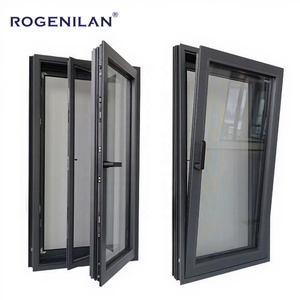
Ultra-narrow sightline aluminum profile with heavy-duty structural reinforcement, acoustic laminated safety glass, and CE hurricane-impact ratings.
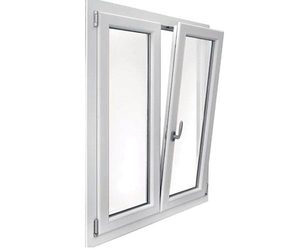
Classic European dual-action hinge engineering offering effortless micro-ventilation tilting and full inward casement rotation for high-end residential estates.
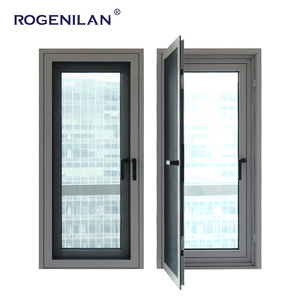
Integrated 304 stainless steel insect screen combined with triple-pane stormproof glass designed for tropical rainstorm regions.
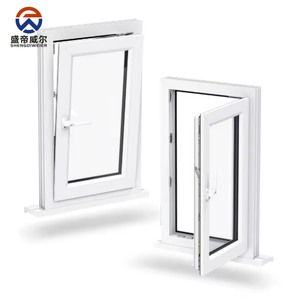
UV-stabilized virgin PVC profiles engineered to resist coastal salt spray and high atmospheric humidity without discoloration or warping.
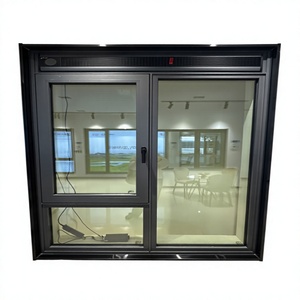
Dual-sash engineering supporting maximum natural airflow control, reinforced corner joints, and security-rated multi-point locking gear.
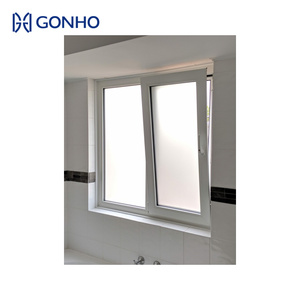
Heavy-duty 98mm architectural series combining integrated louver ventilation blinds with hurricane-rated soundproof exterior casement construction.
As urban development across Vietnam accelerates and global architecture demands stringent energy conservation criteria, the fenestration industry has undergone a radical transformation. Hanoi, situated in a humid subtropical region characterized by intense summer heat, extreme monsoon relative humidity (frequently exceeding 85%), and severe seasonal typhoon threats, presents a unique challenge for building envelope engineers. Standard single-action casement or sliding windows often succumb to air leakage, water ingress, seal degradation, and elevated solar heat gain over time.
This technical whitepaper examines why **Tilt & Turn (Dual-Action) Windows** have emerged as the premier fenestration technology specified by top-tier architectural firms, general contractors, and commercial developers in Hanoi and international export markets. By analyzing structural aluminum thermal breaks, multi-chamber UPVC extrusions, perimeter EPDM gasket engineering, and hardware dynamics, we outline the exact standards required to achieve passive-house level performance in tropical urban environments.
Tilt & Turn fenestration integrates two distinct mechanical modes within a single handle mechanism: **Mode 1 (Tilt)** allows top-inward opening of 10° to 15° for draft-free micro-ventilation and continuous rain-shielded air exchange. **Mode 2 (Turn)** enables full 90° to 180° inward casement rotation for maximum ventilation and safe interior maintenance of high-rise exterior glass facades.
Hanoi’s microclimate demands rigorous control over thermal conductivity ($U$-Factor) and Condensation Resistance Factors ($CRF$). During the summer months, interior air conditioning creates a massive temperature and humidity gradient between exterior ambient conditions (38°C to 42°C with high humidity) and conditioned indoors (22°C). Standard non-thermally broken frames act as thermal bridges, resulting in rapid moisture condensation along interior frame margins—leading to wall mold, interior finish deterioration, and significant HVAC energy loss.
Our Hanoi-manufactured export-grade tilt windows utilize **Polyamide (PA66 GF25)** thermal barrier strips reinforced with 25% glass fiber. This engineering design physically separates the exterior metal profile from the interior aluminum section, reducing overall frame conductivity by over 65%. Combined with argon-gas filled double or triple-pane Low-E insulated glass units (IGUs) utilizing warm-edge polymer spacers, our window assemblies achieve U-factors as low as **0.85 W/m²·K (0.15 Btu/h·ft²·°F)**.
| Performance Standard | Standard Sliding Window | Standard Single Casement | AICC High-Spec Tilt & Turn |
|---|---|---|---|
| Air Infiltration Rating | Class 2 (EN 12207) - Moderate Leakage | Class 3 (EN 12207) - Good Sealing | Class 4 (EN 12207) - Ultra-Airtight |
| Water Tightness (Pascal) | 300 Pa (Class 7A) | 600 Pa (Class 9A) | E1050 Pa (Custom Heavy-Storm Grade) |
| Acoustic Insulation (STC / Rw) | 28 - 32 dB | 34 - 38 dB | 42 - 48 dB (Acoustic Laminated) |
| Thermal Transmittance (U-Factor) | 2.8 - 3.4 W/m²·K | 1.8 - 2.4 W/m²·K | 0.85 - 1.2 W/m²·K (Passive House) |
| Structural Wind Load (Pressure) | 2.0 kPa (Moderate High-Rise) | 3.5 kPa (High-Rise) | 5.0+ kPa (Typhoon / Hurricane Proof) |
Street-level motor vehicle noise, industrial operations, and urban density in Hanoi demand sophisticated sound attenuation features. Conventional sliding windows rely on brush weatherstripping, which leaves micro-gaps through which high-frequency sound waves bypass the assembly. Tilt and turn windows utilize continuous, multi-tiered **EPDM (Ethylene Propylene Diene Monomer) compression gaskets** around the entire perimeter of both sash and frame.
When the single-action handle is rotated to the locked position, heavy-duty mushroom-head locking cams pull the sash tightly against the frame gaskets, compressing the rubber seal by 2.5mm to 3.5mm. This continuous pressure seal eliminates air pathways, working in tandem with asymmetric acoustic laminated glass (e.g., 6mm tempered + 1.52mm PVB acoustic interlayer + 6mm Low-E) to achieve sound transmission loss up to **48 decibels (dB)**. This transforms noisy urban residential apartments in Tay Ho or Cau Giay into serene living environments.
During tropical typhoons in northern Vietnam, window sashes experience severe positive wind loading on windward building faces and immense negative suction forces on leeward facades and building corners. Traditional friction-stay casements can flutter, distort, or fail under localized gust pressures exceeding 3,000 Pascals.
Our tilt and turn systems incorporate heavy-duty perimeter gear hardware (engineered in collaboration with leading European partners such as Roto, Siegenia, and Hoppe). Up to **8 to 12 locking points** are positioned around the perimeter of a single sash. When closed, forged steel locking cams engage into reinforced frame-mounted keeper plates, anchoring the sash deeply into the outer frame along all four edges. This multi-point anchoring distributes wind loads evenly into the structural building substrate, preventing frame deflection and air/water seal blowout even during Category 14 typhoon conditions.
We maintain 100% internal control over raw aluminum alloy billet melting, precision profile extrusion, thermal break insertion, powder coating, double glazing fabrication, and final unit assembly under strict ISO 9001 supervision.
All exported window series undergo third-party laboratory testing to verify compliance with North American NFRC/AAMA standards, European CE building codes, and Australian AS2047 fenestration safety requirements.
Positioned near Hanoi’s logistics hubs and major deep-water ports (Hai Phong), we supply factory-glazed, fully crated window packages floor-by-floor for projects across North America, Australia, Europe, and Southeast Asia.
Our tilt and turn windows are explicitly customized to solve real-world architectural and environmental challenges across diverse Hanoi project topologies:
The modern architectural landscape in Southeast Asia is rapidly shifting toward sustainable, low-carbon building envelopes. Future-forward trends currently driving product selection include:
Answers to key technical, logistical, and localized purchasing queries regarding Hanoi tilt window manufacturing and export services.
Sliding windows rely on flexible brush weatherstrips that inherently allow air, fine dust (PM2.5), and noise infiltration under high wind pressures. Tilt & Turn windows utilize continuous double or triple EPDM compression gaskets around the perimeter, pulled tight by multi-point locking cams. This yields significantly higher water tightness (up to 1050 Pa), superior soundproofing (up to 48 dB), and eliminates the risk of sashes derailing during violent typhoons.
Our aluminum extrusions feature architectural-grade powder coating or PVDF finishes resistant to salt spray and chemical corrosion. Thermally broken PA66 polyamide barriers prevent frame sweating (interior condensation), while internal pressure-equalized drainage channels rapidly direct driving rain out of the frame assembly without backing up into interior rooms.
For tropical regions, we recommend double or triple-pane IGUs featuring a Low-E silver coating on Surface #2 or #3, filled with 90%+ Argon gas, and assembled with warm-edge composite spacers. This setup reduces the Solar Heat Gain Coefficient (SHGC) down to 0.20 – 0.25 while keeping daylight transmittance high, reducing air conditioning electricity costs by 30-40%.
Yes. Our in-house engineering team provides complete AutoCAD shop drawings, structural wind load calculation reports, thermal simulation analysis (THERM/WINDOW), and custom extrusion profiles. Hardware can be specified from top global brands (Roto, Siegenia, Sobinco) or tailored proprietary OEM systems according to project budgets.
All finished window assemblies are wrapped in protective PE film, corner-protected with heavy foam guards, packed into fully enclosed fumigated plywood crates, and secured with steel strapping. Desiccant packs are enclosed inside the packaging to absorb moisture during trans-oceanic shipping.
Upon final shop drawing approval and color sample sign-off, standard production lead time is 25 to 35 days. Staged delivery schedules can be arranged floor-by-floor to align directly with on-site building erection sequences.