
Custom-manufactured to withstand intense high-altitude ultraviolet exposure, solar thermal stresses, and dust-laden micro-environments across Addis Ababa and key regional industrial corridors.
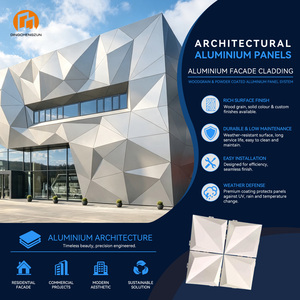 Sculptural Facade
Precision-engineered geometric exterior cladding manufactured from high-tensile 3003-H14 aluminum alloy. Ideal for iconic entrance portals and commercial high-rise podiums.
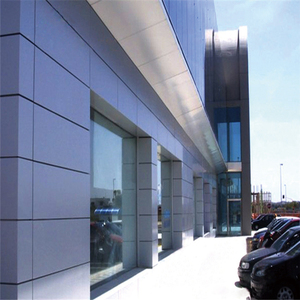 Composite Panel
Heavy-duty fire-rated aluminum composite panel system designed for long-span commercial entrances, curtain wall infills, and high-traffic public infrastructure enclosures.
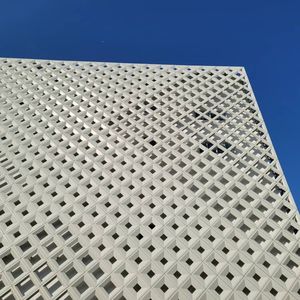 Architectural Cut
CNC laser-perforated structural aluminum screens providing dynamic solar shading, natural airflow control, and striking architectural aesthetics for modern entrances.
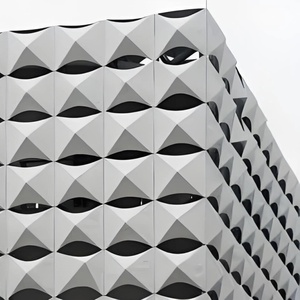 Fireproof Curtain Wall
Integrated eco-friendly curtain wall cladding units featuring heavy-gauge extruded framing, double weather-stripping, and high thermal isolation for shopping malls and hotels.
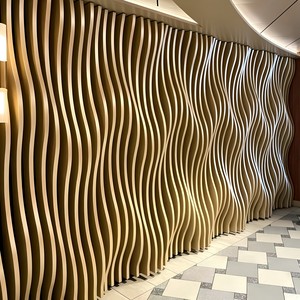 Organic Finish
Sublimated powder-coated wood-grain curved aluminum profiles engineered to withstand harsh UV decay while offering warm organic aesthetics for boutique commercial entries.
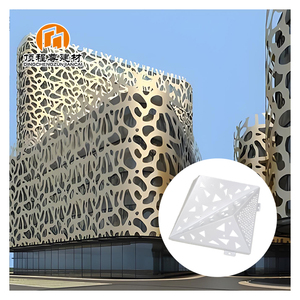 Solar Protection
Acoustically isolated perforated aluminum facade framing engineered specifically to mitigate street-level ambient noise and solar gain in dense urban commercial districts.
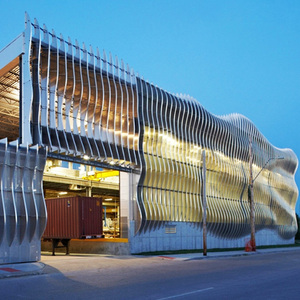 Kinetic Facade
Dynamic wave-profile corrugated entrance cladding system engineered for maximum structural rigidity across long spans with minimal structural dead-load demands.
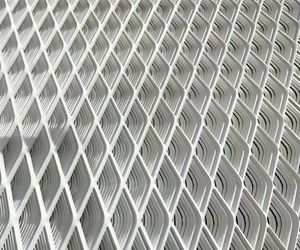 Expanded Mesh
Heavy-gauge expanded aluminum alloy mesh screens providing robust physical security, natural ventilation, and solar control for commercial building entrance vestibules.
Ethiopia is undergoing an unprecedented architectural metamorphosis. Driven by major urban master plans in Addis Ababa (such as the Bole Financial District, Kazanchis commercial expansion, and the Smart City initiatives), alongside rapid commercial development in secondary hubs like Hawassa, Adama, Bishoftu, and Dire Dawa, the demand for resilient commercial entrance systems and architectural glass envelopes has reached an all-time high.
However, East Africa’s geographic and climatic nuances pose severe operational challenges to conventional structural building entrances:
To overcome these environmental stressors, tier-one developers, structural engineering consultants, and lead contractors across Ethiopia require entrance systems that go beyond basic aesthetic framing. Entrance assemblies must incorporate thermally broken aluminum profile alloys, multi-point EPDM gasket seals, high-performance PVDF (Fluoropolymer) coatings, and certified wind-load deflection tolerances engineered specifically for high-density, multi-story commercial applications.
We maintain end-to-end control over aluminum alloy chemistry (6063-T5 / 6061-T6), extrusion wall thickness tolerances, and structural web design to prevent deflection under high wind loads.
Utilizing structural PA66 GF25 (25% glass fiber reinforced polyamide) thermal break strips, our entrance systems drastically minimize solar heat transfer into air-conditioned interiors.
Integrated insulated glass units (IGUs) with warm-edge spacers, Low-E pyrolytic coatings, and safety-laminated interlayers engineered to comply with international CSA A440 / AAMA standards.
Selecting the appropriate commercial entrance and structural cladding system requires balancing structural loading capacity, thermal insulation, acoustic isolation, and long-term cycle durability. Below is the standardized performance matrix engineered into our commercial product line for the Ethiopian export market:
| Performance Parameter | Standard Specification | High-Load Commercial Grade | Testing / Compliance Standard |
|---|---|---|---|
| Structural Wind Load | 1.8 kPa – 2.5 kPa | 3.5 kPa – 5.0 kPa | ASTM E330 / CSA A440.2 |
| Air Infiltration Rate | < 0.15 cfm/ft² at 1.57 psf | < 0.05 cfm/ft² (Fixed Envelope) | ASTM E283 / AAMA 101 |
| Water Penetration Resistance | 400 Pa static pressure | 720 Pa – 1050 Pa cyclic | ASTM E331 / AAMA 501.1 |
| Thermal Transmittance (U-Factor) | U-0.32 Btu/h·ft²·°F | U-0.18 Btu/h·ft²·°F (Triple IGU) | NFRC 100 / ISO 10077-2 |
| Acoustic Isolation (STC / Rw) | STC 35 / Rw 34 dB | STC 44 / Rw 43 dB (Laminated) | ASTM E90 / ISO 140-3 |
| Finish Coating Durability | AAMA 2604 (10-Year) | AAMA 2605 PVDF (25-Year) | AAMA 2605 / ISO 2810 |
Commercial entrance systems cannot be treated as uniform off-the-shelf items. Operational requirements vary greatly depending on building purpose, foot-traffic volume, and surrounding urban density within Ethiopian commercial districts:
High-rise financial institutions demand heavy-duty, automatic-operator-ready entrance doors integrated with curtain wall framing. Our pressure-equalized aluminum entrance systems provide high structural rigidity against chimney-effect stack pressures in multi-story towers while incorporating bullet-resistant security glazing options.
Hotels and diplomatic facilities require maximum acoustic damping to block surrounding city traffic noise, combined with ultra-low thermal solar heat gain (SHGC < 0.28). Our dual-sealed thermal break swing doors and custom perforated kinetic metallic screens deliver silent operation, security, and refined luxury aesthetics.
Industrial administration buildings require rugged, heavy-stile entrance doors engineered for over 1,500,000 continuous opening cycles. Outfitted with reinforced corner cleats, stainless steel continuous hinges, and dual-perimeter dust seals, these entrances withstand heavy industrial foot traffic and airborne particulate matter.
Retail storefronts demand maximum glass sightlines with slim, elegant aluminum profiles. Our aluminum entrance systems feature barrier-free thermally unbroken or broken low-profile sills, automatic sliding operator integration, and impact-resistant tempered safety glass to keep retail environments accessible and secure.
Unlike third-party traders or local fabricators who assemble piecemeal components from disparate source suppliers, our vertical integration establishes unified engineering control across all manufacturing stages:
We start exclusively with virgin prime aluminum billets (Al-Mg-Si series). Extrusion profiles are engineered with internal stiffening ribs at critical stress points to handle heavy automatic door hardware, panic exit devices, and overhead concealed closers without structural sagging or frame twisting over time.
To combat the aggressive ultraviolet radiation of high-altitude East Africa, our extrusions undergo electrostatic multi-coat 70% PVDF (Fluoropolymer) resin application or hard-coat anodizing (minimum 25-micron thickness). This treatment guarantees zero chalking, peeling, or salt-spray corrosion for up to 25 years in harsh outdoor environments.
Every commercial door sash and framing member features dual-durometer EPDM gaskets paired with dense high-pile weather-stripping inserted into continuous T-slots. This blocks fine silt particles during dry dust storms and prevents wind-driven rain penetration during heavy monsoon downpours.
Before container shipping to Djibouti Port, entrance frames are fully dry-assembled, checked for squareness tolerances within ±0.5mm, and tested for mechanical hardware alignment. All structural glass infills are factory-glazed utilizing structural silicone glazing (SSG) protocols under controlled humidity and temperature conditions.
Navigating international procurement for major Ethiopian construction projects requires clear logistical strategies, regulatory compliance, and smooth payment processing. We offer tailored export services to simplify your supply chain:
All bulk export shipments are consolidated, moisture-packed in steel-reinforced ocean crates, and shipped directly to the Port of Djibouti—the primary maritime gateway for Ethiopia. From Djibouti, cargo seamlessly transitions onto the Addis Ababa–Djibouti Railway or via heavy-haul freight trucking corridors managed under Ethiopian Shipping and Logistics Services Enterprise (ESLSE) protocols directly to your project job site.
Our structural entrance systems and curtain wall assemblies are engineered to meet or exceed national building requirements outlined in the Ethiopian Building Code Standard (EBCS) as well as international ASTM, CSA, and ISO benchmarks. We supply complete technical submittal packages—including structural calculations, wind-load testing reports, anchor detail drawings, and thermal analysis sheets—for seamless approval by project consultants and local authorities.
We understand the foreign exchange dynamics and bank processing requirements administered by the National Bank of Ethiopia (NBE). We work closely with major commercial banks (including the Commercial Bank of Ethiopia, Dashen Bank, Awash Bank, and Bank of Abyssinia) to accommodate verified Letters of Credit (L/C), advance payment guarantees, and milestone-based trade finance structures.
Expert answers addressing technical specifications, logistics, customs clearance, and ordering procedures for architects, developers, and contractors.
Partner with a vertically integrated aluminum entrance manufacturer. Send us your project elevations, architectural specifications, or tender bills of quantities for a complimentary engineering review and factory-direct quotation.