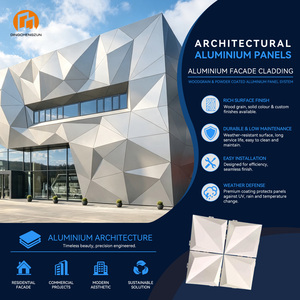
Custom 3D Faceted Aluminum Wall Panel Sculptural Facade Cladding System
Engineered 3D geometric exterior aluminum panels providing passive solar shading and dynamic acoustic dampening for high-rise commercial towers in Manila.

Engineered for high solar reflectance, extreme hurricane-force wind load compliance (NSCP 2015), and atmospheric coastal durability.
Engineered 3D geometric exterior aluminum panels providing passive solar shading and dynamic acoustic dampening for high-rise commercial towers in Manila.
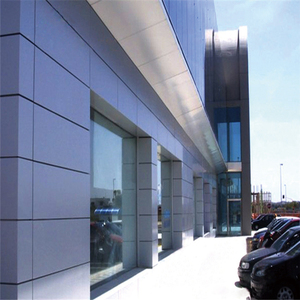
Heavy-duty 4mm aluminum composite panels with 70% Kynar 500 PVDF coating, offering exceptional salt-spray and UV degradation resistance along Manila Bay.
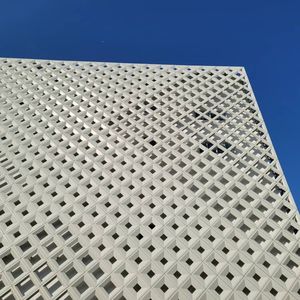
Precision-perforated sun-screens optimized for thermal dissipation, reducing direct solar gain on commercial Low-E curtain wall assemblies.
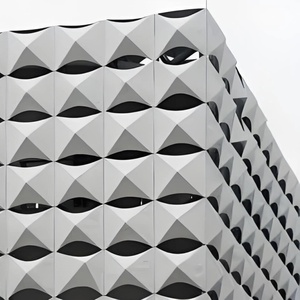
Class-A fire-rated architectural envelope systems matching strict Philippines National Building Code (PD 1096) safety standards.
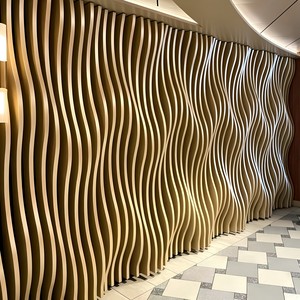
Weatherproof hyper-durable fluorocarbon wood finish combining tropical aesthetic warmth with zero termite or moisture swelling vulnerabilities.
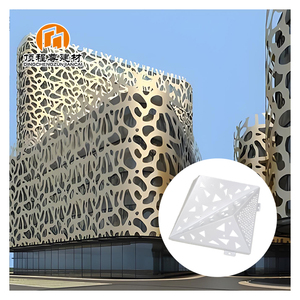
High-grade structural framing for hospitality developments in BGC and Makati requiring maximum daylighting and low internal cooling loads.
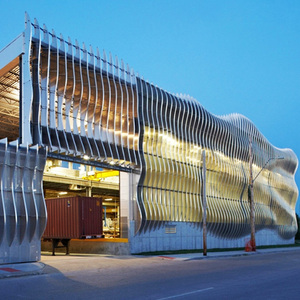
Thermally broken structural mullion profiles designed to integrate with high-vacuum Low-E double glazing for landmark commercial towers.
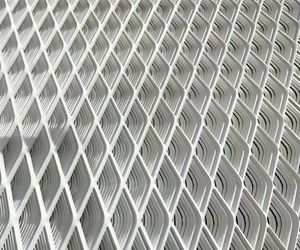
Structural mesh dynamic solar screens built to withstand tropical torrential downpours and atmospheric pressure swings during typhoon season.
Why Northern Hemisphere glass specifications fail in the Philippines, and how targeted Solar Heat Gain Coefficient (SHGC) engineering slashes commercial cooling overheads.
Building developers across Metro Manila—from Bonifacio Global City (BGC) to Makati CBD—face one of the world's most aggressive solar cooling challenges. With average year-round relative humidity exceeding 80% and peak solar irradiance hitting extraordinary thermal thresholds, standard clear or single-pane tinted glass leads to excessive internal heat gain, skyrocketing MERALCO electrical utility bills, and HVAC compressor premature failure.
As a specialized factory and direct B2B exporter to the Philippine construction market, our engineering department produces Double Silver (MSVD) and Triple Silver Low-E Insulated Glass Units (IGUs) specifically calibrated for tropical maritime latitudes. Unlike cold-climate Low-E formulations designed to retain interior room heat (low U-value priority), our tropical Manila formulations prioritize high spectral selectivity—rejecting Infrared (IR) heat energy while transmitting high levels of visible natural daylight (VLT).
| Glazing Configuration Type | Visible Light Transmittance (VLT %) | Solar Heat Gain Coefficient (SHGC) | U-Value (W/m²·K) | Infrared Rejection (NIR %) | Manila Commercial Suitability |
|---|---|---|---|---|---|
| Standard 6mm Clear Monolithic Glass | 88% | 0.82 | 5.7 | 18% | Non-Compliant (High MERALCO Cost) |
| 6mm Tinted Green / Dark Gray Monolithic | 45% | 0.58 | 5.2 | 42% | Basic Low-Rise Only |
| Double Glazed 6+12Ar+6 Single Low-E | 62% | 0.38 | 1.8 | 76% | Standard Commercial Grade |
| Double Glazed 6+12Ar+6 Tropical Double Silver Low-E | 55% | 0.24 - 0.28 | 1.3 | 92% | Recommended for BGC / Makati High-Rises |
| Triple Glazed / Laminated Vacuum Triple Silver Low-E | 48% | 0.20 - 0.22 | 0.9 | 97% | BERDE & LEED Platinum Target Projects |
Note: Test data based on NFRC 100/200 environmental conditions under tropical summer peak solar irradiance (1000 W/m² ambient daylight exposure).
Structural aluminum fenestration and wall panel envelope systems tested against extreme typhoon wind pressures (NSCP 2015) and coastal marine oxidation.
Metro Manila is located in Zone 1 typhoon exposure under the National Structural Code of the Philippines (NSCP 2015). Our extruded T6-6063 architectural aluminum frames feature reinforced wall thicknesses (up to 3.0mm structural mullions) capable of resisting positive and negative design wind pressures exceeding 4.0 kPa without permanent deflection.
Monsoon downpours accompanied by gale-force winds frequently force moisture through inferior window joinery. We implement multi-chamber pressure-equalized drainage tracks and continuous vulcanized EPDM gaskets, achieving zero water penetration under 700 Pa static pressure testing (ASTM E331 certified).
For waterfront developments along Manila Bay, Roxas Boulevard, and Pasay Reclamation area, atmospheric salt fog causes rapid oxidation on standard powder-coated aluminum. Our factory applies 3-coat 70% Kynar 500 / Hylar 5000 PVDF coatings reaching 3,000+ hours in ASTM B117 salt spray testing.
From modern central business districts to high-humidity coastal reclamations, our export systems address hyper-local architectural demands.
Challenge: Maximum curtain wall structural spans, extreme solar heat accumulation, and strict LEED / BERDE energy efficiency mandates.
Factory Solution: Unitized Double-Silver Low-E curtain wall systems with integrated thermally broken aluminum mullions. Pre-glazed in our automated factory environment to eliminate site installation defects and accelerate tower floor-cycle construction speeds.
Unitized Curtain WallChallenge: High acoustic noise pollution from arterial thoroughfares (EDSA, Ayala Ave) coupled with demands for sleek biophilic aesthetic finishes.
Factory Solution: Heavy-duty lift-and-slide Low-E balcony doors featuring sound-dampening acoustic PVB laminated glass interlayers (STC rating 42 dB) finished in weather-resistant wood-grain PVDF aluminum frames.
Acoustic & Balcony SlidersChallenge: Direct exposure to saline sea spray, high wind gusts off Manila Bay, and intense ambient humidity causing seal failure in insulating glass.
Factory Solution: Structural silicone structural glazing (SSG) with dual-sealed polyisobutylene (PIB) primary seals and silicone secondary seals, backed by stainless steel 316 heavy-duty hardware and C5 anti-corrosion exterior aluminum cladding panels.
Manila Bay Waterfront SpecChallenge: Updating legacy single-glazed aluminum windows in operational buildings without disturbing long-term tenants or causing business shutdown.
Factory Solution: Custom retrofitting aluminum window insert profiles engineered for fast suite-by-suite replacement, delivering immediate 30%+ air conditioning utility cost reductions for property owners.
Occupied Building RetrofitKey regulatory shifts and design evolutions shaping procurement strategies for developers, general contractors, and facade consultants.
The Philippine Green Building Council (PHILGBC) with its BERDE framework, along with IFC EDGE certification, has made low-SHGC fenestration a baseline requirement for Grade-A commercial developments. Project tenders increasingly specify verified solar heat gain limits (< 0.25) to qualify for tax incentives and higher tenant rental yields.
Architects in Metro Manila are combining glass curtain walls with secondary outer metal skins—such as laser-cut perforated panels, 3D faceted aluminum cladding, and expanded mesh. This dual-skin strategy creates a ventilated buffer zone that dissipates solar radiation before it reaches the primary Low-E thermal envelope.
To overcome weather delays caused by Manila's long rainy season (June to November), top-tier contractors like EEI, Megawide, and Datem are shifting toward factory-assembled unitized curtain wall panels. Factory assembly ensures 100% controlled silicone sealant curing and swift crane installation on site.
End-to-end quality control from raw ingot extrusion to certified glass insulating assembly and sea-freight packaging.
Unlike trading intermediaries, our factory owns multiple automated aluminum extrusion presses (ranging from 800 to 3,600 metric tons). We control profile alloy chemistry (AA6063-T5/T6), thermal break polyurethane strip insertion, vertical anodizing lines, and fluorocarbon PVDF spray coating under one roof. This guarantees batch-to-batch color uniformity and structural yield strength consistency.
All Low-E window assemblies and curtain wall profiles undergo rigorous physical testing for structural load deflection (ASTM E330), air leakage (ASTM E283), water penetration (ASTM E331), and sound attenuation (ASTM E90). Factory submittal packages include complete shop drawings, structural calculations signed by licensed engineers, and glass performance reports.
We have established streamlined B2B shipping routes serving Manila South Harbor and Manila International Container Terminal (MICT). Fenestration units are packed in custom heavy-duty plywood crates with fumigated skids, desiccated moisture-barrier wrapping, and corner guards to prevent transit breakage and humidity corrosion during ocean carriage.
By consolidating frame extrusion, glass double-glazing, hardware assembly, and export packaging into a single manufacturing source, we eliminate supplier finger-pointing. We back our Low-E window and curtain wall systems with a comprehensive 10-Year Factory Warranty covering glass seal failure and coating degradation.
Direct technical answers regarding import processes, structural codes, lead times, and thermal performance selection.
Our window and curtain wall packages are engineered to meet or exceed PD 1096 and NSCP 2015 wind load specifications. We supply third-party laboratory test certificates (ASTM / AAMA standards) validating air infiltration, water resistance, and structural deflection under typhoon pressures for local building permit sign-offs.
For Metro Manila's tropical latitude, we recommend a Solar Heat Gain Coefficient (SHGC) between 0.22 and 0.28. This range blocks up to 78% of incoming solar infrared heat while retaining high Visible Light Transmittance (VLT 50%+), drastically lowering air conditioning electricity consumption without darkening interior spaces.
Standard lead times typically include 2 weeks for detailed shop drawing approvals and sample verification, 3 to 4 weeks for extrusion fabrication and Low-E IGU assembly, and 10 to 14 days ocean transit from our port to Manila. Total lead time is generally 6 to 8 weeks upon deposit and drawing approval.
Insulating glass units (IGUs) are built using dual-barrier seals (primary polyisobutylene + secondary structural silicone) with molecular sieve desiccant inside the aluminum spacer bars. Crates are lined with heavy vacuum foil bags containing industrial desiccants and secured in custom steel-banded wooden boxes designed for crane unload at MICT.
Yes. Our tooling department cuts custom extrusion dies directly from CAD / BIM files (DWG, Revit). We produce custom mullion depths, decorative exterior caps, and specialized sunshade brackets tailored precisely to your project's architectural facade drawings.
Absolutely. Standard powder coating can chalk and fade within 3 to 5 years under intense tropical UV rays and airborne coastal salt particles. 70% Kynar 500 PVDF fluorocarbon coating provides superior chemical stability, retaining color fidelity and corrosion resistance for 20+ years in marine (C5) environments.
Send your project architectural drawings, window schedule, or tender bill of quantities (BOQ) to our engineering team. We deliver rapid preliminary U-factor/SHGC calculations, budgetary factory pricing, and structural submittal support.
Contact Us