
Precision-fabricated thermal barrier facade solutions engineered for commercial, luxury residential, and municipal architectural developments across Turkey's diverse climatic zones.
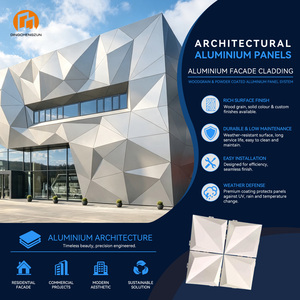
Three-dimensional architectural metal cladding system engineered for integrated triple-glazed curtain walls. Offers enhanced solar shading and dynamic exterior aesthetics for high-rise commercial towers in Istanbul and Ankara.
Inquire Now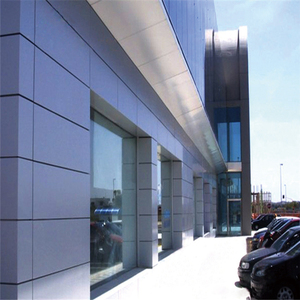
Heavy-duty 4mm aluminum composite panel (ACP) with fluoropolymer PVDF coating. Provides superior weatherability, anti-corrosion resistance for coastal regions like Izmir and Antalya, and seamless thermal insulation pairing.
Inquire Now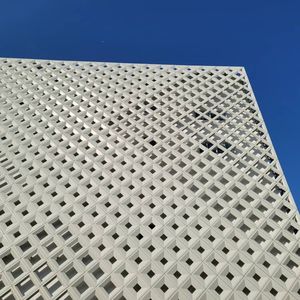
Precision CNC laser-perforated aluminum outer screens designed to overlay high-efficiency triple glazing units. Reduces solar heat gain coefficient (SHGC) while creating customized architectural illumination patterns.
Inquire Now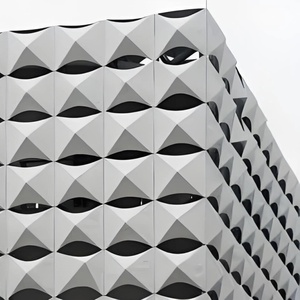
Class A2 fire-rated aluminum alloy structural glazing and cladding profiles. Optimized for shopping malls, airport terminals, and public infrastructure projects requiring strict safety compliance and low U-values.
Inquire Now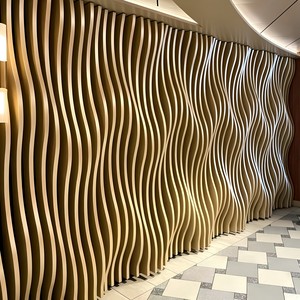
Sublimated organic wood-texture finished curved aluminum panels. Combines the warm visual aesthetic of natural timber with the zero-maintenance structural longevity of architectural-grade anodized aluminum.
Inquire Now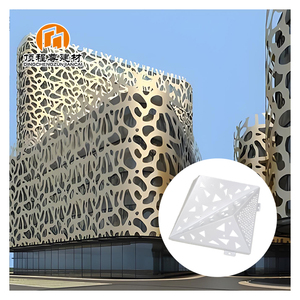
Engineered perforated metal rainscreen and shading facade panels tailored for modern hospitality and multi-family residential towers. Delivers integrated sound dissipation and thermal barrier protection.
Inquire Now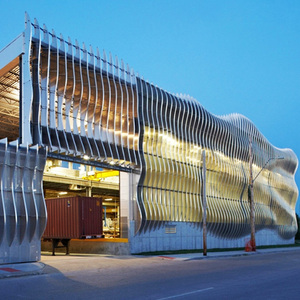
Advanced corrugated structural profiles and dynamic kinetic motion panels. Formulated to interface seamlessly with unitized triple-pane glass frames for landmark architectural structures.
Inquire Now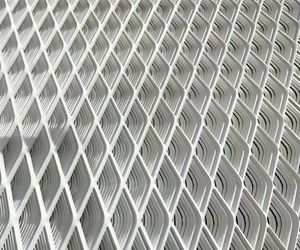
Rigid expanded metal mesh cladding designed to provide passive ventilation, dynamic light diffusion, and structural protection for exterior triple-glazed building envelopes.
Inquire NowThe construction landscape across Turkey is undergoing a profound structural evolution driven by dual imperatives: strict updates to national energy efficiency regulations—notably the TS 825 Thermal Insulation Requirements for Buildings—and the accelerated rollout of Nearly Zero Energy Buildings (NZEB). As urban centers like Istanbul, Ankara, and Izmir undergo massive regeneration, and as luxury commercial developments proliferate along the Aegean and Mediterranean coastlines, selecting high-performance triple glazing factories and specialized suppliers has shifted from an architectural luxury to an absolute engineering requirement.
Triple glazing—comprising three panes of glass separated by two gas-filled cavities, warm-edge spacers, and multi-layered spectrally selective Low-E coatings—delivers unprecedented thermal performance, acoustic isolation, and condensation resistance. When integrated with thermally broken aluminum sub-framing and custom metal cladding systems, triple glazing establishes a robust barrier against Turkey’s extreme microclimates, ranging from hot Mediterranean summers to severe sub-zero Anatolian winters.
Turkey presents a uniquely complex meteorological profile divided into four primary climate zones under TS 825. Each zone demands precise thermal transmittance ($U$-value) thresholds, solar heat gain coefficients (SHGC), and air infiltration parameters:
| Glazing Technology Configuration | Center-of-Glass $U_g$ (W/m²K) | Solar Heat Gain (SHGC) | Acoustic Isolation ($R_w$) | TS 825 Zone Suitability |
|---|---|---|---|---|
| Standard Double Glazing (4-16Ar-4 Low-E) | 1.3 - 1.4 W/m²K | 0.58 - 0.65 | 31 - 34 dB | Zone 1 Only (Non-Compliant for NZEB) |
| Triple Glazing Standard (4-14Ar-4-14Ar-4 Low-E) | 0.7 - 0.8 W/m²K | 0.42 - 0.50 | 38 - 42 dB | Zones 2 & 3 Compliant |
| Triple Glazing Premium (6-16Ar-4-16Ar-6 Dual Low-E + Argon) | 0.5 - 0.6 W/m²K | 0.28 - 0.38 | 46 - 49 dB | Zones 3 & 4 (NZEB & Passive House Standard) |
| Acoustic Triple IGU + Laminated Safety Glass (8.8Lami-14Ar-4-14Ar-6.4Lami) | 0.6 W/m²K | 0.32 - 0.40 | 50 - 54 dB | High-Rise Urban Centers & Airport Zones |
Achieving structural longevity and energy savings across commercial project lifespans requires strict engineering synergy between the glass unit, the aluminum alloy extrusions, and secondary outer cladding panels:
Insulated Glass Unit (IGU) Physics: Modern triple glazing manufactured for import into Turkey relies on dual Low-Emissivity (Low-E) soft coatings applied to surfaces #2 and #5. The cavities are evacuated and filled with 90%+ pure Argon or Krypton gas. To eliminate thermal bridging at the glass edge—a major cause of perimeter seal failure and interior mold growth—the factory must incorporate composite warm-edge spacers (such as Technoform or Swisspacer) rather than conventional cold aluminum box spacers.
Thermally Broken Aluminum Framing Systems: A triple glass unit is only as efficient as its perimeter profile. Our factory partners utilize polyamide ($PA66\text{ GF25}$) thermal break strips exceeding $24\text{mm}$ to $34\text{mm}$ in width within structural curtain wall mullions and transoms. This achieves a frame thermal transmittance ($U_f$) under $1.2\text{ W/m²K}$, preventing heat energy from bridging through the metal framing assembly.
Integration with 3D Architectural Cladding & Rain-Screens: Exterior cladding modules—such as 3D faceted aluminum wall panels, CNC laser-cut louvers, or expanded metal mesh sunscreens—act as a secondary dynamic envelope layer. By intercepting direct solar radiation before it reaches the primary glazing line, these panels drastically reduce cooling energy demand while offering architects unlimited freedom for sculptural expression.
Eliminating supply chain fragmentation through single-source manufacturing control—from raw profile extrusion to finished site delivery.
We control aluminum alloy extrusion, precision CNC machining, thermal break crimping, automated triple-IGU assembly, and PVDF coating under one roof, guaranteeing zero quality drop-off.
All glass units and structural curtain wall mock-ups undergo air permeability, water tightness under static pressure, structural wind load testing, and seismic drift tolerance verification.
Engineered structural silicone joints and dynamic interlocking mullions designed specifically to absorb inter-story seismic drift required by the Turkish Building Earthquake Code.
High-rise developments in dense metropolitan corridors require high wind-load resistance ($> 2400\text{ Pa}$) alongside elite acoustic isolation. By specifying our unitized triple-glazed curtain walls equipped with outer sound-dampening laminated acoustic glass panes and micro-perforated sunscreens, towers achieve acoustics below $35\text{ dB}$ internally despite ambient traffic noise exceeding $80\text{ dB}$.
Projects exposed to marine environments suffer from accelerated oxidation and salt spray breakdown. We supply heavy-duty 4mm PVDF-coated ACM panels and anodized aluminum sliding patio door assemblies with marine-grade sea-side pretreatment (Qualicoat Class 2 certified). Combined with spectrally selective triple glazing, internal space temperatures remain stable without obstructing panoramic sea views.
Municipal buildings require low lifecycle maintenance, fire safety (Class A2 fireproof cladding), and zero moisture condensation during extreme freeze-thaw cycles. Our triple-glazed unitized systems incorporate continuous internal drainage channels and EPDM weather gaskets, ensuring lifetime airtight performance.
Clear, direct answers regarding customs, compliance, shipping logistics, and technical specifications for importing window facade systems into Turkey.
A: Yes. Our triple-pane insulated glass units achieve center-of-glass U-values ($U_g$) down to $0.5 - 0.7\text{ W/m²K}$, easily surpassing TS 825 requirements across all four Turkish climate zones and qualifying projects for LEED/BREEAM green building points.
A: We provide full export documentation including CE conformity certificates, test reports, Commercial Invoices, Packing Lists, and Certificate of Origin documents to ensure smooth customs clearance at major Turkish ports such as Ambarlı (Istanbul), Mersin, and Alsancak (Izmir).
A: Absolutely. Our unitized curtain wall systems feature engineered dynamic expansion joints and structural silicone framing engineered specifically to accommodate horizontal floor displacements and seismic forces mandated by the Turkish Building Earthquake Code.
A: Shop drawing engineering and 3D CAD approvals generally take 1 to 2 weeks. Production cycles require 3 to 4 weeks depending on order volume, followed by direct maritime container transport (approx. 18-25 days) to Turkish sea ports.
A: Yes. As a single-source manufacturer, we produce both the structural triple glazing profiles and outer decorative cladding (3D faceted, laser-cut, perforated, or wood-grain aluminum) to guarantee perfect site installation alignment.
A: Every triple IGU is separated by protective shock-absorbing cork pads, sealed in moisture-proof vacuum wrap, and secured inside heavy-duty fumigated wooden crates with reinforced steel banding engineered for international shipping container transport.
Submit your architectural elevations, window schedules, or tender specifications. Our technical engineering team will deliver a comprehensive proposal complete with thermal calculations, structural shop drawings, and competitive factory-direct pricing tailored for the Turkey market.